

Description
How to identify
The Pear slug (Caliroa cerasi) is a member of the Hymenoptera order, Tenthredinidae family. The adult insect is a small, shiny black sawfly about 5 mm in length.
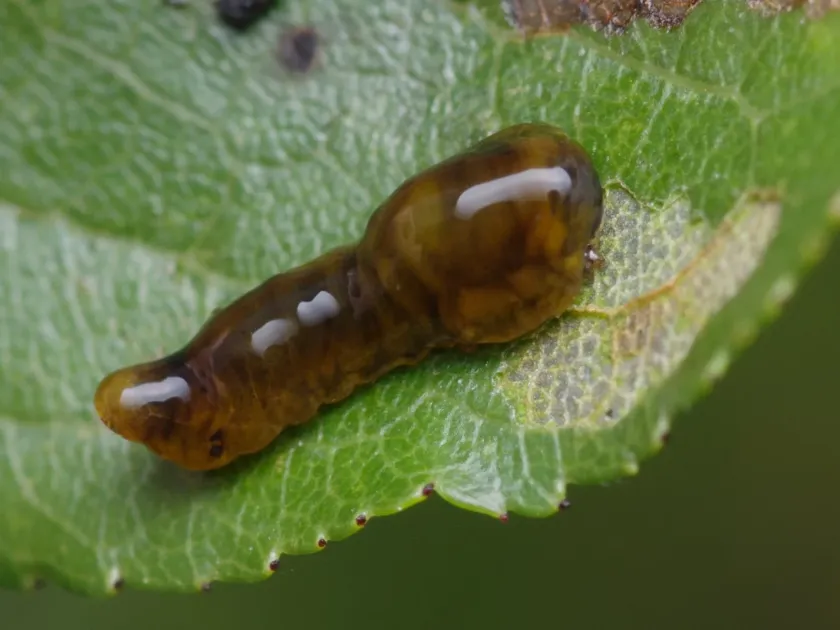
The larvae are commonly referred to as "slugs" due to their appearance; they are dark olive to black, covered in a slimy, moist secretion that protects them from predators.
The life cycle involves complete metamorphosis. They overwinter as larvae in cocoons within the soil, pupating in the spring when the soil temperature rises.
Adult females use a saw-like ovipositor to insert eggs into the leaf tissue. This process leaves small, distinct scars on the foliage that serve as entry points for pathogens.
Depending on the region, this pest can produce one or two generations per year, making repeated monitoring necessary throughout the growing season.
What it damages
The primary hosts of the Pear slug are stone fruits, including cherry, sweet cherry, plum, and apricot trees, which can suffer significant defoliation.
They also target pome fruits such as pear, quince, and occasionally apple, especially in orchards where pest control measures are neglected.
Larvae consume the leaf parenchyma between the veins, leaving the skeletonized leaf as a transparent, fragile lace that eventually turns brown and curls up.
Severe infestations weaken the trees, reducing their ability to photosynthesize and leading to poor fruit development and reduced winter hardiness.
In nurseries, young saplings are at the highest risk, as their limited leaf area can be destroyed rapidly, hindering growth and root development.
Signs of infestation
The most obvious sign of infestation is the presence of shiny, slug-like larvae feeding on the upper surface of the leaves during the summer months.
Affected leaves appear scorched or withered, eventually turning brown and falling prematurely, leaving branches bare before the natural autumn senescence.
Tiny brown blisters on the leaves are early indicators of egg-laying activity, showing where the female has deposited her eggs beneath the epidermis.
A noticeable glossy appearance on the leaves, caused by the slime trail and excrement left by the larvae, is a hallmark of an active infestation.
During a heavy attack, one might notice a distinct "skeletonized" pattern where only the main veins remain, which is visible even from a distance.
Control measures
Cultural control is effective; tilling the soil beneath the canopy disrupts the life cycle by exposing the pupae in the soil to birds and climatic elements.
For chemical control, contact or systemic insecticides applied when the first larvae appear are highly effective in managing population levels.
When using pesticides, always ensure they are registered for the specific crop and respect the pre-harvest interval to keep produce safe for consumption.
Biological control methods involve the use of environmentally friendly products, such as those containing Bacillus thuringiensis or spinosad-based formulations.
- Maintain tree vigor through proper irrigation and balanced fertilization.
- Monitor for early signs of damage to prevent mass outbreaks.
- Encourage beneficial insects, such as parasitic wasps that naturally suppress sawfly populations.
Content graph
Connections · Pear slug
Most often together:
Marketplace
Products · 9


Biology
Taxonomy
- Latin name
- Eriocampoides
- Order
- Hymenoptera
- Family
- Tenthredinidae
- EPPO code
- ERICSP
Community
Discussion
No discussions yet — be the first.