
Erebia butterflies
Erebia
Description
How to identify
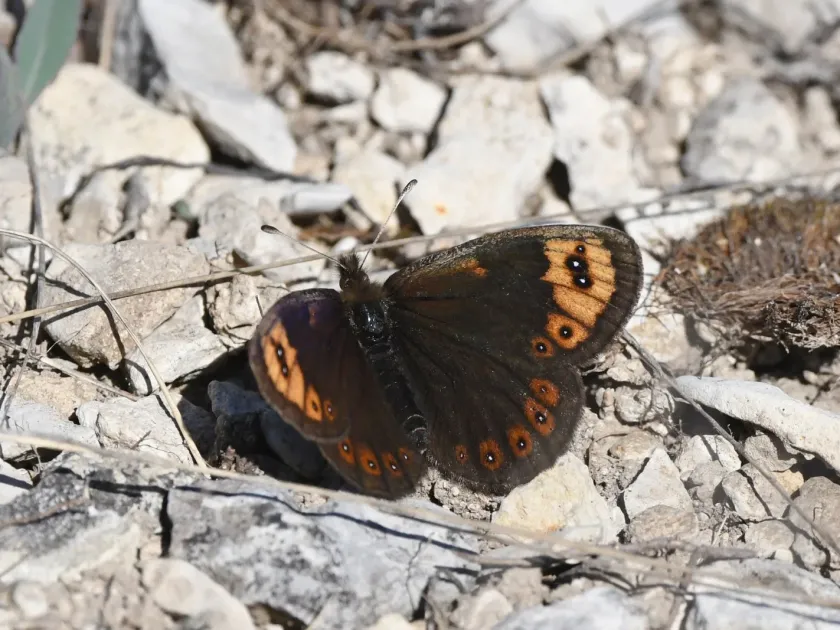
The genus Erebia belongs to the family Nymphalidae, commonly known as ringlets or alpines. These are medium-sized butterflies typically characterized by dark brown or black wings.
Their wings often feature a series of reddish-brown or ochre patches containing black eye-spots with white pupils, which is a key identification feature for the genus.
The larvae, or caterpillars, are generally greenish or yellowish-brown in color, providing excellent camouflage among the grasses on which they feed.
Their bodies are covered with fine setae (hairs), and the head capsule is usually darker than the rest of the body, distinguishing them from other grass-feeding larvae.
Pupae are typically found at the base of host plants or within plant debris, making them quite difficult to spot during routine field monitoring.
What it damages
The primary hosts for Erebia larvae are wild grasses and certain agricultural cereal crops, particularly in colder regions or high-altitude areas.
The damage is most significant in pastures, hayfields, and areas adjacent to natural meadows where these butterflies naturally occur in higher densities.
In agricultural settings, larvae can cause damage to grass mixtures, reducing the overall biomass yield and nutritional quality of the forage.
Caterpillars feed on the leaves, creating irregular notches along the margins, which weakens the plant and reduces its photosynthetic capacity.
While severe economic damage is relatively rare, localized outbreaks can occur, particularly during climate anomalies, necessitating careful monitoring.
When it appears
The life cycle of Erebia is strictly adapted to cool climates, with activity peaks determined by seasonal temperature fluctuations.
Adult flight periods generally occur during the summer months, typically ranging from June through August, depending on the latitude and altitude.
The life cycle can be quite long, as many species overwinter in the larval stage, resuming feeding activity as soon as temperatures rise in the spring.
The most intensive feeding phase for caterpillars occurs in the late spring and early summer, coinciding with the rapid growth of grasses.
Pupation takes place toward the end of summer, after which adults emerge, mate, and lay eggs to ensure the survival of the next generation.
Signs of infestation
The primary indication of an infestation is the presence of characteristic irregular "nibbling" marks along the edges of grass leaves.
Direct observation of larvae is best achieved during the early morning or evening hours when they are most active near the base of the stems.
A high density of adult butterflies observed in pastures or grain fields can serve as an early warning for potential larval infestations later in the season.
The presence of frass (larval excrement) at the base of the grass clumps is a strong indicator of active feeding by the caterpillars.
Significant yellowing or stunted growth of the grass foliage, when other diseases are ruled out, often points to the activity of lepidopteran pests.
Control measures
Integrated pest management for Erebia focuses on preventive agricultural practices that minimize the suitability of the environment for the pest.
- Regular mowing of field margins and road verges to eliminate alternative host plants and reduce the overall pest population.
- Deep autumn plowing to disturb and destroy pupae and overwintering larvae residing in the soil and surface plant residues.
- Strategic crop rotation to disrupt the availability of suitable host grasses for consecutive seasons.
- Deployment of biological control agents, such as entomopathogenic bacteria, when pest populations approach economic threshold levels.
- Targeted application of approved selective insecticides only as a last resort, ensuring minimal impact on beneficial pollinators and natural enemies.
Taxonomy
- Latin name
- Erebia
- Order
- Lepidoptera (butterflies)
- Family
- Nymphalidae
- EPPO code
- EREBSP
Discussion
No discussions yet — be the first.