
Autumnal moth
Epirrita autumnata
Description
How to identify
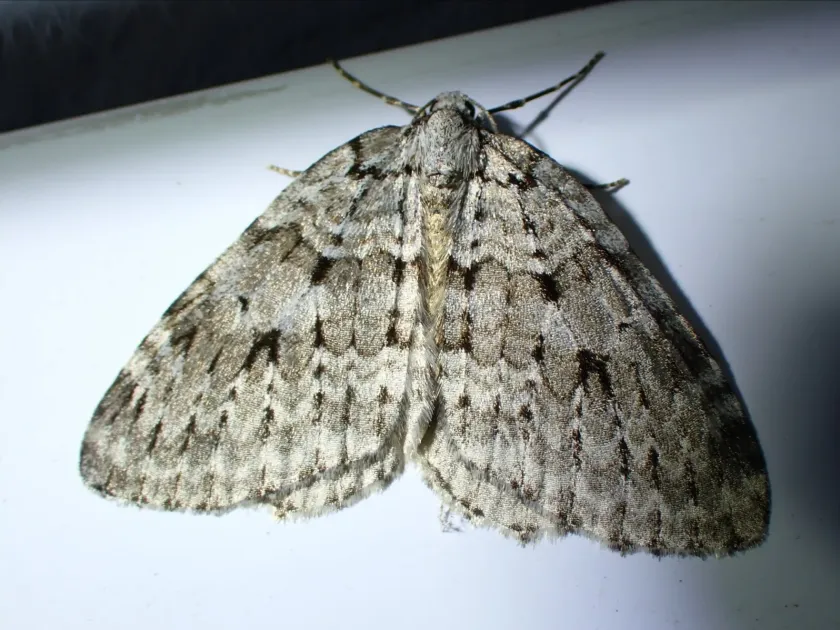
The autumnal moth (Epirrita autumnata) is a member of the Geometridae family within the order Lepidoptera. The adult moth is relatively small, with a wingspan of approximately 30–40 mm, featuring grayish-brown patterns on its wings that serve as excellent camouflage against tree bark.
Larvae, commonly known as loopers, reach lengths of up to 30 mm at maturity. Their bodies are typically bright green with fine pale stripes along the sides, allowing them to blend seamlessly with the foliage of their host trees.
The insect's life cycle is strictly regulated by the autumnal season. Adults emerge in the fall to mate and lay eggs, which are deposited in bark crevices or near buds, ensuring they remain protected throughout the cold winter months.
The name "geometer" or "looper" refers to their distinctive method of locomotion. They move by bringing their hind legs forward toward their front, creating a characteristic loop shape with their body, which is a key identifying behavior.
Monitoring the population of this species involves using light or pheromone traps during the fall flight period. This helps agronomists estimate potential infestation risks for the following spring, allowing for early intervention before larval feeding begins.
What it damages
This pest is highly polyphagous, targeting a wide range of deciduous trees and woody fruit crops. Common hosts include apples, pears, cherries, as well as forest trees like birch and alder, which often serve as primary breeding sites.
Larvae begin feeding early in the spring, focusing on swelling and bursting buds. By consuming the inner parts of the buds, they can prevent leaves and flowers from developing entirely, causing significant damage to the plant's potential yield.
As the larvae mature, they shift their attention to fully developed leaves. They are capable of skeletonizing the foliage, consuming the soft leaf tissue while leaving behind only the tough veins, which leads to rapid defoliation of the tree canopy.
Large-scale outbreaks can result in severe tree exhaustion. The loss of foliage reduces photosynthetic capacity, weakening the tree significantly, decreasing its cold hardiness, and potentially leading to the death of branches or young trees.
In commercial orchards, the economic damage caused by Epirrita autumnata is significant. Beyond direct yield losses, the stress caused by repeated defoliation makes the trees more susceptible to secondary pests and various plant diseases.
When it appears
The life cycle commences in the autumn, typically from September to November, when adult moths emerge, mate, and lay eggs. These eggs remain dormant in a diapausing state on the twigs and bark throughout the duration of winter.
Larval hatching occurs early in the spring, synchronized with the phenological stage of bud burst in host plants. This timing is critical, as it allows the larvae to immediately access the most nutritious plant tissues available at the start of the season.
The larval feeding stage lasts approximately 4 to 6 weeks. During this period, the caterpillars are most active and voracious, rapidly consuming new growth to store the energy required for their subsequent transformation.
Pupation takes place in the soil or under the layer of leaf litter beneath the tree canopy. The larvae create a small silk cocoon mixed with soil particles, providing them with a protective environment throughout the warm summer months.
This biological strategy ensures that the pupae are well-shielded from high summer temperatures and predators, allowing the cycle to complete successfully and leading to the emergence of the next generation of adults as autumn returns.
Signs of infestation
The first signs of infestation are damaged buds that fail to open correctly or show internal feeding scars. On foliage, you may notice small, irregular holes which gradually grow larger as the caterpillars develop and eat more leaf area.
The presence of silken webbing in the canopy is a clear indicator of larval activity. Caterpillars often leave trails of silk or use them to drop from branches when disturbed, which helps them disperse across different parts of the tree.
Frass, which appears as tiny, dark, granular droppings, is frequently found on the surface of leaves beneath active feeding sites. Observing these droppings is an easy way to detect the presence of the larvae hidden within the foliage.
In cases of severe infestation, the tree canopy may appear partially or completely skeletonized. The branches look stripped, giving the tree a burned or withered appearance, which is a stark warning that immediate action is necessary to protect the plant.
Visual inspection of the underside of leaves during the late spring often reveals the larvae resting or feeding. Their green coloration camouflages them well, so a thorough check is required to determine the level of population pressure.
Control measures
Agrotechnical methods are essential, including autumn or early spring soil cultivation around the tree trunk. This disrupts the pupae in the soil, effectively reducing the population before the moths can emerge or the larvae can hatch.
Applying sticky bands around the trunk in the fall acts as a physical barrier. Since females often crawl up the bark to lay eggs, these traps effectively prevent them from reaching the upper branches, significantly limiting the infestation.
Chemical control using systemic or contact insecticides is recommended when larval activity peaks. Applications should be timed to coincide with the bud burst phase to maximize efficacy and prevent early-season damage to the developing leaves.
Biological control methods, such as utilizing Bacillus thuringiensis-based products, provide an environmentally friendly alternative. These are highly effective against young larvae and minimize the impact on beneficial insects within the orchard.
In small gardens or for individual young trees, manual removal of caterpillars is a practical and effective strategy. Regular monitoring allows for early detection, often making chemical intervention unnecessary if the pest is managed in time.
Taxonomy
- Latin name
- Epirrita autumnata
- Order
- Lepidoptera (butterflies)
- Family
- Geometridae
- EPPO code
- EPRRAU
Discussion
No discussions yet — be the first.