
Hawfinches
Eophona
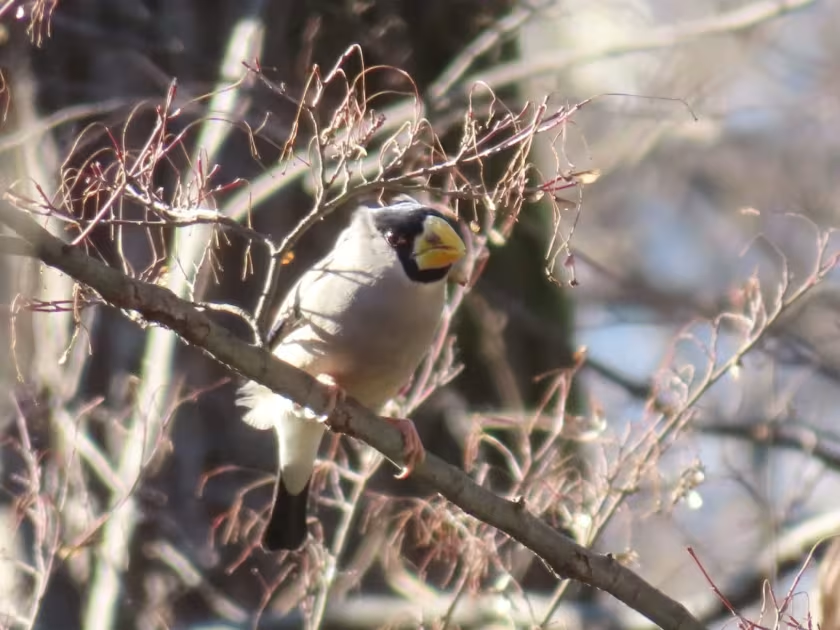
Description
How to identify
The hawfinch (Eophona genus) belongs to the Fringillidae family. They are robust, stocky birds characterized by a massive, conical beak designed for crushing tough seeds and fruit pits.
Their plumage is a mix of brown, black, white, and yellow tones, allowing them to blend into the canopy. Despite their beauty, they are notorious for their feeding habits in agricultural landscapes.
Systematically, they are part of the Passeriformes order. In agricultural settings, they are considered pests due to their physical strength, which allows them to bypass natural plant defenses.
They are shy and cautious birds, typically avoiding human interaction. However, they are highly persistent when they locate a reliable food source like an orchard full of developing fruits.
The defining feature of Eophona is their exceptional jaw force, which they use to crack open stone fruit pits that other birds cannot penetrate.
What it damages
Hawfinches cause significant economic damage by consuming floral buds during early spring and ripening fruits in summer. Stone fruits, including cherries, plums, and peaches, are their preferred targets.
By feeding on buds, they destroy the generative organs of the trees, leading to substantial yield losses before the flowering season even begins.
In summer, they puncture the flesh of mature fruits to extract the seed kernels. This ruins the marketable quality of the fruit and exposes the tree to secondary infections.
The mechanical damage caused by their beaks creates entry points for fungal pathogens and bacteria, which can lead to rapid fruit decay and branch diseases.
The overall impact depends on the size of the flock; in high-density areas, hawfinches can significantly deplete local harvests if left uncontrolled.
When it appears
The seasonal damage cycle starts in late winter and early spring when the birds focus on the protein-rich buds of fruit trees, crucial for their survival after winter.
The second peak occurs during the fruit ripening stage (mid-summer), as the birds move into orchards to exploit the available sugar and fat content in the pits.
The timing of their migration and foraging patterns is influenced by local food availability. Once they establish a foraging route, they tend to return repeatedly to the same trees.
They are most active during the early morning and late afternoon. During the heat of the day, they often retreat to deep shade, making them harder to monitor.
The duration of their visits often extends throughout the entire fruiting period, necessitating proactive protective measures throughout the season.
Signs of infestation
A primary indicator of hawfinch presence is the accumulation of shredded bud remnants at the base of trees in early spring. The buds appear neatly sliced or crushed.
Ripening fruits will show large, clean-cut punctures. Often, you will find piles of cracked stones or pits scattered beneath the trees, which is a clear diagnostic sign.
The sound of cracking pits is a distinct auditory cue. If you hear a loud, rhythmic snapping coming from the canopy, it is likely a flock of hawfinches feeding.
Damaged branches may show signs of mechanical stress or partial defoliation in specific areas where the birds have spent the most time feeding.
Observation of the flock behavior, such as their preference for the top canopy and their tendency to flee when disturbed, helps confirm their identity as the source of damage.
Control measures
Physical exclusion is the most reliable control method. Using bird-proof netting over individual trees or entire rows prevents birds from reaching the fruit safely and effectively.
Sonic bird deterrents, such as devices emitting raptor calls, can be effective if rotated frequently to prevent the birds from habituating to the sound.
Visual deterrents like reflective ribbons, holographic tape, or hawk decoys provide a short-term solution and are most effective when applied just before the fruit starts to ripen.
Maintaining a clean orchard floor by removing fallen fruit prevents attracting birds to the ground level, keeping them away from the immediate vicinity of the trees.
Integrated pest management (IPM) strategies, combining exclusion with deterrents, offer the best protection for commercial and private orchards against hawfinch damage.
Taxonomy
- Latin name
- Eophona
- Family
- Fringillidae
- EPPO code
- EOPHSP
Discussion
No discussions yet — be the first.