
Sorrel leaf miner moth
Enteucha acetosae
Description
How to identify
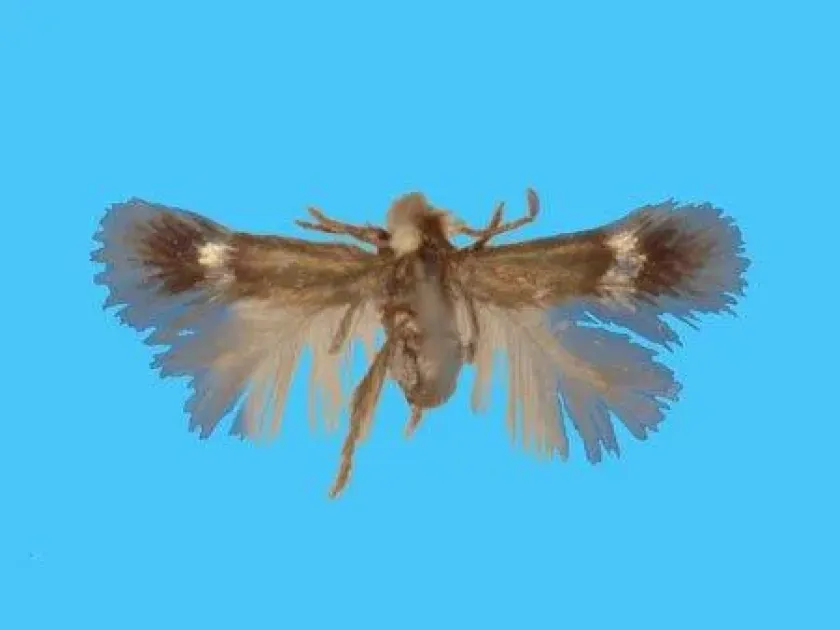
The sorrel leaf miner moth (Enteucha acetosae) is a minute insect belonging to the Nepticulidae family. These moths are exceptionally small, with an adult wingspan typically measuring under 5 millimeters, making them very difficult to observe in the field.
Adults possess dark, often metallic or bronzed wings with a fringe of long hairs along the edges, which is a classic trait of moths in this family. Due to their size and nocturnal habits, they often go unnoticed by gardeners until damage becomes visible.
The larvae are small, legless, and have a pale, creamy appearance. They spend their entire larval stage feeding inside the leaf tissue, creating specific galleries. This concealed lifestyle protects them from many predators and environmental conditions.
As members of the order Lepidoptera, they undergo a complete metamorphosis. They typically overwinter as pupae, either in the soil near the host plant or within the debris of fallen leaves, emerging as adults in the spring.
Understanding their developmental cycle is crucial for effective monitoring. Their specialization on Rumex species means that they thrive wherever sorrel is consistently available, whether in wild patches or commercial fields.
What it damages
The primary hosts for this pest are species of Rumex, commonly known as sorrel. The larvae feed specifically on the internal leaf tissue, known as the parenchyma, while leaving the upper and lower leaf surfaces intact.
The mining activity creates characteristic trails that ruin the appearance of the leaves. For commercial producers or home gardeners, this makes the sorrel leaves unacceptable for consumption, leading to significant yield losses.
As the larvae grow, the mines expand, often becoming white or pale green. This damage disrupts the plant's ability to perform photosynthesis efficiently, causing the plant to weaken and lose its vitality over time.
Heavy infestations can lead to premature leaf yellowing and necrosis. When the epidermis dries out, the affected areas of the leaf may wither, resulting in ragged edges and stunted growth of the entire plant.
Furthermore, the physical injury to the leaf structure creates entry points for secondary fungal and bacterial pathogens, which can cause rotting, further complicating the plant's health and reducing the overall quality of the harvest.
Signs of infestation
The most visible sign of infestation is the presence of winding, translucent trails on the leaves. These patterns are clear evidence of a leaf miner larva feeding beneath the leaf surface.
Close inspection of these mines often reveals small dark pellets, which are the frass or excrement left behind by the larva as it navigates through the leaf. The shape of these trails can be highly indicative of this specific species.
As the infection progresses, the leaves may show signs of deformation, such as twisting or curling. In bright light, the mines appear as distinct silvery or pale spots, which contrast sharply with the healthy green tissue of the leaf.
Gardeners may also notice that infected plants look less vigorous compared to healthy specimens in the same bed. In severe cases, the foliage may start to die back prematurely, particularly during dry or hot weather.
- Winding, narrow light-colored trails on leaves.
- Small dark dots of excrement within the mine channels.
- Twisting and curling of damaged leaf blades.
- Premature yellowing and drying of the foliage.
Control measures
Good agricultural practices are the first line of defense. Keeping the area free of wild Rumex weeds is essential, as these plants act as a secondary reservoir for the moth population when cultivated crops are absent.
Sanitation is equally important: after harvesting or at the end of the season, all plant debris must be removed and destroyed to minimize the number of overwintering pupae in the soil.
Tilling the soil around the plants after the growing season can disturb the pupae, exposing them to environmental elements and natural predators, which significantly reduces the survival rate of the next generation.
For chemical-free control, biological preparations such as Bacillus thuringiensis or other insect-pathogenic microbes can be effective. These are safer for greens that are intended for direct human consumption.
If pesticides are absolutely necessary, they should be applied with extreme caution. Given that sorrel is a fast-growing leafy vegetable, one must strictly observe the pre-harvest interval to prevent chemical residues in the food.
Taxonomy
- Latin name
- Enteucha acetosae
- Order
- Lepidoptera (butterflies)
- Family
- Nepticulidae
- EPPO code
- NEPTAE
Discussion
No discussions yet — be the first.