
Linden looper
Ennomos subsignaria
Description
How to identify
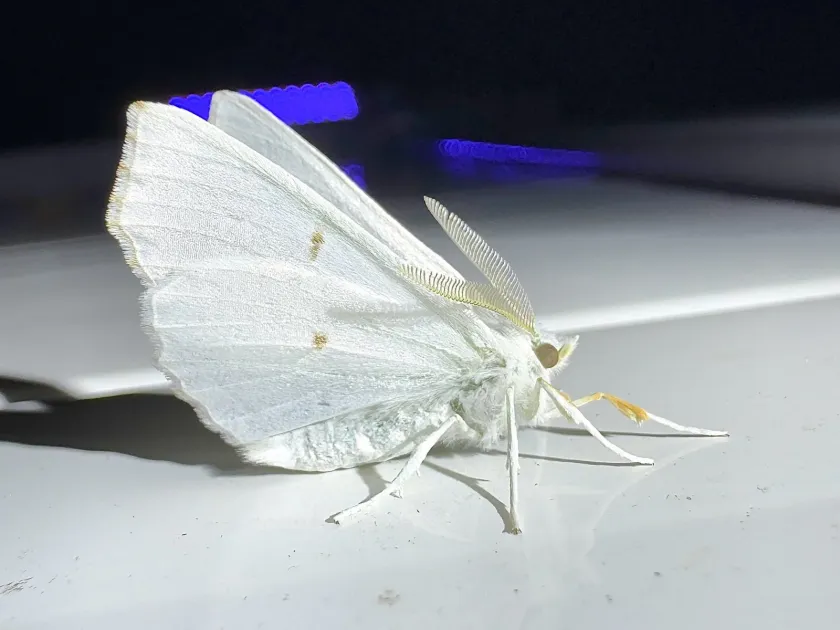
The linden looper (Ennomos subsignaria) belongs to the order Lepidoptera and the family Geometridae. The adult is a moth with a wingspan of 40–50 mm, characterized by its solid white coloration.
The larvae of this species show significant color variation, ranging from brown and reddish-tan to almost black. The body is cylindrical, covered with sparse hairs, and features distinct bumps on the rear end.
The eggs are oval, slightly flattened, and laid by females in dense, mosaic-like clusters on the bark of branches or tree trunks of host plants.
The life cycle consists of one generation per year. The overwintering stage is the egg, which is protected in bark crevices, allowing the pest to survive harsh winter temperatures.
The pupa is dark brown and contained within a loose cocoon made of silky threads, which often binds leaves together or is situated in bark cracks.
What it damages
This pest is a polyphage but shows a strong preference for deciduous trees. Common host plants include linden, oak, maple, birch, elm, and various fruit trees in gardens.
The caterpillars are voracious feeders; during mass outbreaks, they can completely strip the leaf blades, leaving only the veins and causing significant tree defoliation.
Young saplings and forest plantations are particularly vulnerable, as repeated defoliation over several seasons weakens the trees' immune systems and makes them susceptible to secondary pests.
In orchards, the linden looper can attack apple and pear trees, reducing photosynthetic capacity, which negatively impacts flower bud development and overall fruit yield.
Damage is usually patchy, but under favorable climatic conditions, populations can reach critical levels, resulting in widespread canopy stripping across large forest areas.
When it appears
Adult moths are typically observed in mid-summer, usually during June or July. During this period, the insects mate and lay eggs for the next season.
Caterpillar emergence occurs in early spring, synchronized with the budburst of deciduous trees. This stage is the most critical for implementing protective measures.
The feeding period of the larvae lasts about 4–6 weeks. During this time, they are highly active and cause the majority of the damage to the foliage through several larval instars.
Pupation typically begins in the second half of June, when larvae reach their maximum size and cease active feeding, seeking a location for their transformation.
The biological activity of this species is strictly linked to the phenological development of host trees, ensuring that larval emergence coincides with the availability of food sources.
Signs of infestation
The first sign of infestation is the appearance of small holes in the leaves, which rapidly expand as the caterpillars grow, eventually leading to the skeletonization of the canopy.
The pest can be detected by the presence of frass (excrement) on lower foliage or on the ground beneath the affected trees, which often serves as an early warning for agronomists.
A characteristic sign of an established colony is the presence of loose silken webs between leaves, where caterpillars rest or pupate.
During the period of peak moth activity, adults can be spotted at night as they are strongly attracted to artificial light sources, gathering around streetlamps and garden lights.
- Presence of damaged leaves with chewed edges.
- Visible caterpillars on the undersides of leaves.
- Large accumulations of frass beneath the tree.
- Canopy thinning during the active growing season.
Control measures
Chemical control involves the application of stomach-contact insecticides, such as pyrethroids or organophosphates, specifically applied during the early stages of larval emergence.
Biological control is highly effective using products based on Bacillus thuringiensis, which selectively targets lepidopteran larvae without harming beneficial non-target insects.
Agronomic measures include regular inspections of plantations for egg masses during the autumn and winter months, followed by mechanical removal if high density is detected.
Encouraging natural predators, such as insectivorous birds and predatory insects (like ground beetles or parasitic wasps), helps maintain population levels below the economic threshold.
In large-scale nursery operations, pheromone traps are useful for monitoring adult moth populations and making informed decisions regarding the timing of insecticide applications.
Taxonomy
- Latin name
- Ennomos subsignaria
- Order
- Lepidoptera (butterflies)
- Family
- Geometridae
- EPPO code
- ENNOSU
Discussion
No discussions yet — be the first.