
Notch-wing
Ennomos magnaria
Description
How to identify
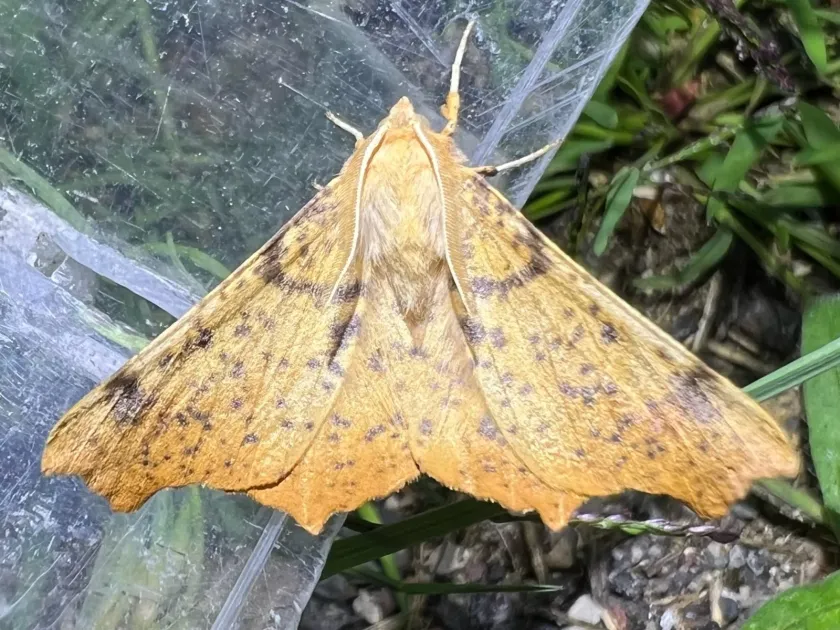
The adult moth, Ennomos magnaria, is characterized by a wingspan of 40–50 mm. The wings feature a distinct angular shape and ochreous-brown coloration, which mimics dry, decaying leaves perfectly.
The larvae are typical inchworms, exhibiting the characteristic looping movement common to the Geometridae family. They possess a textured skin that serves as effective camouflage against tree bark.
This species belongs to the order Lepidoptera, family Geometridae. Its biological classification reflects its specialized adaptation to feeding on deciduous trees in temperate zones.
Distinguishing features of the larvae include specific tubercular projections and coloration patterns that vary slightly across different instars. Pupae are often found attached to leaves or twigs by silk.
The lifecycle consists of four distinct stages: egg, larva, pupa, and adult. Monitoring for these stages is essential for timing intervention strategies effectively throughout the growing season.
What it damages
The primary hosts for this pest are maple and linden trees. The larvae are voracious defoliators, causing significant damage during their peak feeding activity in late spring.
Larval feeding results in skeletonized leaves and irregular holes in the canopy. In severe infestation scenarios, trees may become completely defoliated, impacting their health and vitality.
Heavy defoliation induces stress, making the trees more susceptible to secondary infections and infestations by wood-boring insects. This can significantly reduce the tree's growth rate.
Nursery saplings are particularly vulnerable to larval damage. Repeated defoliation can kill young trees or cause terminal shoot death, leading to distorted growth patterns.
The economic impact is most pronounced in urban forestry and parks, where aesthetic value is damaged and the health of mature linden and maple specimens is compromised.
When it appears
Development is tightly synchronized with the phenology of the host trees. Eggs overwinter on bark and hatch in spring, coincident with bud break on the host plants.
Larval development proceeds through several instars during late spring and early summer. This is the period when most feeding damage occurs and active management is required.
Adult moths usually emerge mid-to-late summer, depending on the latitude and local climate conditions. Mating and egg-laying occur shortly thereafter.
Monitoring programs often use light traps to track moth flight activity, providing data necessary to predict when the next generation of larvae will likely emerge.
Environmental factors like extreme spring heat or late frost can disrupt the synchronization between larvae hatching and host foliage availability, naturally suppressing the population.
Control measures
Integrated Pest Management (IPM) is the recommended approach. Biological control agents, such as Bacillus thuringiensis, are effective and safe for use in residential and public areas.
Chemical control using systemic insecticides is necessary when infestation levels exceed economic thresholds, particularly in commercial nurseries or high-value landscapes.
Cultural practices, such as maintaining healthy tree vigor through proper irrigation and pruning, can help trees withstand limited defoliation without suffering permanent damage.
Encouraging beneficial predator populations, such as parasitic wasps and birds, is a sustainable way to maintain low population levels of the moth in large woodlots.
- Light traps for population monitoring.
- Targeted application of biological insecticides during early instars.
- Sanitation pruning to remove heavily infested branches.
- Fostering natural enemies in the habitat.
Taxonomy
- Latin name
- Ennomos magnaria
- Order
- Lepidoptera (butterflies)
- Family
- Geometridae
- EPPO code
- ENNOMA
Discussion
No discussions yet — be the first.