
Autumn thorn
Ennomos autumnaria
Description
How to identify
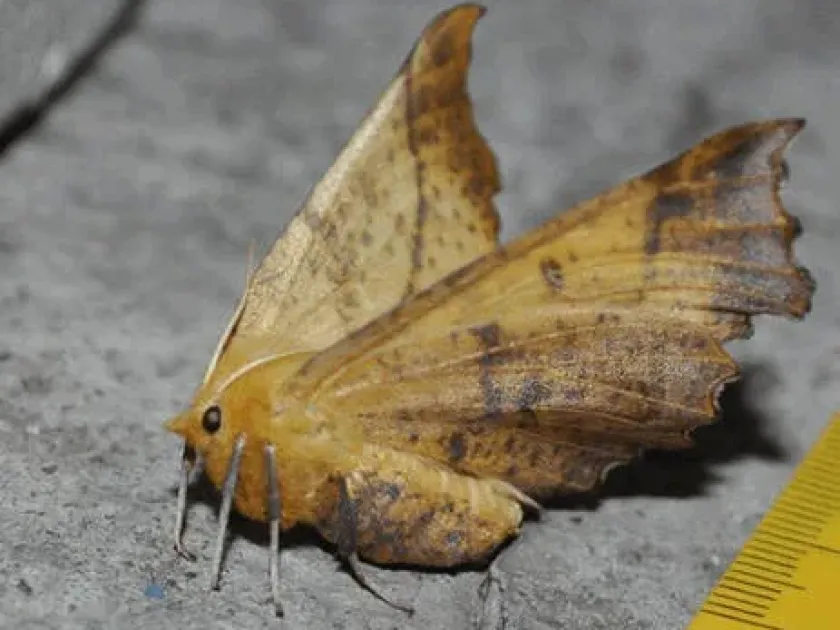
The autumn thorn (Ennomos autumnaria) is a large moth belonging to the Geometridae family, order Lepidoptera. The adult moth features a wingspan of 40–55 mm, with colors ranging from pale yellow to brown, often adorned with dark, angular spots that mimic withered leaves.
The caterpillars of this species are masters of camouflage. In their resting position, they extend their bodies stiffly, resembling small, dry twigs. Their skin is textured and colored in shades of green or brown, blending perfectly with the bark or stems of their host plants.
Eggs are typically laid in small, orderly clusters on the bark of host trees. This overwintering strategy allows the species to survive low temperatures until the following spring, ensuring the continuity of the life cycle.
Taxonomically, it is classified under the Ennominae subfamily. As a holometabolous insect, it undergoes complete metamorphosis, passing through the stages of egg, larva (caterpillar), pupa, and adult (imago), each with specific environmental requirements.
Adult moths are primarily nocturnal. They are highly attracted to artificial light sources, which is a key behavioral trait used by agronomists and researchers to monitor local population densities in orchards and forest areas.
What it damages
This pest is a generalist feeder (polyphagous), meaning it can thrive on a wide variety of deciduous trees and shrubs. In commercial orchards, it is known to cause significant damage to apple, pear, plum, and cherry trees.
Beyond cultivated fruit trees, the larvae often feed on broad-leaved forest species, including birch, lime, oak, and maple. This adaptability makes them a persistent threat to both private gardens and large-scale plantations.
The primary damage is caused by caterpillars consuming young leaves and buds during the spring and early summer. When infestations occur, the caterpillars can strip a tree of its foliage, leading to severe defoliation.
Defoliation reduces the tree's ability to photosynthesize, which in turn weakens the plant. This loss of vitality directly impacts fruit development, leading to smaller yields and reduced fruit quality during the harvest season.
Stressed trees are significantly more susceptible to secondary pathogens, including fungal diseases and wood-boring insects, which can further jeopardize the overall health and lifespan of the orchard trees.
When it appears
The life cycle of the autumn thorn is strictly synchronized with the phenology of its host plants. Overwintering occurs at the egg stage, which remains dormant through the winter months, only hatching when spring temperatures become consistently favorable.
Larval emergence coincides with the bud break and early leaf development of trees. This precise timing ensures that the hungry caterpillars have immediate access to nutrient-rich, succulent vegetation.
Caterpillars remain active feeders throughout the spring and early summer months. After completing their growth phase, they move to the pupal stage, often finding shelter within folded leaves or deep crevices in the tree bark.
The pupal stage is relatively short, typically lasting a few weeks before the emergence of the next generation of adults. Moths emerge in late summer and continue flying through the autumn, hence their common name.
The autumn season serves as the mating and egg-laying period. Females deposit their eggs on the branches, where they will remain protected throughout the cold season until the next spring cycle begins.
Signs of infestation
The most noticeable sign of an infestation is the presence of ragged or skeletonized leaves in the tree canopy. Caterpillars often leave only the major veins behind, giving the foliage an intricate, web-like appearance.
Due to their exceptional mimicry, caterpillars are rarely seen by casual observers. They are usually discovered during detailed inspections of branches or when performing seasonal pruning in the orchard.
The accumulation of frass (caterpillar droppings) on lower leaves or on the ground beneath the canopy is a strong indicator of an active population inhabiting the upper branches of the tree.
At night, adult moths can be detected near outdoor lighting or by using specialized light traps. These devices serve as an effective diagnostic tool to determine if the population exceeds the economic injury level.
- "Skeletonized" foliage with major veins remaining;
- Accumulation of small, dark granular frass on leaves;
- Caterpillars resembling dry twigs found on stems;
- Increased moth activity near lights during autumn evenings.
Control measures
Cultural control includes maintaining orchard hygiene, such as scraping away dead or loose bark from tree trunks where the moths may hide or where eggs might be clustered during the off-season.
Biological control methods involve fostering populations of insectivorous birds, such as titmice and flycatchers, which are effective predators of larvae and help maintain natural balance in the garden.
For chemical-free management, biological pesticides based on *Bacillus thuringiensis* are highly effective against younger larval stages while remaining safe for beneficial insects and the environment.
In cases of severe infestation, synthetic insecticides (such as pyrethroids) may be necessary. Applications should be timed carefully based on monitoring data to ensure maximum efficacy while minimizing collateral damage.
Proper orchard management, including adequate fertilization and irrigation, increases the tree's natural resilience. Healthy trees are significantly better equipped to withstand and recover from limited caterpillar feeding.
Taxonomy
- Latin name
- Ennomos autumnaria
- Order
- Lepidoptera (butterflies)
- Family
- Geometridae
- EPPO code
- ENNOAU
Discussion
No discussions yet — be the first.