
Canary-shouldered thorn
Ennomos alniaria
Description
How to identify
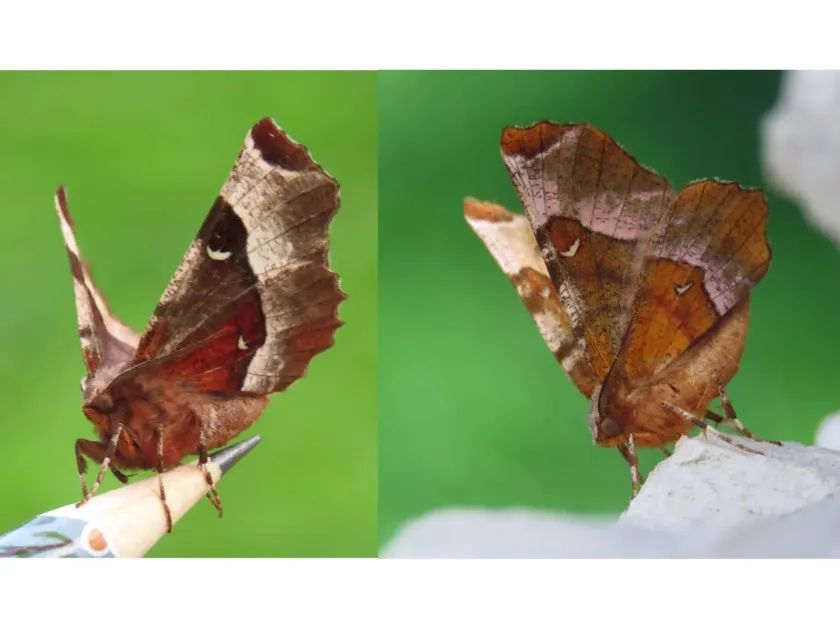
The Canary-shouldered thorn, scientifically known as Ennomos alniaria, is a moth species belonging to the family Geometridae. The adult moth has a wingspan ranging from 35 to 45 mm, with ochreous-yellow to brown wings characterized by dark transverse lines.
The moth's name comes from the distinct yellow tufts at the base of its antennae and its wing shape, which mimics a withered leaf to provide excellent camouflage when resting among foliage.
The larvae are classic inchworms, reaching lengths of up to 50 mm. They exhibit exceptional protective coloration, resembling small twigs or stems of their host plants, which makes them very difficult to spot for casual observers.
The pupae are dark brown, smooth, and typically found enclosed within leaves that have been folded and fastened together with silk threads. This stage is designed to endure predation during the transition period.
Eggs are laid in clusters on the bark of host trees. They are highly resilient, allowing the species to successfully overwinter even in harsh temperate climates, ensuring the population's survival year after year.
What it damages
The primary hosts for the Canary-shouldered thorn larvae are various broadleaf trees, including alder, birch, linden, and willow species. These plants provide the necessary nutrients for the moth's development.
Larvae feed on leaves, consuming them from the edges inward. In cases of severe infestations, the moth can cause significant defoliation, which hampers the tree's ability to undergo photosynthesis effectively.
Regular defoliation stress weakens the trees, making them more susceptible to drought, extreme temperature fluctuations, and secondary infections by fungi or boring insects. This is particularly concerning for young or newly planted saplings.
In forestry and arboriculture, heavy infestation levels reduce the aesthetic value of parks and the growth rate of timber-producing forests. Although mature trees rarely die from a single infestation, chronic damage is detrimental.
Beyond leaf consumption, the feeding activity can sometimes damage developing buds, affecting the tree's ability to produce new growth and potentially disrupting the seasonal cycle of the plant.
When it appears
This species is univoltine, meaning it completes one life cycle per year. Adult moths emerge in late summer and early autumn, with the most intense activity observed from August to September.
The winter is passed in the egg stage, which remains dormant on the branches of the host trees until the onset of spring. This strategy effectively bypasses the lack of food and harsh winter conditions.
Larvae emerge in the spring, synchronized with the budding and leafing of their host trees. They feed actively throughout the spring and early summer months as they grow and prepare for pupation.
Pupation typically occurs during June or July. The pupal stage lasts several weeks, allowing the insect to transform into its adult form, ready to start the cycle again as the warm season wanes.
Climate factors such as temperature shifts in early spring can influence the timing of larval emergence, which occasionally leads to asynchronous development with the host plant's growth.
Signs of infestation
The first signs of infestation are ragged leaf edges, where larvae have been feeding. In high-density populations, this damage becomes visible as thinning of the canopy and exposed branches.
To detect larvae, one must look closely at branches, especially in the early morning or evening when they might be actively grazing. Their twig-like posture is a key identifier when inspecting the canopy.
An accumulation of larval droppings, known as frass, on the ground beneath the canopy is a clear indicator of feeding activity occurring in the upper branches, where larvae are otherwise hard to spot.
Folded leaves held together by fine silk webbing are typical indicators of pupation sites. These can be found during standard inspections of tree health, often on the lower or more accessible branches.
The presence of adult moths, which are attracted to artificial light sources at night during the late summer, signals that a local population is active and likely breeding nearby.
Control measures
For controlling infestations in residential and park areas, biological pesticides such as those based on Bacillus thuringiensis are highly recommended as they target larvae while sparing beneficial insects.
In forestry settings with high infestation pressure, registered insecticides might be used if necessary, provided that the application is timed carefully to target the early larval stages when they are most vulnerable.
Preventive silvicultural practices, such as maintaining healthy tree diversity and pruning dead branches, help reduce the available habitat for egg-laying and keep the overall population density in check.
Encouraging natural predators, particularly insectivorous birds and predatory beetles, plays a vital role in integrated pest management. Birdhouses and diverse landscaping support these natural biological control agents.
Regular monitoring using light traps during the adult flight season helps professionals assess the potential risk for the following year and schedule appropriate interventions if the threshold is reached.
Taxonomy
- Latin name
- Ennomos alniaria
- Order
- Lepidoptera (butterflies)
- Family
- Geometridae
- EPPO code
- ENNOAL
Discussion
No discussions yet — be the first.