
Ennomos moth
Ennomos
Description
How to identify
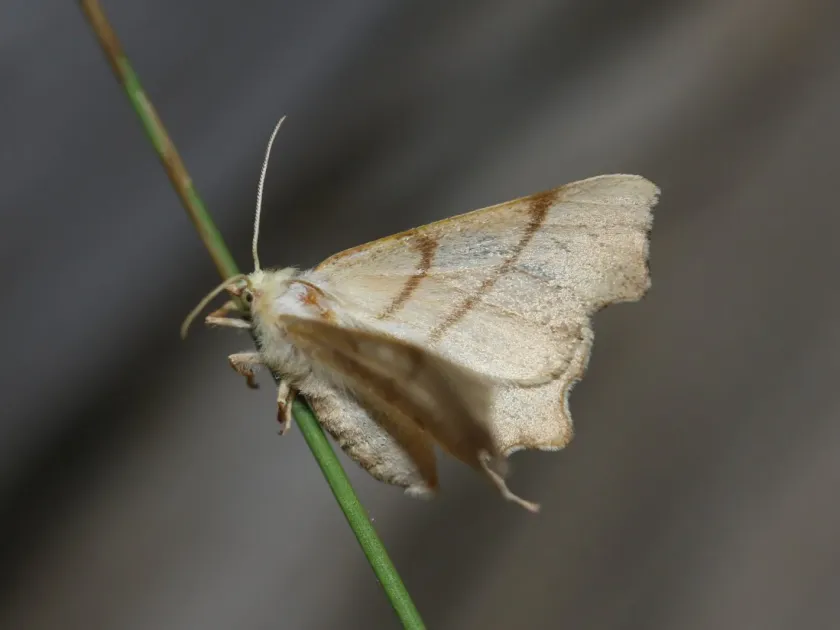
The Ennomos moth belongs to the Geometridae family, commonly known as geometrid moths. These are nocturnal insects with a wingspan that typically ranges between 30 and 50 millimeters.
The wings are distinctively jagged or scalloped at the edges. When resting, the moth holds its wings flat against a surface, camouflaging itself as a dry leaf, which is its primary defense against predators.
The larvae, known as loopers or inchworms, have a reduced number of prolegs. This unique anatomy forces them to move by arching their bodies into a loop, which is a signature behavior for this family.
Caterpillars often exhibit cryptic coloration, mimicking small twigs or leaf stalks. Their skin texture can range from smooth to slightly tuberculate, enhancing their visual camouflage on host plants.
Pupation occurs within a loose silk cocoon, often hidden among leaves or sheltered in bark crevices. The pupa remains in this state until it is ready to emerge as an adult later in the season.
What it damages
Ennomos species are polyphagous, meaning they feed on a wide variety of host plants. In agriculture, they primarily target fruit-bearing trees such as apples, pears, plums, and cherries.
Beyond fruit trees, they are frequently found on deciduous forest trees, including birch, oak, lime, and willow. High populations can cause extensive defoliation across woodlands and orchards.
The larvae are voracious feeders. Early instars typically skeletonize leaves by consuming the soft tissue, while older larvae consume entire leaf blades, leaving only the midribs and veins behind.
Severe infestations lead to massive leaf loss, which stresses the tree significantly. This reduction in photosynthetic area prevents the tree from storing energy, leading to lower yields and poor fruit quality.
Spring feeding on buds and young shoots is particularly destructive. It disrupts the tree's development and can cause stunted growth or the dieback of terminal branches.
When it appears
Adult moths are typically active in late summer and early autumn, with flight periods generally spanning from August to October. During this time, mating and egg-laying occur.
The species overwinter primarily in the egg stage. Eggs are laid in clusters directly on the bark of twigs, branches, or near buds, where they remain dormant throughout the winter months.
Larval emergence coincides with the budding of host trees in the spring. This timing ensures that young caterpillars have immediate access to the most nutritious food sources as they hatch.
The larval feeding stage lasts for several weeks throughout late spring and early summer. By mid-summer, most larvae have reached maturity and are ready to pupate.
Ennomos moths typically have one generation per year (univoltine). Tracking the phenology of local fruit trees helps in identifying the optimal timing for monitoring and control.
Signs of infestation
The most reliable sign of an Ennomos infestation is the presence of inchworms moving on branches. They often freeze in place when disturbed, looking exactly like wooden twigs.
Look for skeletonized or missing leaves in the upper canopy. Uneven leaf development and tattered leaf edges are common indicators of larval activity in the area.
At night, adult moths are highly attracted to porch lights or other artificial illumination. This behavior can be used as an early warning system to monitor the presence of the pest.
Dark fecal pellets (frass) accumulating on lower leaves or on the ground beneath the canopy are a clear sign of intense feeding activity occurring above.
- Holes in newly opening buds.
- Silk threads connecting two or more leaves together.
- Visible larvae when shaking tree branches.
- Sparse canopy appearance due to localized defoliation.
Control measures
Manual removal of egg clusters from twigs during the dormant winter season is a highly effective, non-chemical way to reduce the population before it hatches in spring.
Installing sticky bands around tree trunks can help catch larvae migrating between branches. These bands should be checked and cleared regularly to ensure they remain effective.
Biological control using Bacillus thuringiensis (Bt) is recommended for its target-specific action. It effectively kills the caterpillars without harming beneficial insects or pollinators in the garden.
Chemical intervention should be reserved for outbreaks that exceed the economic threshold. Insecticides with contact or systemic action should be applied early in the season while larvae are small.
Promoting natural biodiversity by installing birdhouses or providing habitats for predatory wasps can provide long-term suppression of Ennomos moth populations through natural predation.
Taxonomy
- Latin name
- Ennomos
- Order
- Lepidoptera (butterflies)
- Family
- Geometridae
- EPPO code
- ENNOSP
Discussion
No discussions yet — be the first.