
Common reed bunting
Emberiza schoeniclus
Description
How to identify
The common reed bunting (Emberiza schoeniclus) is a small passerine bird belonging to the bunting family (Emberizidae) that typically inhabits wetland environments.
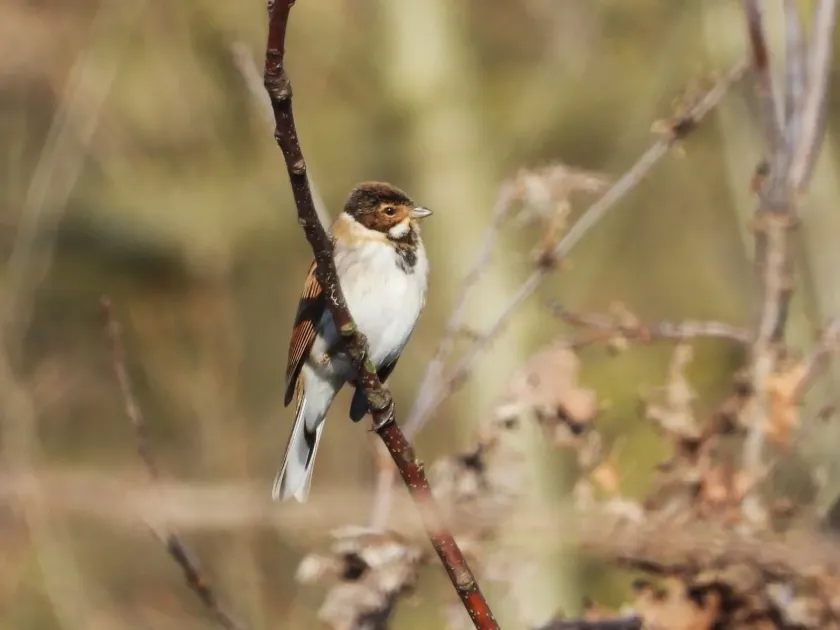
The adult male is easily identified during the breeding season by its striking black head and throat, white moustachial stripes, and a white collar.
Females and young birds display a more cryptic, brown-streaked plumage, which helps them blend into their surroundings such as reed beds and dense vegetation.
While primarily a wetland species, they frequently venture into agricultural land adjacent to their habitat to forage for seeds during the summer months.
Their distinct morphology makes it relatively easy for farmers and agronomists to identify their presence in areas near water sources or riparian strips.
What it damages
The common reed bunting primarily affects cereal crops, including oats, millet, and wheat, particularly during the milk and dough stages of grain development.
These birds feed on the developing kernels within the ears or panicles, which can lead to direct yield loss at the field margins.
Beyond seed consumption, the birds may cause mechanical damage to the stems, potentially leading to lodging and complicating the harvest process.
Crops located in low-lying areas or near marshy lands are the most susceptible to damage due to their proximity to the birds' natural nesting grounds.
The damage caused by these birds can also leave the crop more vulnerable to moisture-related fungal diseases as the husk is breached during feeding.
When it appears
The highest level of bird activity in fields is observed during the mid-to-late summer period, when cereals are reaching full grain maturation.
Damage intensity peaks following the fledging of young birds, as adult individuals and their offspring search for accessible food sources to sustain their energy needs.
As autumn approaches, reed buntings may form small feeding flocks, significantly increasing the risk of localized crop depletion along the field edges.
In spring, these birds pose virtually no threat to agricultural production, as their diet focuses primarily on insects and dormant weed seeds.
After the harvest season is concluded, the threat to the agricultural ecosystem is eliminated until the cycle repeats in the following year.
Signs of infestation
A primary indicator of bird activity is the presence of partially eaten or empty grain heads along the periphery of fields bordering water bodies.
Droppings found on the ground within the foraging zone are a reliable sign of sustained bird activity in the specific area of the crop.
Early morning observations frequently reveal the birds' presence, as they are most actively feeding during the cooler parts of the day.
Broken or bent stems, often with visible scratches or pecking marks, signify that the crop is being used as a foraging platform.
The behavior of the birds, which retreat quickly into nearby reed beds or tall vegetation when disturbed, is a clear sign of their proximity to the field.
Control measures
Since the common reed bunting is not a major agricultural pest, preventative and non-lethal deterrent methods are strongly recommended over extermination.
The installation of visual deterrents, such as reflective tape, holographic scare tape, or shiny objects around the field perimeter, is effective.
Bio-acoustic deterrents that broadcast the distress calls of predatory birds can effectively drive the flocks away from the vulnerable crop areas.
Maintaining clean field borders by periodically mowing weeds and clearing excessive vegetation reduces the attractiveness of the area for bird nesting.
Prioritizing the harvest of field edges that are adjacent to wetlands can minimize the window of opportunity for birds to damage the crop.
Taxonomy
- Latin name
- Emberiza schoeniclus
- Family
- Emberizidae
- EPPO code
- EMBRSH
Discussion
No discussions yet — be the first.