
Common Heath
Ectropis crepuscularia
Description
How to identify
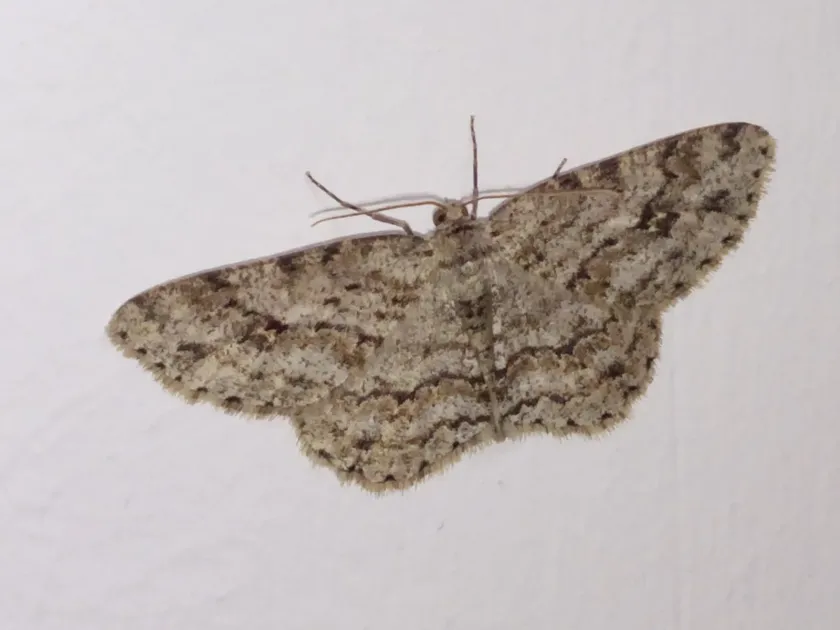
The Common Heath (Ectropis crepuscularia) is a moth species belonging to the Geometridae family, order Lepidoptera. Adult moths typically have a wingspan ranging from 35 to 45 mm, with coloration varying from brownish-grey to dark grey, allowing them to blend perfectly with tree bark.
The larvae, known as loopers, exhibit the characteristic inching movement of the Geometridae family. They possess a camouflaging body that often matches the foliage or stems they feed on, making them notoriously difficult to spot in the wild.
Pupae of this species are reddish-brown and are generally found within the soil or the leaf litter beneath the host tree. This life stage is well-adapted for overwintering, protecting the insect from harsh environmental conditions.
Adult moths are primarily nocturnal, remaining motionless on tree trunks during the day to avoid avian predators. Their resting posture, with wings flattened against the surface, serves as a vital survival strategy.
Entomologists and foresters utilize light traps to accurately identify populations and monitor the start of the flight period, which is essential for timing any necessary control interventions in forest management.
What it damages
This pest is a polyphagous species, meaning it can feed on a wide variety of woody plants. Its dietary range includes both coniferous and deciduous trees, posing a threat to diverse ecosystems and plantation forestry.
Conifers, such as fir, spruce, pine, and larch, are particularly susceptible to defoliation by these larvae. In forestry, heavy infestations can significantly weaken trees, leading to reduced growth rates and lower timber quality.
Deciduous trees like birch, alder, oak, and willow are also frequent hosts. When these moths infest ornamental gardens or fruit orchards, they can cause significant stress to the plants, reducing vigor and aesthetic value.
Late-instar larvae are particularly voracious, consuming large amounts of foliage. Significant defoliation disrupts the tree's photosynthesis, leading to an overall decline in plant health and vitality.
Infested trees often become highly susceptible to secondary pests, such as bark beetles or wood-boring insects, which exploit the weakened state of the host, frequently leading to tree mortality.
When it appears
The flight period for adult Common Heath moths typically occurs in the spring and early summer, usually around May and June, depending on local climate conditions and regional temperature patterns.
Following mating, females lay eggs in crevices of the bark or on the needles and leaves of host plants. The eggs are typically laid in small clusters, ensuring the larvae have immediate access to food upon hatching.
Larval development takes place throughout the summer months. The caterpillars feed actively, growing through several instars before eventually dropping to the ground to pupate in the soil.
The insect overwinters in the pupal stage. This biological adaptation allows the Common Heath to survive freezing temperatures, as the soil provides a stable and protective environment during the winter season.
In warmer climates, it is possible for the species to complete two generations in a single year, which significantly increases the potential for rapid population growth and more severe outbreaks in the ecosystem.
Signs of infestation
One of the earliest signs of infestation is the presence of skeletonized needles or leaves. The larvae initially feed on the edges of the foliage, leaving behind only the midribs, which creates a jagged, damaged appearance.
Frass (larval droppings) appearing as small, dark pellets beneath the tree canopy is a strong indicator of an active infestation. High volumes of frass typically correlate with a high concentration of larvae in the upper branches.
During mass outbreaks, a faint, rustling sound may be heard, caused by the collective feeding of large numbers of caterpillars. This sound is often compared to a light rainfall hitting the leaves.
Inspection with a flashlight at night can reveal the larvae on the branches. They may also be found hanging from silk threads if disturbed, a common behavior when the population density is high.
Visible thinning of the canopy is a critical sign of significant defoliation. As the tree loses its foliage, it becomes visibly sparse, and the needles may yellow and drop prematurely, indicating serious physiological stress.
Control measures
Managing the Common Heath requires an integrated pest management (IPM) approach, utilizing a combination of mechanical, biological, and chemical methods to effectively control populations while minimizing environmental impact.
- Encouraging the presence of natural predators, such as birds and parasitic wasps, which act as biological control agents.
- Applying microbial insecticides containing Bacillus thuringiensis, which target larvae specifically while sparing beneficial insects.
- Implementing chemical control via systemic insecticides during the peak larval stage if tree health is severely threatened.
- Cultivating the soil around the base of trees in autumn to expose and destroy overwintering pupae.
- Using light traps to monitor adult flight patterns and reduce the population of egg-laying females during the spring.
Taxonomy
- Latin name
- Ectropis crepuscularia
- Order
- Lepidoptera (butterflies)
- Family
- Geometridae
- EPPO code
- BOARBI
Discussion
No discussions yet — be the first.