
Tea looper
Ectropis bhurmitra
Description
How to identify
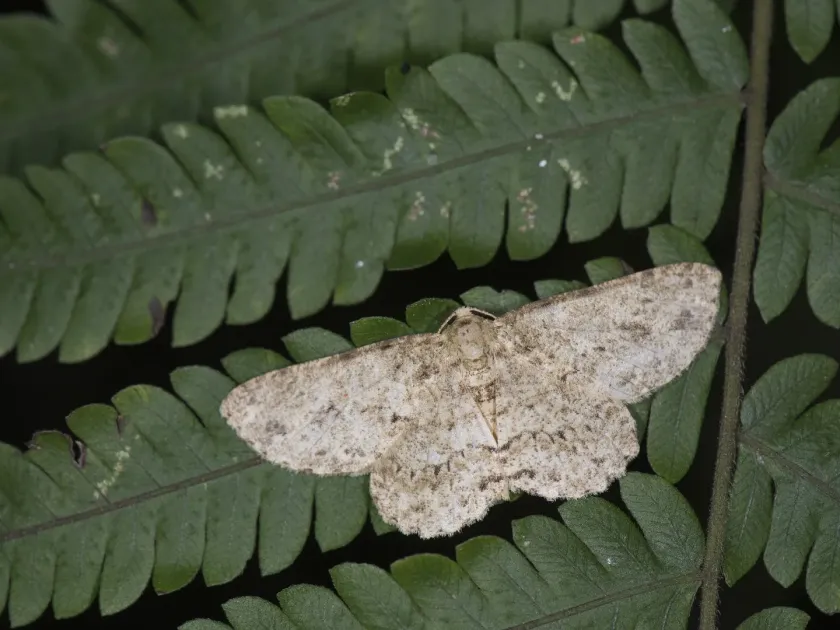
The tea looper (Ectropis bhurmitra) is a significant moth pest belonging to the Geometridae family. Adult moths possess a wingspan ranging from 30 to 40 mm and display a cryptic, mottled brown and grey coloration, allowing them to blend perfectly with tea bush bark during the day.
The larval stage, commonly known as the looper, is named for its unique looping locomotion. The larvae exhibit variable coloration, often mimicking twigs, which serves as a highly effective camouflage against avian predators within the tea canopy.
The life cycle involves four stages: egg, larva, pupa, and adult. The duration of each stage is highly dependent on ambient temperature and humidity, which in tropical tea-growing regions allows for rapid and overlapping generations throughout the year.
Eggs are typically deposited in crevices of the bark or on the undersurface of leaves. Upon hatching, the young larvae immediately begin feeding on tender leaf tissues, quickly progressing through several instars before reaching maturity.
Pupation primarily occurs in the soil beneath the tea bushes. The pupal stage is a critical period for monitoring, as environmental conditions in the topsoil layer can significantly influence the survival rate of the next generation of moths.
##damage##The tea looper is a voracious defoliator of the tea plant (Camellia sinensis). Larvae feed primarily on the young, succulent buds and leaves, which are the most valuable parts of the plant for tea production, directly impacting yields.
Heavy infestations can lead to complete defoliation of bushes, severely weakening the plants and making them susceptible to secondary physiological stress. This reduction in leaf area drastically limits the plant's photosynthetic capacity.
The economic impact is exacerbated by the loss of raw material quality. Damaged leaves are unsuitable for processing into high-grade tea, leading to financial losses for producers and requiring costly corrective measures.
While tea is the primary host, Ectropis bhurmitra has been documented feeding on various other plant species, which allows it to maintain populations even during periods when tea foliage is scarce or under active protection.
The severity of damage is often correlated with the age of the tea bushes and the season. Younger bushes or those recently pruned are particularly vulnerable to attack, as the rapid regrowth provides an ideal food source for the larvae.
##signs##The most prominent sign of an infestation is the presence of irregular, notched feeding patterns along the margins of leaves. In severe cases, the larvae may consume the entire leaf lamina, leaving only the midribs intact.
Small, dark, pellet-like frass (excrement) scattered on the leaves or the ground beneath the canopy is a clear indicator of larval presence. Finding these droppings is an excellent way to locate feeding larvae hiding under leaves.
Behavioral signs include the larvae's tendency to remain motionless, mimicking twigs, when disturbed. This defensive behavior makes them difficult to spot during routine inspections unless one looks specifically for the structural mimicry.
Adult moths are nocturnal and are attracted to artificial light sources. Monitoring light traps can provide early warning of an impending population surge, allowing for timely intervention before larval damage becomes widespread.
Disturbed soil around the base of the bushes may reveal pupal chambers or empty cocoons, especially after heavy rains or mechanical cultivation that brings pupae closer to the soil surface.
##control##Biological control is highly recommended, utilizing entomopathogenic fungi such as Beauveria bassiana or microbial agents like Bacillus thuringiensis. These options effectively manage larval populations with minimal environmental impact.
Cultural management practices include regular removal of debris and weed control beneath the bushes to destroy pupation sites. Proper pruning schedules can also help manage the population by removing eggs and young larvae from the canopy.
Integrated Pest Management (IPM) incorporates the use of pheromone traps to monitor adult flight activity. This data-driven approach ensures that interventions are applied only when necessary, saving costs and reducing chemical exposure.
Chemical control should be treated as a last resort. If required, selective, tea-safe insecticides must be applied strictly according to the pre-harvest interval (PHI) to ensure the safety and quality of the final tea product.
Encouraging the presence of natural predators, such as spiders, lacewings, and insectivorous birds, is a long-term strategy for maintaining low tea looper populations within a balanced plantation ecosystem.
Taxonomy
- Latin name
- Ectropis bhurmitra
- Order
- Lepidoptera (butterflies)
- Family
- Geometridae
- EPPO code
- ECTRBH
Discussion
No discussions yet — be the first.