
Maple seed moth
Ectoedemia sericopeza
Description
How to identify
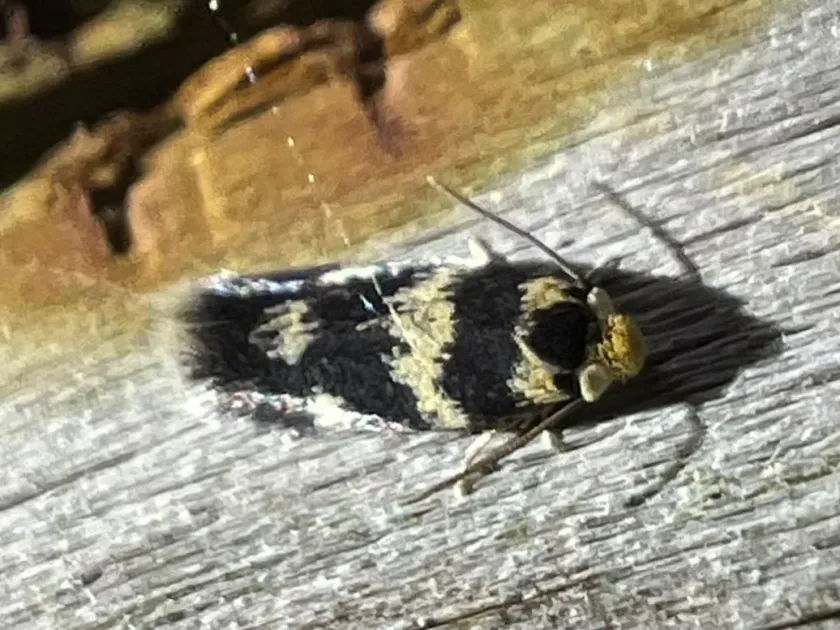
The Maple seed moth (Ectoedemia sericopeza) belongs to the order Lepidoptera and the family Nepticulidae. It is a tiny moth, with a wingspan of only 5–7 millimeters.
Adult moths are dark-colored, often exhibiting a metallic sheen, which makes them very difficult to detect on the bark or foliage of maple trees.
Larvae, or caterpillars, have a yellowish-white body and spend most of their life cycle mining within the tissues of the host plant.
This species is a specialized feeder primarily targeting Acer platanoides, making it a significant pest in both urban parks and forest stands.
Pupation typically occurs in the soil or under leaf litter, which is a crucial phase of their development for overwintering.
What it damages
The primary damage caused by this moth is the destruction of seeds within the samaras (winged seeds) of maple trees, which prevents natural regeneration.
Larvae consume the interior of the developing seed, causing the fruit to fail to mature and drop prematurely from the tree canopy.
Secondary damage involves larval mining in the petioles (leaf stalks), which can lead to weakened leaves and premature leaf drop in heavily infested trees.
Severe infestations reduce the aesthetic value of maple trees and can impact the overall physiological health of the host tree.
In seed orchards and nurseries, the activity of this pest can lead to total crop failure, impacting local reforestation efforts significantly.
When it appears
Adult activity begins in the spring, coinciding with the flowering and fruit-setting period of the maple trees, which provides the necessary food source.
Female moths lay eggs on the surface of young samaras, where larvae hatch and immediately bore into the interior of the seed.
The developmental cycle from egg to pupa takes several weeks, after which the larvae exit the fruit to pupate in the soil below.
Depending on local climate conditions, the moth may complete two generations per season, increasing the pressure on host trees.
As the season progresses toward autumn, the moth populations transition into diapause to survive the winter in the soil.
Signs of infestation
An early indicator of infestation is the premature shedding of green samaras in early summer, often leaving the ground beneath the tree covered in debris.
Close inspection of the samaras reveals tiny entry holes where the larvae have penetrated the shell to feed on the seed inside.
Distinctive serpentine mines appear on the leaf petioles, appearing as thin, light-colored lines winding along the surface of the stalk.
Evidence of frass (larval excrement) may also be found near the entry points or on the ground beneath the infested canopy.
- Premature drop of green maple seeds.
- Small entry holes on samara surfaces.
- Serpentine mines on leaf petioles.
- Reduced seed viability.
- Increased vulnerability to secondary infections.
Control measures
Cultural control measures, such as the removal and destruction of fallen leaves and samaras, are essential to reducing the overwintering population.
Autumn soil cultivation around the base of the trees helps disrupt the pupation cycle of the moth, significantly lowering its survival rate.
Chemical control using systemic insecticides can be effective when applied during the peak flight period of the adult moths before egg-laying occurs.
Biological control agents, such as entomopathogenic fungi or beneficial nematodes, can be used as part of an integrated pest management strategy.
Monitoring the moth population with pheromone traps is the most reliable way to time control efforts effectively and protect tree health.
Taxonomy
- Latin name
- Ectoedemia sericopeza
- Order
- Lepidoptera (butterflies)
- Family
- Nepticulidae
- EPPO code
- NEPTSE
Discussion
No discussions yet — be the first.