
Ebrechtella tricuspidata
Ebrechtella tricuspidata
Description
How to identify
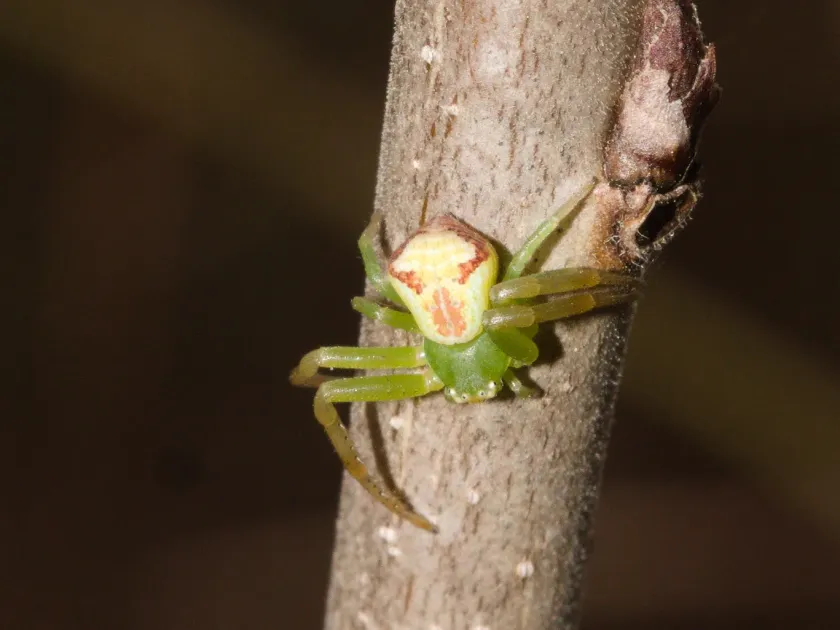
Ebrechtella tricuspidata is a common species of crab spider belonging to the Thomisidae family, frequently observed in agricultural and garden environments.
The spider is named for the distinctive pattern on its abdomen, which consists of three points or teeth, helping in its quick identification in the field.
Females are larger than males and possess the remarkable ability to adjust their body color to match the petals of the flower they inhabit for camouflage.
They are characterized by their crab-like appearance, having two front pairs of legs that are significantly longer and stronger than the rear two pairs.
These spiders move sideways with great speed, a behavioral adaptation that allows them to escape threats or navigate complex floral structures efficiently.
What it damages
Ebrechtella tricuspidata is not a pest; it is a strictly predatory species that poses no threat to cultivated plants, fruits, or vegetable crops.
The spider serves as a natural pest control agent by hunting various insects, such as aphids, dipterans, and other small pests that might otherwise damage the crop.
They do not consume plant tissues, nor do they lay eggs in plant parts, making them entirely neutral or beneficial entities within an agricultural ecosystem.
Their presence on a plant should be welcomed by farmers as a sign of a diverse and balanced ecological environment capable of natural pest regulation.
Farmers who observe these spiders can be assured that their crops are currently hosting a natural predator that helps reduce the overall pest pressure.
When it appears
The activity period for Ebrechtella tricuspidata typically begins in late spring, coinciding with the rise in temperatures and the start of plant blooming.
During the summer months, adult spiders reach peak activity, actively foraging on various flowering plants to ensure reproductive success and high prey capture.
Their life cycle is closely synchronized with the phenology of various host plants, which provide essential hunting grounds and shelter throughout the warmer season.
As autumn progresses, adult spiders begin to die off due to cooling temperatures, while mated females seek secure locations to enter winter diapause.
Overwintering occurs in sheltered microhabitats, such as leaf litter, bark crevices, or dry grass, where they remain dormant until the following spring.
Signs of infestation
Identifying this spider is easy: look for small, crab-like creatures sitting motionless in the center of flowers or on the underside of leaves.
The absence of typical pest damage, such as leaf yellowing, tissue necrosis, or deformed growth, confirms that the spider is not a threat to the plant.
If disturbed, the spider will move with rapid, crab-like motions toward the leaf edge or back of the flower to evade detection.
Finding a spider holding an insect prey item is a clear indicator that the predator is actively performing its role in keeping pest populations low.
Crucially, unlike many other spiders, Ebrechtella tricuspidata does not weave webs, so the absence of silk around the plant is a typical observation.
Control measures
No control measures are necessary for Ebrechtella tricuspidata; it should be encouraged as a natural ally in plant health management.
To preserve these beneficial predators, it is recommended to avoid using broad-spectrum insecticides, especially when crops are in the flowering stage.
Integrated Pest Management (IPM) practices should prioritize the use of selective pesticides that are less harmful to beneficial spiders and other arthropods.
Maintaining flower-rich margins around agricultural fields provides essential habitat for these spiders to thrive, hunt, and successfully overwinter.
Reducing soil disturbance near the base of trees or in garden beds helps maintain the stability of the spider population within the local ecosystem.
Taxonomy
- Latin name
- Ebrechtella tricuspidata
- Family
- Thomisidae
- EPPO code
- MISUTR
Discussion
No discussions yet — be the first.