
Ebrechtella
Ebrechtella
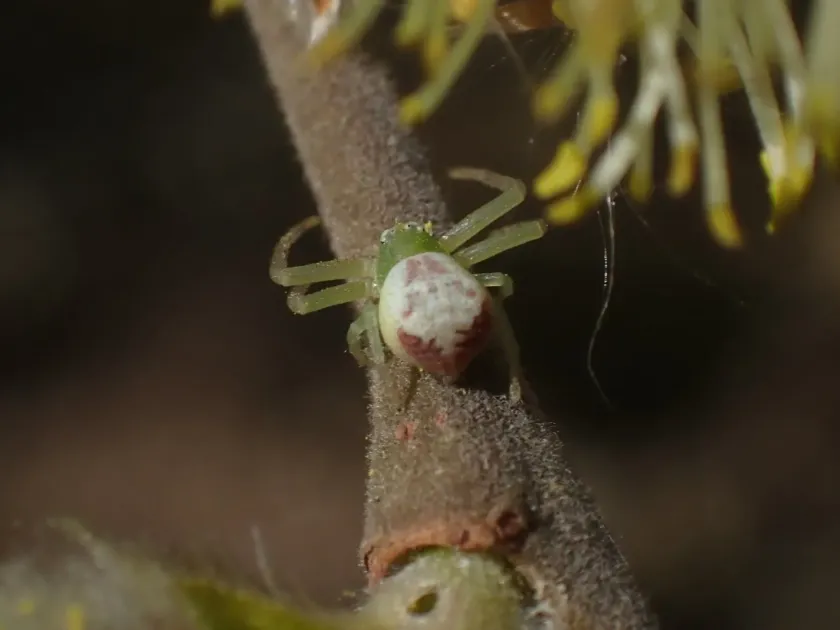
Description
How to identify
Ebrechtella is a genus of crab spiders belonging to the Thomisidae family. They are easily identified by their unique ability to move sideways and their flattened, crab-like body structure.
These spiders are masters of camouflage, often changing their body color to match the petals of the flowers where they lie in wait for unsuspecting prey.
Unlike web-spinning spiders, Ebrechtella does not build webs. Instead, they rely on their large, powerful front legs to grab and hold prey during a surprise ambush.
Females are typically larger than males and show more variety in color patterns, ranging from white to vibrant yellow or green depending on their habitat environment.
They are frequently encountered in gardens and agricultural fields where floral diversity is high, as these areas provide the best conditions for their hunting style.
What it damages
The impact of Ebrechtella on agriculture is debated because they act as predators that target insects, including beneficial pollinators like honeybees and bumblebees.
By hunting pollinators, they can indirectly reduce the yield of fruit-bearing plants and berry bushes by decreasing the success rate of flower fertilization in a garden.
In ornamental flower production, their presence can be considered a nuisance, not only because they reduce pollinator visits but also because they may cause minor physical damage to flower petals.
A high density of these spiders can disrupt the local ecological balance, leading to a temporary decline in pollinator activity in specific high-value crop areas.
While they do not consume plants themselves, their role as an ambush predator makes them a factor that professional growers must monitor during peak blooming periods.
When it appears
The activity cycle of Ebrechtella is closely tied to the blooming season of various plants, which determines the availability of their favorite hunting grounds.
They emerge in the spring as soon as temperatures rise, seeking out early-flowering shrubs and trees to begin their hunting season after winter dormancy.
Peak activity occurs during the height of summer when garden flowers and weeds are in full bloom, providing the spiders with maximum cover and food supply.
As autumn arrives and plant life begins to fade, the spiders prepare for hibernation by moving into bark crevices or leaf litter to survive the cold winter months.
The length of their developmental stages is highly dependent on climate and the abundance of insects in the environment, making them adaptable to different garden conditions.
Signs of infestation
The most common sign of an Ebrechtella presence is finding motionless or strangely positioned insects resting in the middle of flower blooms.
Upon closer inspection, one might see the spider itself, sitting quietly in the center of a blossom, perfectly camouflaged to match the petal color.
Signs of minor petal damage or unnatural folding of floral parts can indicate that the spider has been using the flower for an extended period to catch prey.
A noticeable decrease in the number of bees or butterflies visiting a specific patch of flowers compared to neighboring patches can also be a telltale sign.
Observing small, silken threads around the base of a flower bud may suggest the spider has been securing its position to prevent falling while fighting off larger prey.
Control measures
Ebrechtella is not a typical garden pest and is often considered a beneficial predator as it also catches many harmful insects that feed on plant sap or foliage.
Mechanical removal is the preferred management method if the spider population reaches a level that significantly affects the pollination of sensitive high-value crops.
Avoid broad-spectrum insecticides, as these will kill the spider along with the beneficial pollinators and other natural enemies, leading to a major pest outbreak later.
Cultural practices, such as pruning faded flowers and keeping the garden clean, can help reduce the number of suitable ambush sites for the spiders.
Encouraging biodiversity in the garden ensures that both predators and pollinators have their place, keeping the population of Ebrechtella in check naturally.
Taxonomy
- Latin name
- Ebrechtella
- Family
- Thomisidae
- EPPO code
- EBRESP
Discussion
No discussions yet — be the first.