
Starry Moth
Disclisioprocta stellata
Description
How to identify
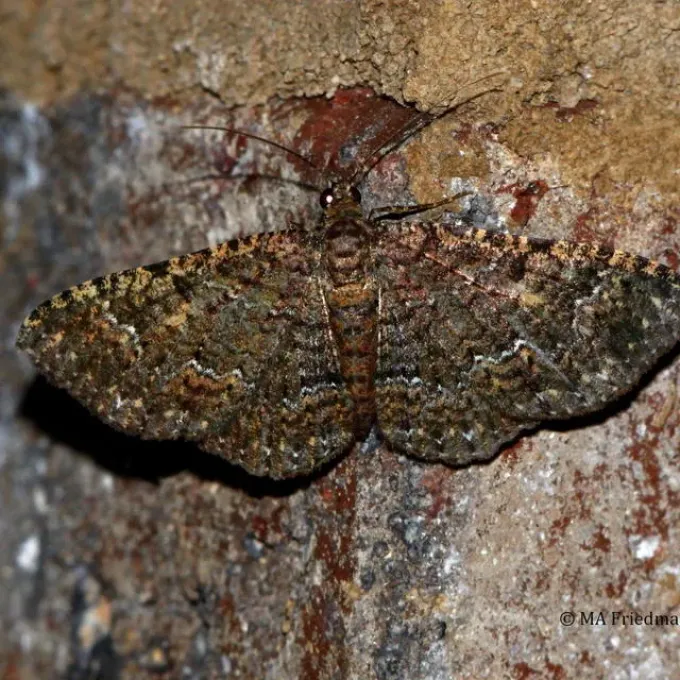
The Starry Moth (Disclisioprocta stellata) is a member of the Geometridae family, order Lepidoptera. Adults are characterized by a unique pattern on their wings, which features intricate, star-like or wavy markings, providing excellent camouflage against tree bark or leaves.
The larvae, known as inchworms, move by looping their bodies, a classic behavior of the Geometridae family. Their coloration often matches the host plant, making them difficult to detect without a careful and systematic inspection of the foliage.
The life cycle undergoes complete metamorphosis, consisting of the egg, larva (caterpillar), pupa, and adult stages. They typically overwinter as pupae in the soil or protected leaf litter, allowing the species to survive harsh seasonal changes.
Adult moths are nocturnal and highly attracted to light. This behavior is often utilized in integrated pest management programs, where light traps are deployed to monitor population density and time the application of control measures.
Taxonomic identification requires an expert examination, as the Starry Moth shares morphological similarities with several other species in the Larentiinae subfamily, necessitating close inspection of wing venation patterns and genitalia structures.
What it damages
The primary host plants for this species include trees from the Fagaceae family, especially those in the Quercus (oak) genus. The caterpillars feed aggressively on leaves, which can lead to severe stress for the host tree during periods of heavy infestation.
Defoliation is the most common form of damage observed in affected areas. As caterpillars consume leaf tissue, the tree's photosynthetic capacity is reduced, which can weaken the plant's overall health and decrease its resistance to other secondary stressors.
Younger larvae typically feed on the epidermis, while older, more mature larvae are capable of skeletonizing entire leaves, leaving behind only the tougher midribs and primary veins. This level of damage often results in the browning and eventual shedding of the foliage.
In nursery settings, the Starry Moth can cause significant economic losses by deforming the growth structure of young saplings. Repeated defoliation events can prevent the trees from achieving their expected height and vigor within a single growing season.
Damage intensity often peaks when larval development overlaps with the period of rapid shoot elongation. This synchronicity is critical, as it directly impacts the amount of biomass the tree can recover before the onset of dormancy.
When it appears
Adult flight activity typically begins in the spring, coinciding with the flushing of host tree buds. This ensures that the newly hatched larvae have an immediate, high-quality food source available to support their rapid growth.
The species may complete one or two generations per year, depending on the latitude and local climate conditions. Warmer summers often favor a second generation, which can sustain pest pressure late into the season.
The peak feeding stage of the larvae occurs from late spring through early summer. During this timeframe, monitoring efforts should be heightened, especially in regions known to have stable populations of the moth.
As summer draws to a close, larvae reach their final instar and seek pupation sites. They descend from the canopy into the leaf litter or shallow soil to pupate, ensuring they are well-protected from predators and winter temperatures.
Weather patterns, particularly early spring temperatures, play a major role in the population dynamics. Unusually cold springs can delay larval emergence, which may help synchronize the pest with its natural biological control agents.
Signs of infestation
The most reliable sign of an infestation is the presence of frass (caterpillar excrement) on the leaves or the ground beneath the host tree. These small, dark pellets are often visible long before the visual damage to the canopy becomes apparent.
Leaf-rolling or leaf-tying with silk is another common sign. Caterpillars often create small, protected shelters by binding leaf sections together, which allows them to hide from predators while feeding safely inside.
Visible damage patterns, such as irregular holes or missing leaf margins, indicate feeding activity. If the canopy appears thinner than usual or shows signs of yellowing, it is an indication of potential larval activity.
Direct sightings of caterpillars during morning or evening hours are a definitive sign. Since they are master camouflagers, a thorough inspection of the underside of leaves and small stems is recommended.
- Ragged leaf margins.
- Accumulation of small, dark frass pellets.
- Silk threads and leaf-tying behavior.
- Skeletonized leaf patches.
- Visual presence of larvae during inspection.
Control measures
Integrated Pest Management (IPM) is the most effective approach for managing the Starry Moth. Maintaining healthy, vigorous trees through proper fertilization and watering is the first line of defense against pests.
Manual removal is suitable for small-scale infestations in home gardens. Hand-picking caterpillars in the early morning or late evening, or pruning infested branches, can significantly reduce the local population without chemical intervention.
Biological control agents, such as Bacillus thuringiensis (Bt), are highly effective against larval stages of the moth. Bt is a selective biological pesticide that targets caterpillars while sparing beneficial insects and pollinators.
Chemical control should be reserved as a last resort, especially when thresholds for economic or aesthetic damage are exceeded. When necessary, insecticides should be applied according to local regulations to minimize impact on non-target species.
Enhancing natural biodiversity in the garden or forest can also curb outbreaks. Encouraging populations of insectivorous birds, spiders, and parasitic wasps provides a sustainable way to keep Starry Moth numbers below damaging levels.
Taxonomy
- Latin name
- Disclisioprocta stellata
- Order
- Lepidoptera (butterflies)
- Family
- Geometridae
- EPPO code
- DSCLST
Discussion
No discussions yet — be the first.