
Dirhinus
Dirhinus
Description
How to identify
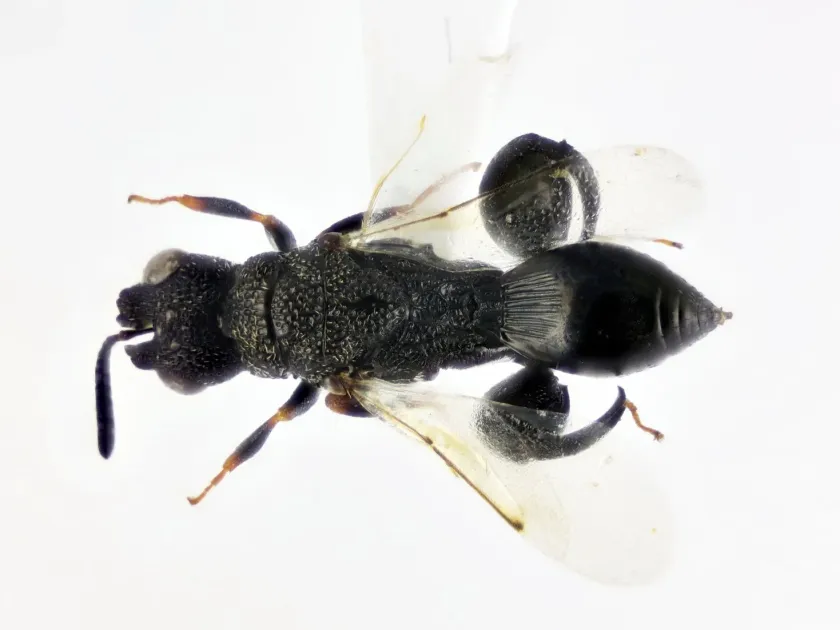
Dirhinus is a genus of parasitic wasps belonging to the family Chalcididae. These insects are easily recognized by the presence of two distinct horn-like projections on the front margin of the head, which is a key morphological feature.
The adult wasps typically possess a dark-colored body, often black with a metallic sheen. Their cuticle is densely punctate, providing a robust exoskeleton that is well-adapted for survival in various environmental conditions.
Their hind femora are significantly thickened and armed with teeth, a characteristic trait of the Chalcididae family. This structure aids in their movement and allows them to effectively navigate within puparia or soil substrates.
The lifecycle of Dirhinus is strictly linked to their role as parasitoids. Females search for host pupae (mostly dipterans) and deposit their eggs inside, ensuring their offspring have a protected environment for development.
Due to their highly specialized life strategy, they are often found in ecosystems where their hosts are abundant, including both natural habitats and agricultural lands under management.
What it damages
Dirhinus does not cause direct damage to cultivated plants as they are not phytophagous. Their impact is exclusively ecological, primarily interacting with other insect populations present in the agro-ecosystem.
The primary concern regarding Dirhinus in agriculture is its role as a potential superparasitoid. By attacking the pupae of other beneficial parasitoids, they can inadvertently reduce the effectiveness of biological pest control programs.
When present in high densities, they can disrupt the balance of insect communities, potentially leading to an increase in pest species populations that were otherwise controlled by the parasitoids they attack.
In greenhouses or controlled environments, their presence may require the adjustment of bio-control agents to ensure the target pests are managed successfully without interference from the wasps.
The economic impact is indirect, manifesting as the need for additional monitoring or the readjustment of pest management tactics to compensate for the reduction in beneficial insect populations.
Signs of infestation
Identifying Dirhinus in the field is difficult due to their small size and cryptic behavior. Their presence is usually detected through systematic monitoring using sticky traps or emergence traps in the soil.
A definitive sign of their activity is the presence of empty host puparia featuring clean, round exit holes, created by adult wasps emerging after the completion of their developmental cycle.
In agricultural settings, laboratory analysis of soil cores or debris is required to confirm the species. This involves rearing out insects found within puparia gathered from the field.
Monitoring efforts should be intensified during the peak activity periods of their dipteran hosts, as their lifecycle synchronization is critical for their survival and reproductive success.
Professional identification requires careful examination of the head structure, antennal attachment, and wing venation under a microscope, following the taxonomic keys for the Chalcididae family.
Control measures
Direct control measures against Dirhinus are rarely recommended, as they are part of the natural regulatory complex of many ecosystems and are not primary agricultural pests.
If management is necessary to preserve the efficiency of other beneficial insects, the use of selective insecticides that do not harm Hymenoptera is the most appropriate approach to mitigate impact.
Standard agronomic practices, such as deep plowing and the thorough destruction of crop residues, help to minimize the availability of host puparia sites, naturally limiting the wasp population.
When implementing biological control, it is essential to conduct an audit of the current entomofauna to prevent the displacement of desirable parasitoids by Dirhinus species.
Maintaining a healthy crop environment by reducing organic waste and weeding helps to manage the host population, which in turn regulates the presence and activity of the parasitoid wasps.
Taxonomy
- Latin name
- Dirhinus
- Order
- Hymenoptera
- Family
- Chalcididae
- EPPO code
- DIRHSP
Discussion
No discussions yet — be the first.