
Brachymeria
Brachymeria
Description
How to identify
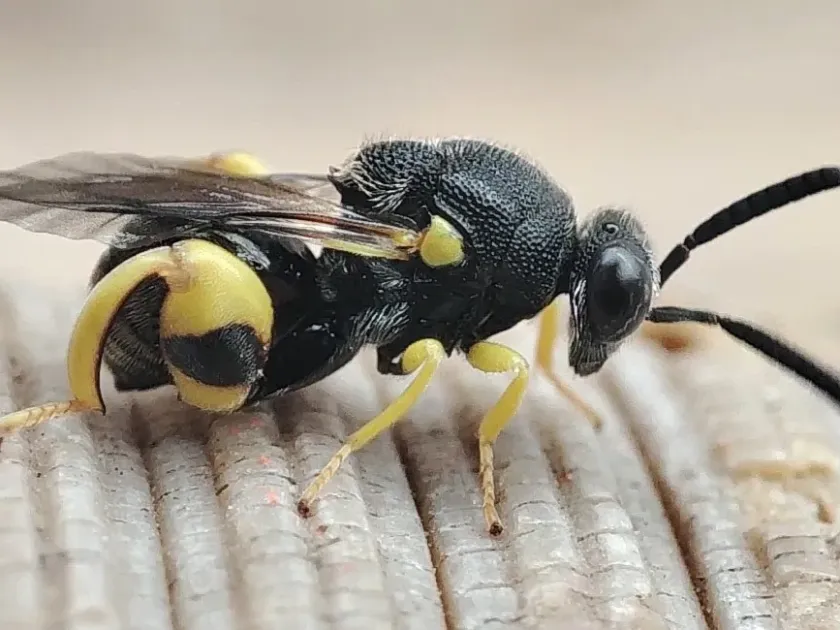
Brachymeria belongs to the family Chalcididae within the order Hymenoptera. These are small insects, typically measuring 3 to 5 millimeters in length.
They are characterized by their robust, greatly enlarged hind femora, which are often equipped with teeth. The body coloration is generally black, sometimes accented with yellow or white spots on the legs.
The head and thorax exhibit a distinct reticulated or pitted surface texture, giving the insect a rugged, sclerotized appearance. Their wings are transparent with reduced venation, typical of chalcid wasps.
The life cycle proceeds through egg, larva, pupa, and adult stages. Unlike many agricultural pests, most Brachymeria species are primary or secondary parasitoids that develop inside the pupae of other insects.
It is essential to distinguish between species, as some act as beneficial biocontrol agents against harmful Lepidoptera and Diptera, while others may disrupt biological control programs by parasitizing beneficial insects.
What it damages
Brachymeria does not cause direct damage to cultivated plants, as adults feed on nectar and insect secretions. Their impact is primarily ecological, stemming from their role in the host-parasite dynamic.
They target the pupae of harmful insects, particularly those from the Lepidoptera (moths and butterflies) and Diptera (flies) orders that infest vegetable, orchard, and field crops.
When Brachymeria attacks the pupae of beneficial entomophages, it acts as a hyperparasite, reducing the overall efficacy of natural pest control within the agroecosystem.
Significant impacts are observed in greenhouses and orchards, where the natural balance of beneficial populations may be disrupted by the overuse of broad-spectrum pesticides.
The death of a host pupa prevents the development of the pest adult; however, this outcome can be detrimental if the host is a beneficial predator or parasitoid providing valuable ecosystem services.
Control measures
Specific control measures for Brachymeria are rarely implemented because it is not considered a primary agricultural pest and is frequently treated as a component of the local entomofauna.
The primary management strategy involves sustainable insect population management and avoiding the indiscriminate use of insecticides that kill beneficial parasitic wasps.
If reduction of parasitic wasp populations is necessary in protected cultivation environments, the use of mesh barriers to prevent insect entry is the most recommended approach.
Proper agronomic practices, such as the destruction of plant residues where pupae hibernate, help manage potential host populations and minimize the presence of Brachymeria.
Biological control strategies emphasize the maintenance of biodiversity, including flowering plants that attract and support populations of beneficial parasitoids to ensure an ecologically balanced agricultural environment.
Taxonomy
- Latin name
- Brachymeria
- Order
- Hymenoptera
- Family
- Chalcididae
- EPPO code
- BRARSP
Discussion
No discussions yet — be the first.