
Dilophus femoratus
Dilophus femoratus
Description
How to identify
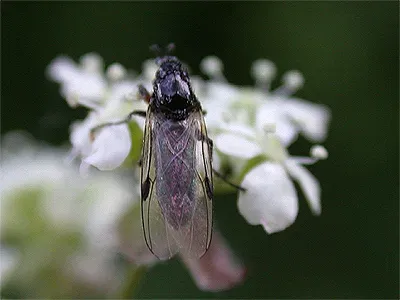
Dilophus femoratus is a species of march fly belonging to the family Bibionidae in the order Diptera. Adult flies are small, typically measuring between 5 to 7 mm in length, and are easily recognized by their predominantly black appearance.
The males possess distinctive, enlarged foretibiae armed with two rows of spines, which they utilize effectively for digging through soil and organic matter. Their heads are round with large, prominent compound eyes.
The larvae are cylindrical, legless, and have a distinctively sclerotized head capsule, which is a characteristic feature of this family. They are typically found in the top layers of soil enriched with organic debris.
The life cycle consists of four larval instars, a pupal stage in the soil, and the adult stage. Development timing is heavily influenced by moisture and soil temperature, which dictate the speed of maturation.
Adults are frequently observed in early spring, often congregating in large groups to feed on nectar. While they are a nuisance, the primary agricultural impact comes from their larval offspring in the soil.
What it damages
The primary concern regarding Dilophus femoratus is the damage caused by their larvae, which feed on the roots and underground stems of various cereal crops, including winter wheat, barley, and rye.
Larval feeding destroys the root systems, which disrupts the plant's ability to absorb water and essential nutrients, ultimately leading to stunted growth, wilting, and in severe cases, the death of seedlings.
The damage is most pronounced during the early spring months. As plants break dormancy and begin active growth, the feeding pressure from overwintered larvae can significantly reduce field stand density.
Besides cereals, these larvae may occasionally feed on the roots of forage grasses and vegetable crops, especially in soils with high humus content that favor larval survival.
The mechanical damage to the roots also serves as a portal for secondary soil-borne pathogens, making it difficult to distinguish the damage from root rot infections without proper field investigation.
When it appears
Adult emergence typically begins in the spring. This phase is relatively short, focusing primarily on mating and the dispersal of females to suitable egg-laying sites in moist, organic-rich soil.
The larval stage is the most prolonged and significant part of the life cycle. Larvae remain active during the autumn as they accumulate energy for the winter, and again in the spring upon reaching warmer temperatures.
Pupation occurs within the soil profile, often occurring at shallow depths. This transitional period usually happens later in the spring before the next generation of adults emerges.
Weather patterns, particularly excessive rainfall during the autumn or spring, create ideal conditions for larval survival, often leading to increased pest populations in the following season.
Monitoring for the presence of the flies during their spring emergence helps farmers anticipate the potential threat to upcoming sowings or existing winter crops.
Signs of infestation
The first indicator of an infestation is often the appearance of irregular, chlorotic, or wilting patches within the cereal field, which often become more visible as temperatures rise.
Closer inspection of the affected plants often reveals chewed or severed roots. Finding multiple pale-colored, legless larvae in the rhizosphere is a definitive sign of Dilophus femoratus activity.
Reduced crop vigor and overall thinning of the stand density across the field are classic symptoms of subterranean pest activity, requiring targeted soil sampling.
Plants affected by larval feeding are often easily pulled out of the soil due to the lack of a functional root system anchoring them, providing a simple way to assess the damage severity.
- Patchy field thinning and yellowing.
- Wilting of young cereal shoots.
- Visible root system damage.
- Larvae presence in the root zone.
- Stunted development in comparison to neighboring plants.
Control measures
Crop rotation is the most effective cultural practice to manage populations of this pest, as moving susceptible hosts to different fields breaks the larval feeding cycle.
Deep autumn plowing (tillage) is essential for burying organic matter and exposing larvae to surface-level predation by birds and the drying effects of the environment, reducing their winter survival rate.
Promoting rapid seedling development through proper fertilization and high-quality sowing ensures that plants develop strong root systems capable of withstanding moderate pest pressure.
Seed treatment with systemic insecticides provides a crucial layer of protection, keeping the young, vulnerable seedlings safe from larval attack during the critical initial weeks of growth.
In high-infestation scenarios, targeted soil insecticides may be used, although they require careful application and adherence to regional integrated pest management guidelines to ensure economic feasibility.
Taxonomy
- Latin name
- Dilophus femoratus
- Order
- Diptera (flies)
- Family
- Bibionidae
- EPPO code
- DILPFM
Discussion
No discussions yet — be the first.