
St. Mark fly
Bibio
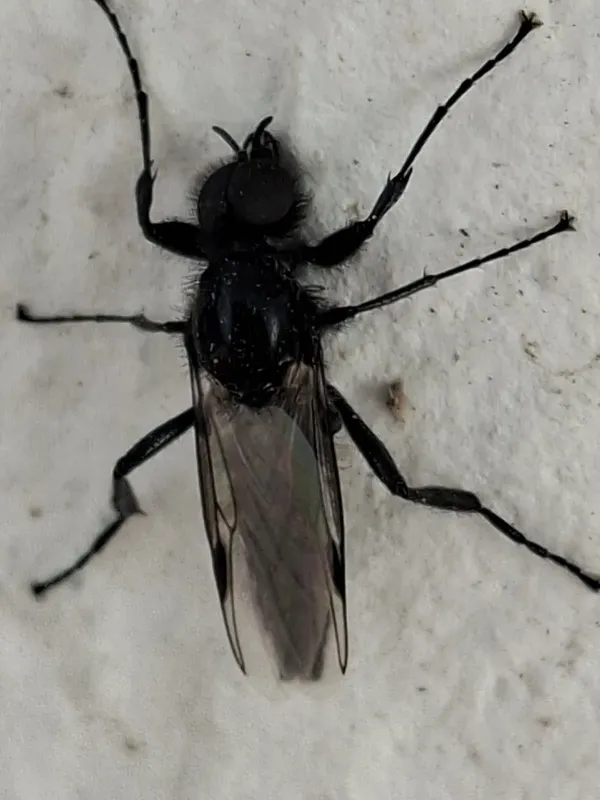
Description
How to identify
The St. Mark fly (family Bibionidae, order Diptera), commonly known as the March fly, consists of small to medium-sized flies easily identified by their robust bodies and thickened fore-tibiae, which give the group its common name. Adults are often densely hairy and exhibit a slow, distinct flight pattern.
The larvae of the St. Mark fly have a characteristic appearance: they are vermiform, legless, and possess a well-developed, darkened head capsule. The larval body is covered with numerous small, spine-like protrusions that assist in their movement through the soil medium.
The insect undergoes a complete metamorphosis. Females lay eggs in small clusters within soil rich in organic matter, leaf litter, or near the root systems of plants, where the larvae spend the majority of their life cycle.
The life cycle of the St. Mark fly is typically annual. Larvae overwinter in the soil at varying depths, resuming feeding in early spring, which makes them particularly hazardous during the germination of seeds and the early development of root systems.
Adult flies emerge in spring and often congregate in large groups on flowering shrubs; however, it is the larvae dwelling in the top layer of the substrate that cause the primary damage.
What it damages
St. Mark fly larvae are polyphagous, feeding mainly on decaying organic matter. However, in the absence of sufficient organic material or when population densities are high, they shift their feeding habits to the live tissues of plants.
Young vegetable crops, ornamental plant seedlings, and grain crops are the primary victims. The larvae tunnel into young roots, leading to the weakening and eventual death of the affected plants.
They pose a specific danger to young strawberry plantings, cabbage seedlings, and tomatoes, where larvae damage the root collar and delicate rootlets, causing the wilting of the above-ground biomass.
Beyond direct damage, the lesions caused by larval feeding create entry points for secondary fungal and bacterial infections. As a result, root rots rapidly strike the weakened plants, significantly complicating the diagnostic process.
The severity of damage is most pronounced in areas with heavy applications of fresh manure or compost, as these conditions attract females for oviposition and provide larvae with an abundance of food.
When it appears
Mass emergence of adult St. Mark flies typically occurs in the spring, usually between April and May, depending on the climatic zone and soil temperature. This period is critical for monitoring the presence of the pest.
In the autumn, larvae finish their active feeding phase and prepare for overwintering. During this time, they move deeper into the soil to survive the frost, making them less accessible to surface-level control measures.
Soil temperature plays a key role in population development. A prolonged, damp spring promotes more intense reproduction and helps maintain larval populations within the root zone of cultivated plants.
Larval activity in the soil directly correlates with substrate moisture levels. During droughts, larvae migrate to deeper soil horizons, though they return to the surface following irrigation or rainfall.
It is important to note that the emergence period of adults often coincides with the beginning of the vegetation phase for many vegetable crops, necessitating prophylactic inspections starting immediately after the snow melts.
Signs of infestation
The first sign of St. Mark fly infestation is the sudden wilting of seedlings or young plants despite adequate soil moisture, which is often misidentified as the result of drought or common plant diseases.
Upon inspecting the root systems of affected plants, one can identify the characteristic legless larvae with dark heads localized directly adjacent to the damaged root tissues.
The presence of large numbers of flies in the garden during spring serves as a warning that larvae of the current generation are already present in the soil or that new eggs will be laid shortly.
Surface disturbances in the soil, such as the disintegration of the soil structure around the root ball, can also indicate larval activity, although this sign is indirect and often subtle.
In cases of mass infestation, bare patches in garden beds or localized mortality of young seedlings are observed, which requires immediate soil inspection underneath the dead plants.
Control measures
The primary method of control is adherence to good agricultural practices. It is crucial to avoid applying fresh organic manure shortly before sowing, as this material strongly attracts female St. Mark flies.
Deep autumn tilling of the soil allows for the exposure of overwintering larvae to the surface, where they succumb to low temperatures and predation by birds, significantly reducing the pest population.
Practicing crop rotation and the prompt removal of plant debris from the plot denies larvae a food source. Thorough weeding and the cleanup of fallen leaves are mandatory requirements for plant protection.
In cases of high pest density, the use of soil-incorporated insecticides is justified. Products based on diazinon or other effective active ingredients significantly reduce larval numbers in the root zone.
Biological control methods include the use of entomopathogenic nematodes or fungal-based preparations that actively suppress larval development within the soil environment without causing harm to the surrounding ecosystem.
Taxonomy
- Latin name
- Bibio
- Order
- Diptera (flies)
- Family
- Bibionidae
- EPPO code
- BIBISP
Discussion
No discussions yet — be the first.