
Dieuches bug
Dieuches armatipes
Description
How to identify
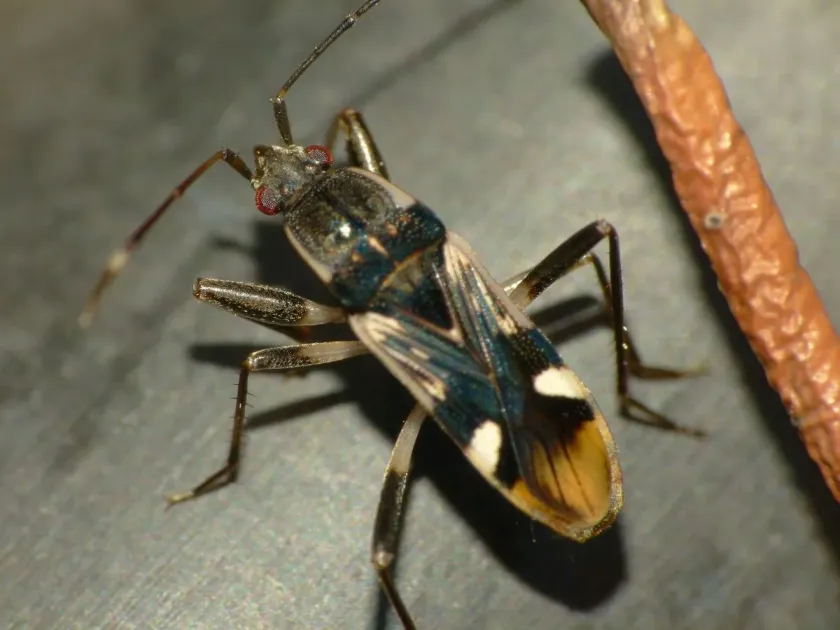
The Dieuches bug (Dieuches armatipes) belongs to the Rhyparochromidae family, often referred to as dirt-colored seed bugs. These insects are characterized by a sturdy, elongated body, typically featuring a dark color scheme with distinctive patterns on the pronotum.
They possess specialized piercing-sucking mouthparts. These structures are evolutionarily optimized to penetrate plant tissues to feed on sap or seeds, which is central to their survival and impact as agricultural pests.
Nymphs of this species undergo several stages of development. As they mature, they resemble the adult form in appearance but lack fully developed wings and reproductive organs.
This bug species is typically found in the lower strata of vegetation or near the soil surface. Their cryptic behavior allows them to remain unnoticed until the population density becomes significant.
Identification often requires careful inspection under magnification to distinguish Dieuches armatipes from other closely related species within the diverse Rhyparochromidae family.
What it damages
Dieuches armatipes is considered a polyphagous pest, meaning it feeds on a variety of hosts. It frequently impacts cereal crops, legumes, and several vegetable varieties, causing yield losses.
Adults and nymphs primarily target seeds at the milk or dough stage of development. By draining nutrients, they prevent proper kernel filling, which negatively affects the quality and weight of the harvest.
Apart from direct feeding, their activity often results in the weakening of the whole plant. This makes the crop more susceptible to secondary environmental stressors like drought or lodging.
Wounds created by the bug's mouthparts can serve as entry points for pathogens. Consequently, secondary infections by fungi or bacteria often exacerbate the initial damage caused by the insect.
Economic damage is typically correlated with high population densities. In years of favorable climate for the insect, it can cause severe economic losses if left unmonitored and untreated.
When it appears
The seasonal cycle of the Dieuches bug is heavily influenced by temperature. Spring emergence occurs when soil temperatures rise enough to initiate the activity of overwintered adults.
Population peaks are generally observed in mid-summer. During this time, the development of the generation aligns with the ripening period of key crops, leading to increased pressure on the field.
The life cycle usually includes multiple stages: eggs are laid in soil or organic debris, followed by five nymphal instars before reaching the adult stage. Multiple generations can occur in warmer climates.
Winter dormancy is a critical phase. Adults seek refuge in the soil, under plant residues, or in dense vegetation near field margins to survive the cold months.
As autumn progresses, the insects prepare for hibernation, moving toward areas that provide sufficient insulation against freezing temperatures.
Signs of infestation
Visual signs of an infestation include small, chlorotic spots or necrotic tissue at the sites of feeding punctures. These marks are often visible on stems and leaves.
Heavily affected crops show signs of poor grain development. In cereals, this manifests as shriveled kernels and reduced test weight, significantly impacting the commercial value of the grain.
Observing the bugs directly is possible, especially during early morning hours or in cooler conditions when they are active near the base of the plant.
- Yellowing and wilting of lower leaves.
- Premature drying of seed-bearing structures.
- Presence of insect excreta on plant parts.
- General stunting of plant growth in affected patches.
Regular field scouting, particularly around the edges of fields adjacent to wild grasses, is essential for early detection and mitigation of the pest population.
Control measures
Integrated Pest Management (IPM) is the most effective approach for controlling Dieuches armatipes. Cultural practices, such as post-harvest plowing, are highly effective in destroying overwintering sites.
Sanitation of field borders and the removal of alternative host weeds reduce the availability of food sources for the bugs before they migrate into crops.
Crop rotation serves as a strategic disruption to the pest's life cycle. By planting non-host crops, farmers can effectively lower the pest pressure in subsequent seasons.
If economic thresholds are exceeded, targeted chemical intervention may be necessary. Pyrethroid-based insecticides are commonly utilized, ensuring application follows local regulations.
Biological control agents, including various species of parasitic wasps, play a role in suppressing populations. Encouraging natural enemies within the field ecosystem is recommended.
Taxonomy
- Latin name
- Dieuches armatipes
- Order
- Hemiptera (bugs, aphids, leafhoppers)
- Family
- Lygaeidae
- EPPO code
- DIEUAR
Discussion
No discussions yet — be the first.