
Dieuches
Dieuches
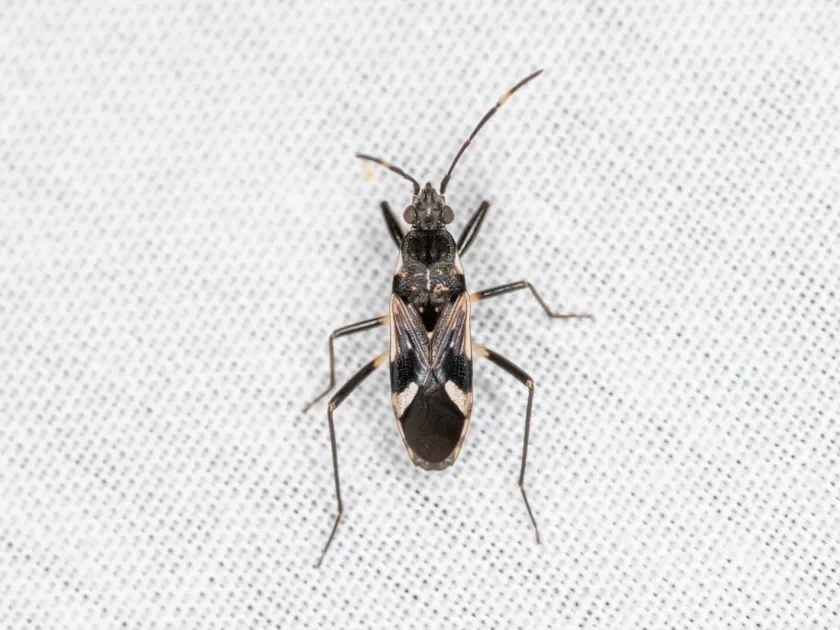
Description
How to identify
The genus Dieuches belongs to the family Rhyparochromidae, part of the order Hemiptera. These insects have a specialized body structure adapted for life on the ground, often hidden within the root zone of plants or under organic debris.
Adult specimens typically range from 5 to 10 mm in length. Their coloration generally shifts between dark brown and black, frequently displaying contrasting patterns on the elytra and pronotum, which provides excellent camouflage against soil and dried leaves.
The head of the bug features a well-developed rostrum designed for piercing plant tissues and extracting sap. The antennae are long, composed of four distinct segments, a key morphological characteristic for precise taxonomic identification within the genus.
Nymphs resemble the adults morphologically but lack wings and often exhibit a lighter, reddish-brown hue. Their development involves five nymphal stages (instars) during which they progressively increase in size and structural maturity.
These insects are primarily nocturnal or crepuscular, leading a secretive life that makes manual detection in the field difficult. During the day, they remain sheltered under soil crusts, plant residues, or within cracks in the earth.
What it damages
The pest affects a wide range of agricultural crops, including cereals, legumes, and various vegetable species. Damage is most severe during the early growth stages when seedlings require optimal hydration and nutrient flow.
Dieuches species are polyphagous, meaning they can adapt to different host plants based on field conditions and the availability of preferred crops, making them versatile and persistent agricultural pests.
Feeding occurs by piercing stems and leaves; the bug injects salivary enzymes that digest plant tissue internally before ingestion. This process causes localized necrosis and physiological stress, leading to stunted plant growth.
The highest threat level occurs during drought years when plants are already weakened by water stress. Under these conditions, the feeding activity of these bugs causes rapid wilting and tissue degradation in crops.
Furthermore, feeding sites serve as entry points for secondary fungal and bacterial pathogens. Even low-density populations of Dieuches can therefore lead to significant localized infections, compromising overall crop health.
When it appears
The life cycle of Dieuches is closely tied to soil temperature and the presence of crop residues. Generally, they overwinter as adults, finding shelter in the soil or beneath thick layers of mulch and dormant weeds.
Spring activity begins as soon as the topsoil reaches favorable temperatures. Following a brief period of feeding, the females begin laying eggs directly in the soil or on the undersides of leaves close to the ground.
Field activity typically peaks during the first half of summer, coinciding with the hatching of nymphs. This is the period when they are most voracious, preparing for their growth stages and eventual maturation.
The number of generations per season depends on the climatic zone; southern regions may support multiple generations annually, whereas in temperate zones, the cycle is often limited to one or two broods.
As autumn approaches, signaled by decreasing temperatures and shorter photoperiods, the insects migrate to hibernation sites. Unharvested plant debris provides the perfect habitat for their successful overwintering.
Signs of infestation
The first signs of an infestation include the appearance of tiny yellow or whitish spots on leaves, which may eventually coalesce into larger chlorotic patches as the bugs feed on cellular sap.
Symptoms also include slowed plant growth, deformation, and curling of leaves. In severe cases, individual shoots may wilt completely due to the disruption of the vascular system in the stems.
Inspecting the root collar of the plants in the morning often reveals the presence of adult bugs or nymphs, which react to disturbances by quickly retreating into the soil. Sticky traps can be used to confirm their presence.
The presence of dark excrement on the leaf surface is another indicator. Additionally, the soil around the base of the plant may show discoloration due to the accumulation of dying tissue and waste from the insects.
Searching through mulch or the top layer of soil in suspected zones is the most reliable detection method. Finding clusters of these small bugs confirms an infestation, necessitating immediate intervention.
Control measures
Deep autumn plowing is the primary management strategy, as it destroys hibernation sites and forces the insects to the surface where they are vulnerable. Regular mechanical weeding also helps reduce the nymph population.
Agrotechnical strategies must focus on weed management, as non-crop plants often serve as reservoirs for the pest. Prompt removal of crop residues post-harvest is essential to strip the bugs of their food sources.
- Implementing crop rotation with non-host species to break the life cycle.
- Adjusting sowing dates to ensure plants pass through sensitive growth phases during periods of low activity.
- Encouraging natural predators and entomopathogenic agents to keep populations in check.
Chemical control involving contact-stomach insecticides is advised when thresholds of economic damage are exceeded. Applications are most effective during the evening when the insects are active on the surface.
It is vital to rotate insecticides with different modes of action to mitigate the risk of resistance development. Systematic field scouting is recommended, particularly during prolonged dry spells when the threat is highest.
Taxonomy
- Latin name
- Dieuches
- Order
- Hemiptera (bugs, aphids, leafhoppers)
- Family
- Lygaeidae
- EPPO code
- DIEUSP
Discussion
No discussions yet — be the first.