
Dicranolaius
Dicranolaius bellulus
Description
How to identify
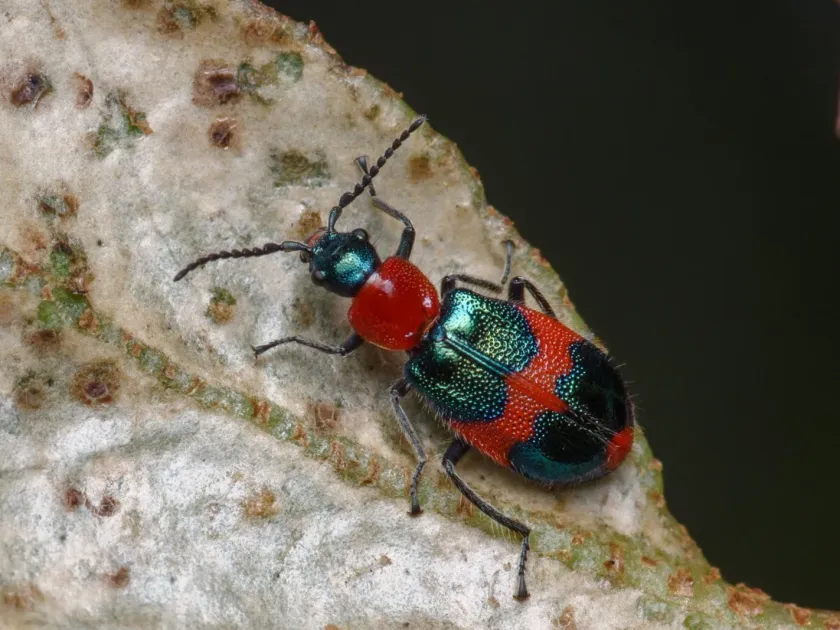
Dicranolaius bellulus is a species of beetle belonging to the Melyridae family, commonly known as soft-winged flower beetles. Adults are typically 4 to 6 mm long and feature a vivid, contrasting color pattern.
Their bodies display striking combinations of red, orange, and black, making them easily distinguishable in the field. These beetles are highly mobile and active during daylight hours.
The larvae of this pest are generally found in the soil or within plant debris. They possess flattened bodies covered with fine hairs, which assist their movement within the soil environment.
The life cycle includes a complete metamorphosis, progressing through egg, larval, pupal, and adult stages. This complexity allows the species to adapt effectively to various agricultural landscapes.
Adults are known to be strong fliers, often moving rapidly between plants or fields, which makes effective population tracking essential for timely pest management.
What it damages
Adult beetles are the primary source of damage, as they feed on the reproductive parts of various crops, including cereals like wheat and barley, and legumes like soybeans.
By consuming anthers and stigmas, the beetles interfere with pollination. This damage often leads to incomplete fertilization and the development of empty or sterile flower heads.
In high-density populations, the feeding can be extensive enough to cause significant yield loss, negatively impacting the grain quality and overall productivity of the crop.
Larval stages in the soil may occasionally consume germinating seeds or damage the root systems of seedlings, leading to reduced plant vigor in the early growth stages.
The economic impact is most severe when the pest infestation occurs during the critical flowering and grain-filling phases, where yield loss is irreversible.
When it appears
The activity of Dicranolaius bellulus is closely linked to the flowering season of its host plants, typically appearing in late spring and throughout the summer.
Warm and humid conditions favor the emergence of adults, which usually coincides with soil temperatures rising above 15 degrees Celsius, triggering their activity.
The species survives winter primarily in the larval or pupal stage, burrowing into the soil or hiding within protected plant residue to endure colder temperatures.
Spring activity levels are heavily influenced by the weather patterns; rapid warming often results in more synchronized emergence, which can increase the pest pressure on crops.
Wild host plants around field margins often serve as initial reservoirs for the pest before they migrate into the main agricultural crop areas.
Signs of infestation
The most immediate sign of an infestation is the visual presence of the beetles on flower spikes, particularly during the cooler parts of the day when they are less mobile.
Damage symptoms include ragged edges on flower petals and reproductive structures, alongside the presence of insect excrement on the leaf surfaces or spikes.
Heavily affected crops may display bleaching or withering in parts of the flower head, indicating that the reproductive parts have been destroyed by beetle feeding.
Field scouting using sweep nets is an effective way to quantify the population density and determine if the economic injury level has been reached.
Uneven ripening and a significant percentage of empty grains in the harvested crop are strong indicators of previous heavy infestation during the flowering phase.
Control measures
Effective management includes agricultural practices such as deep tillage post-harvest to disrupt the soil-dwelling larval and pupal stages of the beetle.
Crop rotation and maintaining a weed-free buffer zone around fields are essential to prevent the migration of beetles from wild hosts into the primary crop.
Chemical control should be considered as a last resort, using registered insecticides only when the economic threshold for the specific crop is exceeded.
- Regular monitoring of crop fields before and during the flowering phase.
- Selective insecticide applications to minimize the impact on beneficial insect populations.
- Utilization of biological control agents where applicable to keep populations below threshold levels.
Care must be taken during flowering applications to select products that are least harmful to pollinators, ensuring that the control measures do not further reduce crop fertilization rates.
Taxonomy
- Latin name
- Dicranolaius bellulus
- Order
- Coleoptera (beetles)
- Family
- Melyridae
- EPPO code
- DICABE
Discussion
No discussions yet — be the first.