
Diconocoris hewetti
Diconocoris hewetti
Description
How to identify
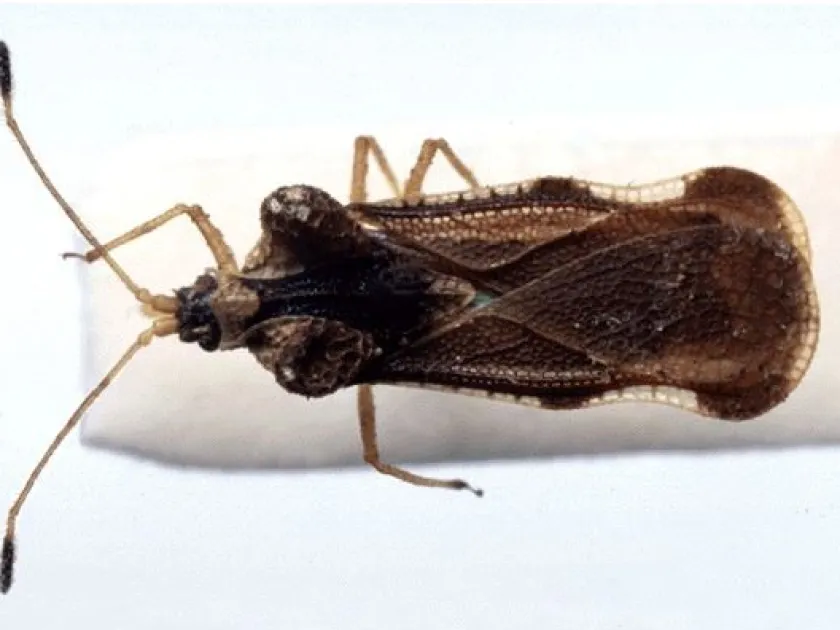
Diconocoris hewetti is a species of lace bug belonging to the family Tingidae. These insects are easily identified by the delicate, lacelike sculpturing of their pronotum and forewings, which serves as both camouflage and protection.
Adult insects are generally small, typically measuring between 3 and 4 millimeters in length. Their coloration ranges from pale ochre to brown, allowing them to blend seamlessly with the leaves of their host plants.
The nymphs go through five developmental stages, differing in size and morphological features. They are often wingless and may possess small, protective spines on their bodies to deter generalist predators.
The life cycle is closely synchronized with the growth phases of the host plant. They primarily inhabit the abaxial surface of leaves, where the microclimate is more stable and protected from direct sunlight.
Reproduction involves laying eggs in clusters, usually inserted partially into the leaf tissue along the veins. This placement provides the eggs with nutrients and protection during the incubation period.
What it damages
Diconocoris hewetti is recognized as a pest primarily affecting cocoa plantations in parts of Southeast Asia. It specializes in feeding on specific plants within the Malvaceae family.
Both nymphs and adults feed by inserting their stylets into the leaf tissue to extract sap. This feeding behavior causes localized cell death and disrupts the plant's overall metabolic functions.
The primary symptom of infestation is stippling, characterized by chlorotic patches on the leaf surface. Under heavy pressure, these patches merge, leading to extensive tissue necrosis and leaf curling.
Severe infestations result in premature leaf drop, which significantly reduces the photosynthetic capacity of the plant. This loss of vitality directly impacts the yield of cocoa beans and tree health.
The damage caused by these bugs creates open wounds on the foliage. These lesions often serve as entry points for various phytopathogens, potentially leading to secondary disease outbreaks that complicate treatment.
Control measures
Effective management of Diconocoris hewetti relies on an integrated pest management (IPM) approach. Regular scouting of the plantations is essential to detect early signs of localized population build-ups.
Chemical control involving systemic insecticides is often necessary during peak activity seasons. These chemicals are absorbed by the plant, providing residual protection against sap-sucking nymphs and adults.
Biological control agents, such as predatory bugs (e.g., mirids) and specialized wasps, play a crucial role in suppressing pest populations naturally. Preserving these beneficial insect habitats is vital.
Cultural practices, such as proper pruning, improve canopy ventilation and light penetration. This modification of the microclimate makes the environment less favorable for the survival and reproduction of lace bugs.
Sanitation practices, including the removal and destruction of heavily infested plant materials, help reduce the overall inoculum of the pest, preventing rapid spread across the managed area.
Taxonomy
- Latin name
- Diconocoris hewetti
- Order
- Hemiptera (bugs, aphids, leafhoppers)
- Family
- Tingidae
- EPPO code
- DICOHE
Discussion
No discussions yet — be the first.