
Pomegranate butterfly
Deudorix isocrates
Description
How to identify
The pomegranate butterfly (Deudorix isocrates) is a member of the Lycaenidae family (butterflies) within the order Lepidoptera. It is a distinct species with a wingspan typically ranging from 35 to 50 mm.
Males are generally dark brown with a violet sheen, while females exhibit a lighter, more brownish coloration. Both sexes are recognizable by the small, tail-like appendages on their hindwings.
The larvae are approximately 20 mm long, featuring a stout body with a dark brown or reddish hue. This coloration allows them to blend in seamlessly with the dark seeds and rind of the pomegranate.
Pupae are also dark and are often found inside the fruit or attached to the bark of the host tree, providing excellent camouflage.
The life cycle involves complete metamorphosis. The duration of each developmental stage is highly dependent on environmental temperature and humidity levels.
What it damages
The pomegranate (Punica granatum) is the primary host for this pest. The larvae bore into the developing fruit, feeding extensively on the seeds and inner pulp.
While pomegranate is the main target, this butterfly can also infest other fruits like citrus, guava, and tamarind, posing a broader threat to orchard diversity.
The feeding activity of the larvae destroys the fruit's interior, leading to premature fruit drop and significant yield reduction for the farmer.
Secondary infections occur when pathogens enter the fruit through the holes bored by the larvae, causing rapid rotting and spoilage of the remaining crop.
In high-infestation areas, the pomegranate butterfly can cause severe economic losses, sometimes destroying up to 70-80% of the harvest if not managed properly.
When it appears
Activity is most pronounced during the warmer months. The butterflies are diurnal, preferring sunny weather to mate and deposit eggs.
Females lay eggs individually on the calyx of young fruit. Multiple generations are produced throughout the growing season, overlapping in their developmental stages.
The most critical period for infestation is when the fruit begins to swell, providing the necessary nutrients for the growing larvae to complete their development.
The insect typically overwinters in the pupal stage, hidden inside mummified fruits left on the tree or fallen on the ground, or within bark crevices.
Farmers are advised to start monitoring for adult butterflies as soon as the trees finish flowering, as this is when the first generation begins its cycle.
Signs of infestation
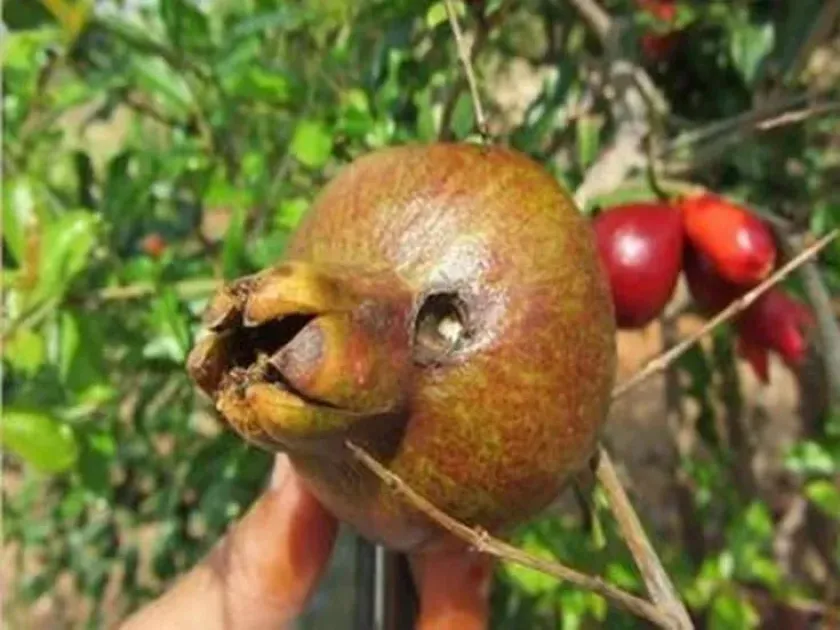
The presence of small, circular entry holes on the fruit surface, often accompanied by piles of frass (larval excrement), is a primary indicator of an infestation.
Internal damage manifests as hollowed-out seeds and tunnels inside the fruit, which can be confirmed by slicing open a suspect pomegranate.
Stunted growth or uneven development of individual fruits compared to healthy ones on the same branch often points to a larval infestation within.
Premature yellowing or shriveling of the fruit is a common sign that the internal structure has been compromised by the feeding larvae.
Visible sightings of adult butterflies near the tree canopy, especially during the morning hours, serve as an early warning for potential upcoming damage.
Control measures
Sanitation is the first line of defense: regular collection and destruction of fallen or infested fruit prevents the next generation from emerging.
Bagging individual young fruits with paper or cloth sleeves is a highly effective, non-chemical method to prevent the butterfly from laying eggs on the fruit surface.
Pheromone traps are essential for monitoring population levels, helping farmers time insecticide applications for maximum effectiveness.
Biopesticides containing Bacillus thuringiensis (Bt) are recommended for organic management, as they specifically target the larvae while sparing beneficial insects.
- Regular pruning to remove infested branches.
- Timed application of approved insecticides.
- Encouraging natural predators such as wasps and spiders.
Taxonomy
- Latin name
- Deudorix isocrates
- Order
- Lepidoptera (butterflies)
- Family
- Lycaenidae
- EPPO code
- VIRAIS
Discussion
No discussions yet — be the first.