
Deudorix dariaves
Deudorix dariaves
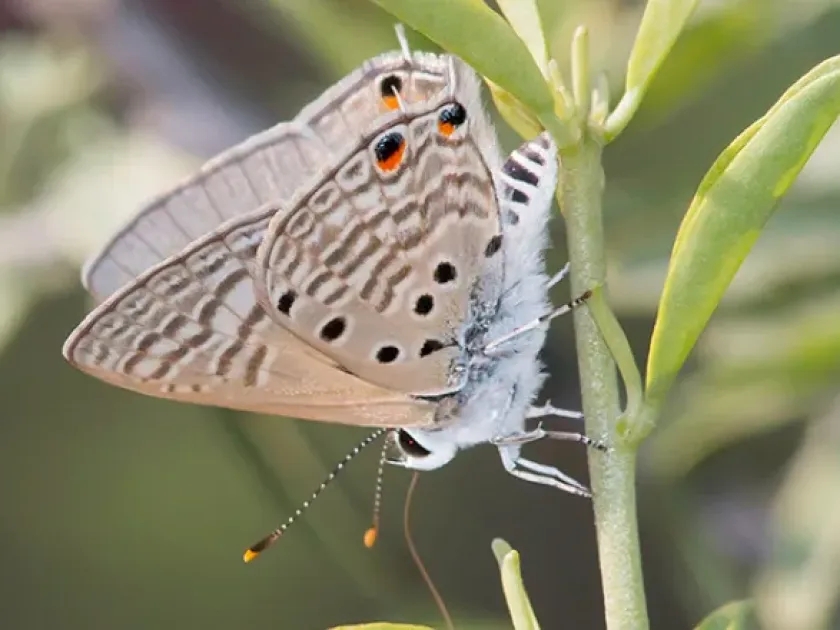
Description
How to identify
Deudorix dariaves is a butterfly species within the Lycaenidae family (commonly known as blues or gossamer-winged butterflies). As a larval-stage pest, it is recognized for causing significant damage to horticultural crops.
Adult insects exhibit a typical butterfly morphology with wing patterns evolved for camouflage. The males and females often show subtle variations in coloration, which can be useful for species differentiation during monitoring.
The larvae progress through several instars, displaying a robust body structure adapted for boring into plant tissues. Their mouthparts are highly efficient, allowing them to penetrate even tough fruit skins.
The pupal stage is generally hardy, enabling the insect to survive seasonal changes. Pupae are often found attached to branches or protected spots on the host plant, hidden by silk filaments.
Proper identification relies on observing both the adult moth's activity patterns and the specific larval exit or entry holes found on affected fruits, which remain a key indicator for entomologists.
What it damages
The primary hosts of this pest include various fruit-bearing trees. The larvae specialize in feeding on the generative parts of the plant, focusing on developing fruits, which are the most valuable part of the yield.
By boring into the fruit, the larvae consume the pulp and seeds, leading to immediate quality degradation. This type of damage prevents the fruit from reaching maturity and often results in premature abscission.
The entry holes created by the larvae serve as entry points for secondary pathogens, such as fungi and bacteria. This leads to internal rotting, which further ruins the fruit and can spread to adjacent healthy fruits.
In cases of high infestation, the pest can cause significant economic losses. Commercial orchards may suffer severe yield reductions if the pest cycle is not disrupted early in the season.
The hidden nature of the larval feeding within the fruit makes it difficult to control using contact insecticides alone, necessitating a more integrated management approach to protect the harvest.
Signs of infestation
The most prominent sign of infestation is the presence of larval frass (excrement) around the entry hole. This is a clear indicator of active feeding occurring inside the fruit.
Surface deformation and discolored patches on the fruit skin are indicative of internal tunneling. These symptoms often appear shortly after the larvae have successfully penetrated the epidermis.
Premature fruit drop is a strong warning sign. If many immature fruits are found on the ground, cutting them open will often reveal the presence of a larva or the hollowed-out remains of the seeds.
Adult butterflies can be spotted flying around host plants, particularly during the transition from flowering to fruit set. Observing adult activity is a signal to begin inspecting fruits for early signs of eggs.
Silk webbing near the calyx or entry points is a characteristic sign left by the larvae. This webbing helps anchor the larvae and provides a level of protection during their development.
Control measures
Sanitation is a critical step in managing this pest. Removing and destroying infested or fallen fruits is essential to break the life cycle and prevent the emergence of the next generation of adults.
Biological controls, including the use of Bacillus thuringiensis or specific viral agents, provide an environmentally friendly alternative to chemical pesticides, particularly for younger larval stages.
Chemical intervention should be strategically timed based on the monitoring of adult flight activity. Systemic insecticides are often preferred because they can reach the larvae hidden inside the fruit tissue.
Pheromone traps are highly effective for population density estimation and timing the application of control measures. This ensures that interventions are carried out when they are most likely to succeed.
Physical protection, such as fruit bagging in small-scale orchards, provides an impenetrable barrier against the adult butterflies, effectively preventing egg-laying on the developing fruits.
Taxonomy
- Latin name
- Deudorix dariaves
- Order
- Lepidoptera (butterflies)
- Family
- Lycaenidae
- EPPO code
- VIRADA
Discussion
No discussions yet — be the first.