
Sturany's reticulated slug
Deroceras sturanyi
Description
How to identify
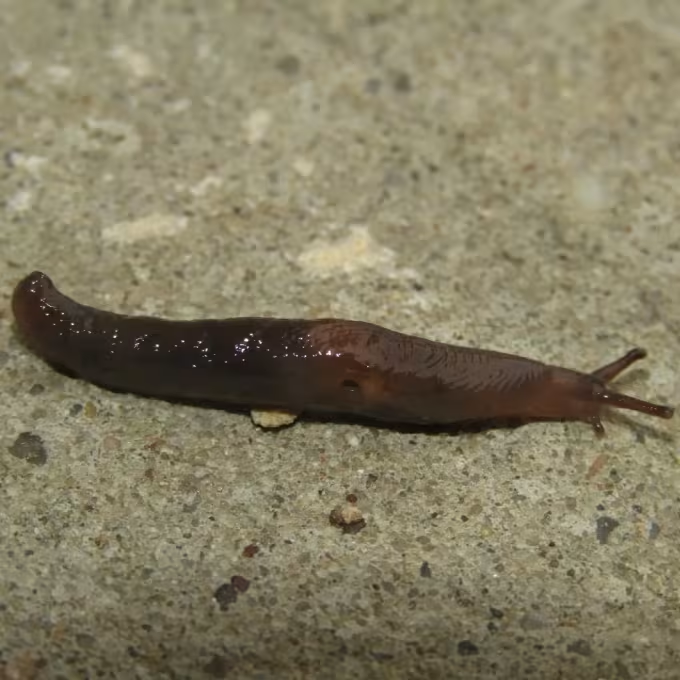
The Sturany's reticulated slug (Deroceras sturanyi) is a small terrestrial gastropod mollusk, part of the Agriolimacidae family. It typically measures between 25 and 40 mm in length.
The body is covered in a protective mucus layer and exhibits a greyish-brown coloration with a distinct reticulated or netted pattern on the mantle area.
A reliable identification feature is the prominent keel on the posterior end of the slug's tail, which distinguishes it from many other slug species.
These slugs are simultaneous hermaphrodites, meaning each individual can lay eggs, allowing for rapid population growth in favorable moist environments.
They are primarily nocturnal or active during periods of high humidity, preferring cool and damp microclimates found under decaying vegetation or soil crevices.
What it damages
This species is a highly polyphagous pest that causes significant damage to various agricultural crops, including leafy greens, cruciferous vegetables, and root crops.
They frequently target seedlings and young plants in greenhouses, often causing total stand loss if left unmanaged during the early growth stages.
In addition to consuming plant tissues, they leave behind slimy trails that contaminate the produce and render it unmarketable due to aesthetic and health concerns.
The slugs often feed on the developing roots and tubers, creating deep cavities that pave the way for secondary bacterial and fungal infections.
Ornamental gardens are also heavily affected, as slugs graze on flowers and foliage, significantly reducing the visual quality of the plants.
When it appears
Slug activity is heavily dependent on moisture levels, with peak populations usually appearing during rainy seasons in both spring and autumn.
During dry and hot summer months, the activity of Deroceras sturanyi declines as they seek refuge deep within the soil profile to avoid desiccation.
The life cycle is flexible, allowing for continuous reproduction whenever temperature and moisture conditions are optimal for the species.
Overwintering occurs primarily at the egg stage, as the eggs are laid in protected soil cavities where they remain viable until spring temperatures rise.
Emergence of juveniles in the spring coincides with the planting season, making young crops particularly vulnerable to early-season infestation.
Signs of infestation
The most visible indicator of an infestation is the presence of irregular, ragged holes in the leaves, often found in the lower canopy of the plants.
Silvery, dried mucus trails are a hallmark sign of slug presence, clearly visible on the soil surface, paving stones, or the leaves of affected plants.
Plants may show symptoms of stunted growth or wilting due to the damage inflicted on roots or the base of the stems by nocturnal feeding.
When inspecting the garden, one might find the slugs themselves tucked into damp, dark corners or under debris close to the plant base.
Using damp cardboard or boards placed on the soil as traps is a common diagnostic method to determine the level of infestation in a specific area.
Control measures
Cultural control strategies focus on sanitation, such as removing weeds, fallen leaves, and other debris that provide shelter for the slugs during the day.
Applying physical barriers like crushed eggshells, coarse sand, or lime around sensitive crops can effectively deter slugs from approaching the plants.
Biological control involves encouraging local predators like hedgehogs, toads, frogs, and predatory ground beetles that feed on juvenile and adult slugs.
Trapping techniques, such as using containers filled with beer or yeast solutions, are effective at reducing local populations in small-scale vegetable gardens.
For large-scale infestations, chemical molluscicides based on iron phosphate are recommended as they are effective while being safer for non-target wildlife.
Taxonomy
- Latin name
- Deroceras sturanyi
- Order
- Molluscs
- Family
- Agriolimacidae
- EPPO code
- DEROST
Discussion
No discussions yet — be the first.