
Grey field slug
Deroceras reticulatum
Description
How to identify
The grey field slug (Deroceras reticulatum) belongs to the phylum Mollusca, class Gastropoda, and family Arionidae. It is a major agricultural pest worldwide.
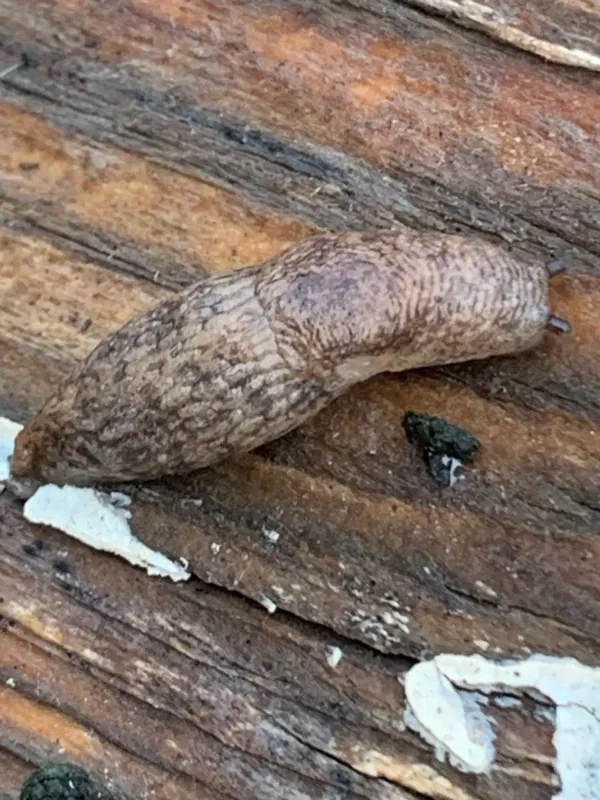
Adult slugs typically measure between 40 and 60 mm in length and possess a pale, greyish-brown body with a distinctive dark reticulated pattern.
Like other slugs, this species lacks a shell and relies on a thick mucus layer to prevent desiccation and facilitate movement across various surfaces.
A key diagnostic feature is the respiratory pore located on the rear half of the mantle, which is visible upon close inspection of the animal.
This species is highly reproductive, laying batches of transparent eggs in moist, protected soil crevices or under decaying organic matter.
What it damages
As a generalist herbivore, the grey field slug attacks a wide variety of crops, including cereals, oilseed rape, potatoes, and various leafy vegetables.
Seedlings are particularly vulnerable; slugs can completely consume young shoots, leading to reduced plant density and significant crop losses.
Leaves show irregular, ragged holes, and in severe cases, the entire foliage may be skeletonized, leaving only the primary veins of the plant.
Root crops and tubers such as potatoes often sustain deep gouges or cavities, which significantly reduce their market value and shelf life.
Additionally, feeding damage facilitates the entry of plant pathogens, further increasing the potential for disease outbreaks in the field.
When it appears
Activity is heavily dependent on moisture and temperature, with the highest levels of slug movement occurring during damp, cool weather conditions.
They are primarily nocturnal, seeking refuge in humid environments such as under soil clods or deep in vegetation cover during the heat of the day.
Spring and autumn are the peak periods for crop damage, as these seasons typically provide the optimal humidity levels required for slug activity.
During prolonged dry and hot periods, slugs retreat into deep soil cracks or remain dormant in cool, shaded microhabitats to survive.
Multiple generations can occur within a single year, allowing the population to explode rapidly whenever environmental conditions become favorable.
Signs of infestation
The most recognizable sign of infestation is the presence of glistening, silver-like trails left by dried mucus on soil and leaf surfaces.
Irregular, clean-cut holes in foliage indicate that slugs have been feeding on the plant, often accompanied by the absence of aphids or other insects.
Damage to developing potato tubers often appears as small circular pits that expand into larger cavities as the slug continues to feed.
Visual confirmation of the pests is possible by checking under debris, low-hanging leaves, or in the soil surface during damp early mornings.
Dark, granular, cylindrical feces left on the soil or leaves are another reliable indicator of high slug activity in the immediate area.
Control measures
Cultural control strategies include intensive soil cultivation to expose eggs and slugs to predators and desiccation by the sun and wind.
Removing plant debris and managing weeds helps eliminate hiding spots and reduces the overall attractiveness of the area to slugs.
Chemical control involving molluscicide pellets containing metaldehyde or ferric phosphate can be used when economic thresholds are exceeded.
Encouraging natural predators such as carabid beetles, frogs, and hedgehogs can provide a measure of biological suppression of the slug population.
Physical barriers and manual trapping using simple bait stations or damp mats remain effective methods for small-scale garden and field applications.
Taxonomy
- Latin name
- Deroceras reticulatum
- Order
- Molluscs
- Family
- Agriolimacidae
- EPPO code
- DERORE
Discussion
No discussions yet — be the first.