
Deroceras panormitanum
Deroceras panormitanum
Description
How to identify
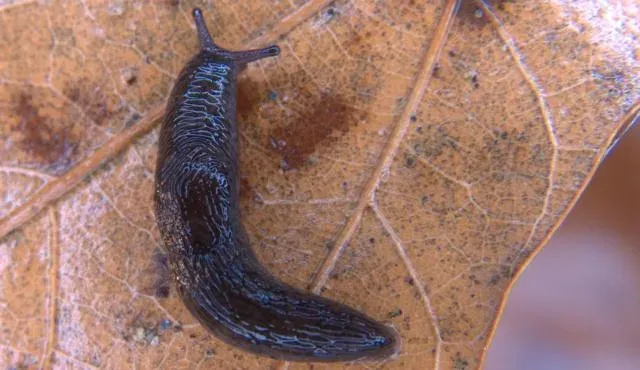
Deroceras panormitanum, commonly known as the Panormitan slug or Sicilian slug, is a small terrestrial gastropod mollusc belonging to the family Agriolimacidae. Adults typically measure 20 to 40 mm in length.
The body coloration ranges from pale grey to brownish, often featuring dark flecks. A diagnostic feature is the pneumostome, or breathing hole, located on the right side of the mantle, which is positioned in the posterior half.
This species is highly invasive due to its ability to self-fertilize, allowing a single individual to establish a new population in a garden or greenhouse environment rapidly.
Because of its external similarity to other Deroceras species, such as the netted slug, accurate identification often requires anatomical examination of the reproductive system in a laboratory setting.
It prefers humid microhabitats, such as damp soil, dense vegetation, or underneath decaying organic matter, where it can maintain moisture and avoid desiccation.
What it damages
This slug is a generalist feeder (polyphagous) that consumes a wide variety of plant tissues. It causes significant damage to vegetables, ornamental flowers, and nursery-grown plants.
Seedlings and young plants are particularly vulnerable and can be completely consumed overnight, leading to total crop loss in intensive farming or gardening settings.
It frequently attacks leafy greens like lettuce, cabbage, and spinach, as well as succulent fruits like strawberries that come into contact with the soil surface during the ripening process.
The slug also causes damage to underground organs, such as tubers, bulbs, and roots. These feeding wounds often serve as entry points for bacterial and fungal pathogens, further complicating the damage.
In greenhouses, Deroceras panormitanum can become a major economic pest, causing aesthetic damage to ornamental flowers and reducing the marketability of produce.
When it appears
The activity level of Deroceras panormitanum is primarily driven by soil and air moisture. It is most active during periods of high humidity, particularly following rainfall or regular irrigation.
While they are active throughout the growing season, peak damage usually occurs in the spring when new growth is tender and in the autumn as conditions become cooler and wetter.
In temperate climates or indoor facilities like greenhouses, these slugs can remain active throughout the winter if temperatures stay above freezing, as they do not undergo true hibernation.
During dry and hot summer months, the slugs retreat into deeper soil crevices or under thick mulch layers to escape dehydration, becoming significantly less active on the surface.
Egg-laying often happens in multiple batches throughout the year, especially in well-irrigated garden settings, ensuring that new generations are ready to feed as soon as conditions improve.
Signs of infestation
The most recognizable sign of an infestation is the presence of irregular, ragged holes in the leaves of plants, often with only the main veins remaining.
Silvery, shiny trails of dried mucus left on leaves, stems, or the soil surface are clear evidence of slug activity, as they move across these surfaces during their nightly foraging.
Fruits and root vegetables may exhibit shallow, gouged-out pits or deep cavities. These wounds are frequently colonized by mold or soft-rot bacteria, indicating a persistent slug problem.
When seedlings fail to emerge or are found severed at the soil level, it is often a sign of nocturnal feeding by slugs that have established a colony in the vicinity.
Daytime discovery of adults under stones, boards, or garden debris confirms their presence, providing a direct target for management efforts.
Control measures
Effective management requires an integrated pest management (IPM) approach that combines cultural, biological, and, if necessary, chemical strategies to reduce slug populations.
- Cultural control: Clearing vegetation debris, removing weeds, and keeping the garden tidy reduces the number of cool, moist hiding spots available.
- Barriers: Applying abrasive materials like coarse sand or wood ash around vulnerable plants can deter slugs from crossing.
- Manual removal: Placing wet boards or pieces of carpet in the garden acts as a trap, allowing for easy collection and destruction of slugs in the morning.
- Biological control: Encouraging natural predators, such as hedgehogs, toads, frogs, and ground beetles, helps maintain natural balance.
- Chemical control: Utilizing molluscicides based on iron phosphate is an effective and environmentally safer option for commercial and home gardens.
Adjusting irrigation schedules is crucial; watering in the morning rather than the evening allows the soil surface to dry out by nightfall, creating a hostile environment for these moisture-dependent pests.
Taxonomy
- Latin name
- Deroceras panormitanum
- Order
- Molluscs
- Family
- Agriolimacidae
- EPPO code
- DEROPA
Discussion
No discussions yet — be the first.