
Grey field slug
Deroceras invadens
Description
How to identify
The grey field slug (Deroceras invadens) belongs to the phylum Mollusca, class Gastropoda, order Stylommatophora, and family Agriolimacidae. It is a highly invasive species that has spread globally.
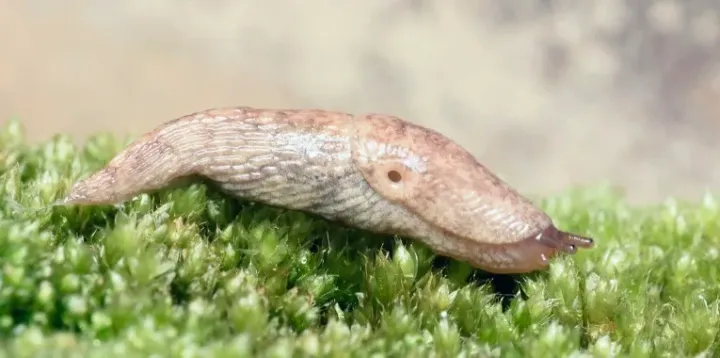
Adult specimens measure between 30 and 50 mm. Their body color ranges from light grey to brownish, featuring a characteristic reticulated (net-like) pattern on the mantle area caused by dark pigments.
The presence of abundant, clear, and watery mucus is a key identification trait, which leaves distinctive silvery, dried trails on soil surfaces and foliage when the slug moves.
These slugs are hermaphroditic and highly prolific, capable of laying hundreds of eggs in damp soil during a single season, leading to rapid population explosions.
They are highly moisture-dependent creatures, often retreating deep into soil crevices or underneath debris during dry or sunny periods to prevent dehydration.
What it damages
The grey field slug is a notorious polyphage, meaning it feeds on a vast array of agricultural, horticultural, and vegetable crops with succulent tissues.
Young seedlings are particularly vulnerable; crops like lettuce, cabbage, and young pulses can be decimated overnight by high populations of this voracious feeder.
Root vegetables such as potatoes, carrots, and beets are severely impacted, as the slugs bore deep cavities into the flesh, rendering the produce unmarketable and prone to decay.
In ornamental settings, they frequently attack hostas, marigolds, and spring bulbs, feeding on leaves and developing flower buds, which significantly reduces the plant's aesthetic value.
Broadacre crops, including oilseed rape and winter cereals, suffer from substantial losses when the slugs consume emerging cotyledons, causing thin stands and poor yields.
When it appears
Slug activity is strongly correlated with temperature and humidity, with peak levels occurring during cool, damp weather in spring and autumn.
During the summer months, if heat and drought prevail, their activity is largely limited to the nighttime, and they remain hidden in moist, dark shelters during the day.
The lifecycle is continuous in favorable conditions, but the most intense feeding periods occur when ambient temperatures range between 12 and 20 degrees Celsius.
Winter survival is managed by eggs and adult slugs sheltering within the soil profile, protected from freezing temperatures by surface organic matter or deep soil crevices.
Activity usually resumes in early spring as the soil warms, with reproductive stages increasing rapidly once the vegetation provides sufficient cover and moisture.
Signs of infestation
The most reliable sign of an infestation is the presence of shiny, silvery, dried-out mucus trails found on paths, leaves, or the soil surface surrounding damaged plants.
Foliar damage appears as irregular holes, often described as 'windowing,' where the slug consumes the softer leaf tissues while leaving the tougher veins intact.
Sudden wilting of young plants without visible root disease often indicates that the slug has chewed through the stem at the soil line, effectively girdling the plant.
Daytime inspections near moist areas, under mulch, or beneath decaying wood or garden debris often reveal the presence of adult slugs hiding away from the light.
On harvested produce, such as potatoes, presence is indicated by deep, irregular pits which differ from the cleaner cuts made by insect larvae or rodents.
Control measures
Cultural control involves regular soil cultivation and hoeing to break up slug tunnels and expose eggs and juveniles to the surface, where they quickly desiccate.
The use of physical barriers, such as coarse sand, wood ash, or crushed eggshells, can deter slugs, although these measures are most effective in small garden spaces.
Maintaining a clean garden by removing weeds and plant debris reduces the available daytime shelters, significantly limiting the population growth in the area.
Chemical control using ferric phosphate pellets is an environmentally safer alternative to traditional metaldehyde, as it is non-toxic to hedgehogs and most beneficial soil fauna.
When applying molluscicides, it is critical to distribute them evenly around susceptible plants during cool, moist evenings, when the slugs are most likely to emerge and feed.
Taxonomy
- Latin name
- Deroceras invadens
- Order
- Molluscs
- Family
- Agriolimacidae
- EPPO code
- DEROIN
Discussion
No discussions yet — be the first.