
Parsnip webworm
Depressaria pastinacella
Description
How to identify
The parsnip webworm Depressaria pastinacella belongs to the order Lepidoptera, family Depressariidae. The adult moth has a wingspan of approximately 20 to 25 millimeters and displays a mottled brown or gray coloration, which provides excellent camouflage against dead plant material.
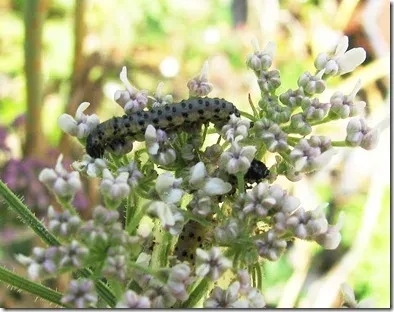
The larval stage, the webworm itself, changes significantly during its development. Early instars are yellow-green, while later stages become darker, ranging from green to dark brown or black, often with distinct spots and tiny bristles covering the body segments.
These insects overwinter as adults, seeking shelter under debris, in bark crevices, or in man-made structures. With the arrival of spring, they emerge to mate and begin the search for suitable host plants for egg-laying.
The lifecycle is strictly synchronized with the flowering of various plants in the Apiaceae family. Females deposit eggs near the developing flower buds, ensuring that larvae have immediate access to food upon hatching.
Environmental factors, particularly temperature and humidity, play a crucial role in population dynamics. Warm and dry conditions in spring often lead to faster larval development and higher survival rates for the first generation.
What it damages
The parsnip webworm primarily attacks plants within the family Apiaceae (formerly Umbelliferae). Important crops such as parsnips, carrots, dill, parsley, and fennel are highly susceptible to its feeding activities.
The larvae feed on the flower heads, spinning webs that bind the umbels together. This webbing prevents normal flower development and pollination, leading to premature drying of the flowers and significantly reduced seed yield.
In cases of high infestation, the webworm can cause severe damage to commercial seed production. The loss of reproductive tissues translates into a direct economic hit for growers who rely on high-quality seed crops.
In addition to the flower heads, larvae may feed on the foliage and tender stems of young plants. This feeding stunts the overall growth of the plant and reduces the plant's ability to store energy in the taproots.
The damaged plant parts become vulnerable to secondary infections, including fungal pathogens and bacterial rots, which can exacerbate the impact of the pest and lead to tissue death.
When it appears
Adult moths typically emerge from their overwintering sites in late spring, usually around April or May, depending on the local climate and temperature accumulation. This coincides with the start of the growing season.
The period of most active damage by larvae occurs during the late spring and summer months, particularly during the months of June and July when host plants are in their peak flowering phase.
The time required for completion of one generation ranges from approximately 30 to 45 days. Depending on the geographical region and the length of the growing season, there may be one or two generations per year.
By late summer, the second generation of adults prepares for the winter. These moths are often observed in August or September before they migrate to their chosen overwintering locations to survive the cold months.
Monitoring for the presence of adults using pheromone traps or visual inspections during the spring is vital to determine the need for intervention before damage becomes widespread across the field.
Signs of infestation
The most prominent sign of an infestation is the presence of silk webbing around the flower heads. The affected umbels appear constricted, deformed, and fail to open properly due to the presence of the larvae within.
Inside the webbed nests, larvae deposit dark, granular frass (excrement). This accumulation of waste material is a clear indicator that feeding is taking place within the enclosure.
As the infestation progresses, the infected flower heads will exhibit signs of chlorosis, followed by browning and premature senescence. The plant’s overall vitality decreases as the larvae continue to consume vital tissues.
During morning or evening hours, the larvae themselves can often be spotted. They are typically restless and will drop from the plant or wriggle violently if they feel threatened by human activity.
- silk webbing on flower heads;
- deformed or constricted umbels;
- accumulation of larval frass;
- discolored and dying florets;
- slow development of the plant apex.
Control measures
Good agricultural practices such as weed management are essential. Removing wild hosts like wild carrot or hemlock in and around the fields reduces the available breeding habitat for the webworm.
Fall tillage is an effective mechanical method for reducing the overwintering population. By turning over the soil and burying plant debris, the overwintering adults are prevented from surviving or emerging in the spring.
For smaller plots or organic systems, hand-picking and removing the webbed flower heads before the larvae pupate is a highly effective, albeit labor-intensive, control strategy that avoids chemical usage.
Chemical intervention should be timed specifically to the egg-hatching phase. Once the larvae have established their protective webs, contact insecticides become significantly less effective at reaching the target pests.
Biological control, including the use of *Bacillus thuringiensis* (Bt), is a preferred option in many integrated pest management (IPM) programs, as it targets the larvae specifically while preserving beneficial insects and pollinators.
Taxonomy
- Latin name
- Depressaria pastinacella
- Order
- Lepidoptera (butterflies)
- Family
- Depressariidae
- EPPO code
- DEPRHE
Discussion
No discussions yet — be the first.