
Parsnip moth
Depressaria depressana
Description
How to identify
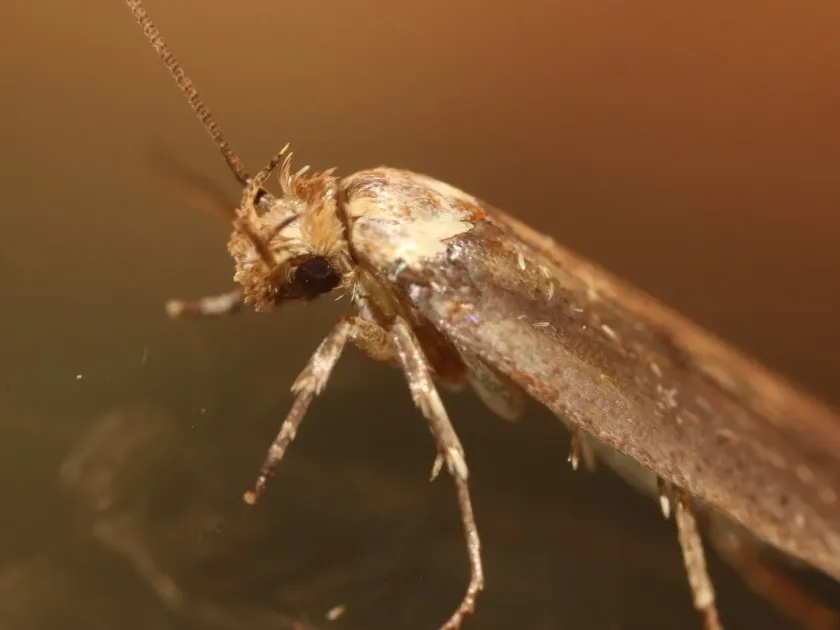
The parsnip moth (Depressaria depressana) is a member of the Depressariidae family within the order Lepidoptera. The adult moth is relatively small, with a wingspan of approximately 15–18 mm, featuring brownish-grey wings that provide excellent camouflage against floral structures.
Adults are primarily nocturnal, seeking shelter during the day in hidden areas such as plant crevices or debris. Their flattened body shape allows them to move through dense floral clusters of host plants with ease.
The larvae are pale green or yellow-green with darker spots on the body. They are highly active and demonstrate a protective behavior by spinning silk threads to create nests among the flowers of their host plants.
The life cycle is closely synchronized with the flowering phenology of Apiaceae species. Depending on regional climatic conditions, the moth may complete one or two generations annually, impacting the total pest pressure during the growing season.
Overwintering occurs in the adult stage. The moths enter diapause and seek shelter in tree bark, buildings, or dry vegetation, surviving the winter until rising temperatures trigger their emergence in spring.
What it damages
The parsnip moth feeds exclusively on plants in the Apiaceae (umbellifer) family. Key crops affected include carrots, dill, coriander, anise, cumin, and fennel, with the larvae posing the most significant threat.
Larval feeding is concentrated on the reproductive parts of the plant, specifically the flowers and developing ovaries. This direct destruction of seed-bearing structures significantly reduces seed yield and quality.
Heavy infestations can lead to the complete failure of seed production, which is particularly devastating for commercial seed production and the essential oil industry, where floral integrity is paramount.
Mechanical damage caused by larval feeding often facilitates the entry of secondary pathogens, including fungi and bacteria, which can lead to further tissue necrosis and systemic plant health decline.
Economic damage is often more pronounced in dry and warm years, which favor the development of multiple moth generations, leading to significant yield loss across cultivated areas.
Signs of infestation
The most distinctive sign of infestation is the presence of silk webbing on the umbels. Larvae pull the florets together into dense, webbed clusters, making them clearly visible upon inspection.
Affected umbels typically appear withered, stunted, or scorched. The flowers fail to develop into seeds, turn brown, and drop prematurely, resulting in an uneven and sparse floral canopy.
Frass (larval excrement) appearing as small dark pellets can be found within the webbed nests. If the nest is disturbed, the larvae will often wriggle actively or drop to the ground to escape.
In addition to webbed clusters, one may observe physical damage to stems and stalks where larvae have chewed on the tissues. This disruption of vascular transport further stunts the development of the umbel.
In severe cases, entire fields may show signs of yellowing or browning as the larvae move from one flower head to the next, causing widespread damage to the reproductive capacity of the crop.
Control measures
Effective management begins with strict crop rotation, ensuring that umbelliferous crops are not planted in or near fields that supported these crops in the previous year to break the pest cycle.
Sanitation is critical; removing wild Apiaceae species from the field edges and surrounding areas helps eliminate primary hosts that serve as a reservoir for the moth population.
Cultural methods, such as deep autumn ploughing, are highly effective in disturbing the overwintering sites of the adult moths, thereby reducing the spring population density.
- Implement spatial isolation from previous year's host fields.
- Use pheromone traps for monitoring and early detection.
- Apply biological insecticides targeting larval stages when thresholds are reached.
- Maintain weed control to eliminate alternative wild host plants.
Chemical control should be applied judiciously. Because these crops are often attractive to pollinators, insecticide applications must be timed to avoid peak pollinator activity, ensuring that the protection of the crop does not harm beneficial insect populations.
Taxonomy
- Latin name
- Depressaria depressana
- Order
- Lepidoptera (butterflies)
- Family
- Depressariidae
- EPPO code
- DEPRDE
Discussion
No discussions yet — be the first.