
Depressaria chaerophylli
Depressaria chaerophylli
Description
How to identify
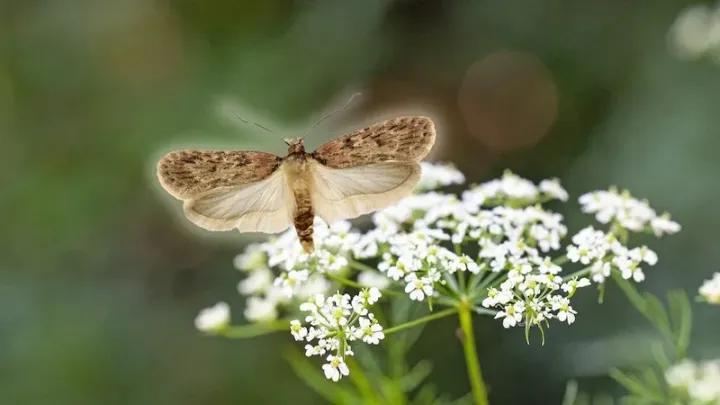
Depressaria chaerophylli, commonly known as the chervil moth or a type of flat moth, belongs to the family Depressariidae within the order Lepidoptera. The adult moth is relatively small, with a wingspan of approximately 15–20 mm.
The forewings of the moth are typically brownish-gray with dark streaks and spots, providing excellent camouflage against tree bark and dry plant material. The hindwings are usually lighter in color.
The larvae are yellowish-green caterpillars characterized by dark warts and short setae. The head capsule and thoracic shield are notably darker, which serves as a key morphological feature for field identification.
The life cycle involves complete metamorphosis: egg, larva, pupa, and adult. The insect typically overwinters as an adult, seeking shelter in crevices of bark, leaf litter, or other protected areas during the cold season.
This species is well-adapted to environments where host plants from the Apiaceae family thrive, making it a persistent pest in regions where these crops are grown commercially.
What it damages
The primary hosts for Depressaria chaerophylli are plants belonging to the Apiaceae (umbelliferous) family. This includes important commercial crops like carrots, dill, parsnips, and chervil.
The damage is caused primarily by the larvae, which feed on the generative parts of the plant. They target flower buds, blossoms, and developing seeds, often destroying the entire umbel structure.
A distinctive damage behavior is the spinning of silken webs. Larvae pull the florets together into dense clusters, creating a protected environment where they feed, which makes chemical control more difficult.
The economic impact is most significant in seed production fields, as the destruction of flower heads leads to partial or total loss of seed yield, reducing the commercial value of the harvest.
Additionally, the damaged plant tissue and the accumulation of larval waste inside the webbed clusters create favorable conditions for secondary fungal infections, further damaging the crop.
When it appears
Adult moths emerge in early spring, typically starting in April or May, once the temperature consistently rises above 10-12°C. This timing is critical for the synchronization with the host plant development.
The larval stage occurs during the budding and flowering phase of the host crops. This is the period when they are most active and pose the highest threat to the seed crop potential.
The development from egg to adult takes approximately 40 to 60 days, depending on environmental conditions. Warmer weather accelerates the lifecycle, potentially allowing for overlapping generations.
In southern latitudes, two generations per season may occur, extending the period of risk for farmers and requiring more sustained monitoring efforts.
After finishing their feeding cycle, the larvae pupate, and the next generation of adults appears later in the season to begin preparing for overwintering.
Signs of infestation
The most prominent sign of infestation is the presence of webbed clusters of florets. These clusters look tangled and deformed, losing the characteristic appearance of a healthy umbel.
Inside these webbed nests, larvae can be found alongside their dark granular excrement. If the umbel is touched, the larvae often react by wriggling violently or dropping to the ground.
Uneven development of the umbels is a common sign; certain parts of the flower head may dry out or wither prematurely due to the disruption of nutrient transport by larval feeding.
During the seed-filling stage, inspection of the field reveals significant gaps in seed set, with many florets appearing skeletonized or entirely absent in infested zones.
Monitoring the field for adult flight patterns, particularly in the evening when moths are active, can provide an early warning of potential larval infestations.
Control measures
Cultural control is essential and involves the removal of wild umbelliferous host plants from the field edges. This reduces the reservoir populations that can colonize commercial fields.
Chemical control should be implemented based on economic thresholds. Insecticides are most effective when applied early, before the larvae successfully create their protective silken nests.
Biological control methods involve supporting natural enemies, such as parasitic wasps and tachinid flies, which can significantly suppress larval populations in integrated pest management programs.
- Regular field scouting during the pre-flowering and flowering stages.
- Use of selective insecticides to minimize impact on pollinators and beneficial insects.
- Thorough post-harvest crop residue management to destroy overwintering pupae.
Integrating different management strategies, such as crop rotation and biological monitoring, is vital for long-term reduction of Depressaria chaerophylli populations.
Taxonomy
- Latin name
- Depressaria chaerophylli
- Order
- Lepidoptera (butterflies)
- Family
- Depressariidae
- EPPO code
- DEPRCH
Discussion
No discussions yet — be the first.