
Parsnip moth
Depressaria
Description
How to identify
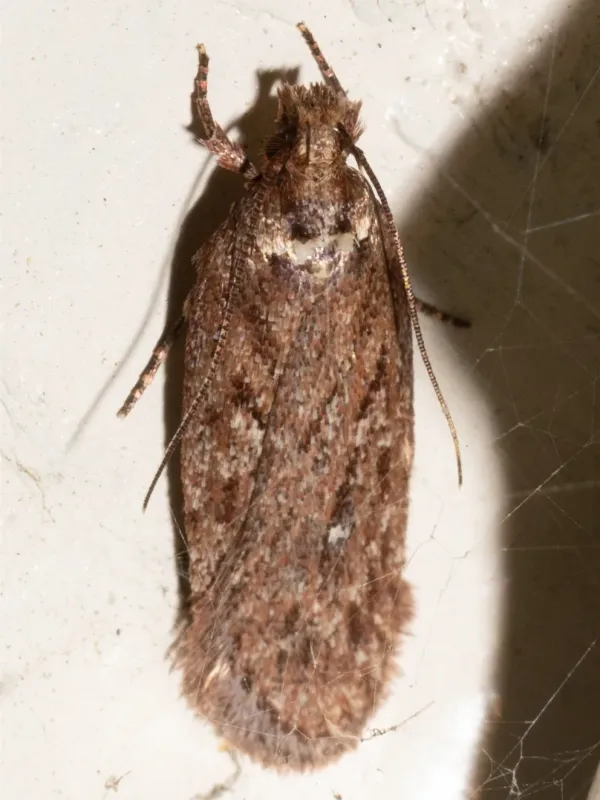
The parsnip moth (Depressaria) belongs to the family Depressariidae. Adult moths are relatively small with a wingspan of about 15–20 mm. Their forewings typically exhibit mottled grey, brown, or ochre patterns, providing excellent camouflage against plant debris and bark.
The larvae, or caterpillars, undergo several developmental stages (instars). They are typically yellowish-green or brownish with distinct dark tubercles on their segments. A shiny dark head is a key morphological feature used for identification during field scouting.
Pupation occurs within a loose silk cocoon, often hidden inside the webbed flower heads of the host plant. This cryptic behavior makes it difficult to detect the pupae without carefully examining the damaged plant parts.
The life cycle varies depending on the species and geographical location. Generally, the adult moth is the overwintering stage, seeking shelter in crevices of bark, old buildings, or under plant debris to survive the winter months.
Agronomists use pheromone traps to monitor adult flight periods accurately. This data is crucial for determining the timing of field inspections and potential chemical or biological applications to manage the population effectively.
What it damages
The primary hosts for the parsnip moth include members of the Apiaceae (umbelliferous) family. This includes important commercial crops such as parsnips, carrots, dill, fennel, parsley, and various wild species that serve as alternate hosts.
The larvae are the destructive stage, feeding primarily on the generative organs of the plant. They consume buds, flowers, and developing seeds, causing significant economic damage, especially in seed production fields where seed quality is paramount.
Early-stage larvae may feed on leaves, skeletonizing them or webbing them together into nests. This webbing protects them from predators and environmental factors, making them harder to target with standard insecticide applications.
Infested umbels become deformed and often fail to produce viable seeds. In severe cases, the entire flower head may wither and die, leading to substantial yield losses and reducing the overall quality of the harvested crop.
Furthermore, larval feeding sites provide entry points for secondary pathogens, including fungi and bacteria. These infections can exacerbate damage, causing rot and further diminishing the market value of the produce.
When it appears
Adult moth activity typically commences in the spring as temperatures rise, signaling the end of the overwintering period. This is the optimal time for initial scouting and setting up monitoring traps.
The larvae are most active during the vegetative and flowering stages of the host plants. In many regions, this corresponds to the summer months, necessitating regular field checks throughout the active growth period.
A second generation may emerge later in the summer depending on climatic conditions. This generation poses a risk to late-planted crops or late-maturing varieties, extending the period of required vigilance for the grower.
As autumn approaches, the adults begin to seek overwintering sites. Activity gradually declines as the insects prepare for diapause, which marks the end of the primary damaging cycle for the season.
Understanding the local phenology of the parsnip moth is essential for effective IPM (Integrated Pest Management). Growers who align their protection strategy with these seasonal shifts are far more successful at limiting losses.
Signs of infestation
The most reliable sign of an infestation is the presence of silk webbing on the umbels (flower heads). When larvae are present, they pull the petals and buds together, creating conspicuous nests that stand out from healthy foliage.
Frass (larval excrement), appearing as tiny dark pellets within the webbed areas, is a clear indicator of active feeding. This debris is often visible upon closer inspection of the plant's reproductive structures.
Deformed, withered, or blackened buds are strong indicators of larval damage. If an entire umbel appears stunted or fails to open correctly, it is highly likely that larvae are feeding inside the protected environment of the nest.
Early morning or late evening is the best time for visual detection. During these times, larvae may be seen crawling on the stems or outside the webbing, as they are less disturbed by the heat of the day.
Inconsistent seed set or missing seeds in the harvested umbels can confirm past infestation. If the crop shows patchy development, it is likely that localized populations of the moth have been active in those areas.
Control measures
Cultural control practices are the first line of defense. Deep plowing of fields after harvest helps destroy overwintering pupae and larvae, significantly reducing the population density for the following season.
Managing wild Apiaceae weeds near the crops is crucial. These weeds serve as breeding grounds for the moth, and keeping fields free of them creates a buffer zone that discourages the pest from migrating into cultivated areas.
Biological control options include the use of parasitic wasps, such as Trichogramma species, which prey on the moth's eggs. This method is highly effective in organic and integrated farming systems, providing natural population regulation.
Chemical intervention should be based on economic thresholds. When spraying is necessary, ensure the use of approved insecticides that are applied during the larvae's early stages of development for maximum efficacy.
- Regular monitoring with pheromone traps.
- Thorough coverage during insecticide application to penetrate the silk webbing.
- Rotation of crops to non-umbelliferous plants to interrupt the pest cycle.
Taxonomy
- Latin name
- Depressaria
- Order
- Lepidoptera (butterflies)
- Family
- Depressariidae
- EPPO code
- DEPRSP
Discussion
No discussions yet — be the first.