
Horse follicle mite
Demodex equi
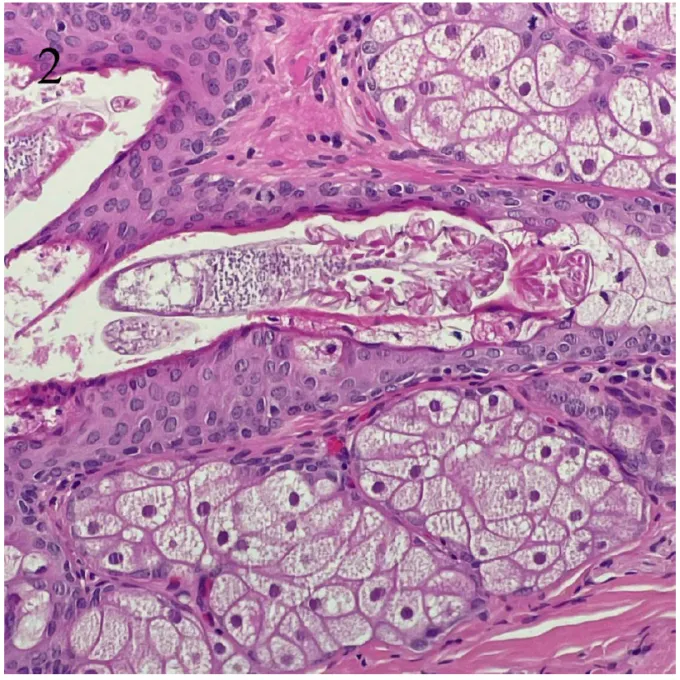
Description
How to identify
The horse follicle mite (Demodex equi) is a microscopic ectoparasite belonging to the family Demodicidae and the order Trombidiformes. It is a highly specialized organism adapted to live within the hair follicles and sebaceous glands of horses.
The mite possesses a distinct cigar-shaped morphology, comprising a short gnathosoma and an elongated abdomen with transverse striations. These structural features allow it to inhabit the narrow space of the hair follicle effectively.
The entire life cycle of Demodex equi occurs on the host. It feeds on sebum and epithelial cells. Because of its tiny size, the mite remains invisible to the naked eye, necessitating the use of microscopic examination for identification.
These mites are host-specific, meaning they do not infect humans or other livestock. Their population density is usually kept in check by the host's immune system, which explains why many horses carry the parasite without showing clinical signs.
Diagnosis requires a deep skin scraping or the expression of follicular content from affected areas. Laboratory analysis confirms the presence of adult mites, larvae, and eggs, distinguishing Demodex equi from other skin pathologies.
What it damages
It is crucial to clarify that the horse follicle mite is not an agricultural pest and does not affect plants. It is exclusively an animal health concern, specifically a parasite of equines.
The damage caused by Demodex equi manifests as equine demodicosis. The mites invade the hair follicles, causing inflammation of the surrounding dermis and distension of the follicle openings.
This parasitic activity interferes with the normal secretion of sebum, creating a favorable environment for secondary bacterial infections. Such infections often lead to more severe skin conditions than the mite infestation itself.
Physical damage to the skin, combined with chronic inflammation, results in hair loss and the formation of crusty lesions. This creates significant discomfort for the horse and negatively affects its general well-being.
While often a localized condition, in immunosuppressed horses, the infestation can become generalized, leading to poor coat condition, skin thickening, and decreased performance capacity in working or sporting horses.
Signs of infestation
Infection is typically characterized by small nodules or papules, commonly appearing on the head, neck, and shoulders. These nodules represent localized inflammatory responses to the high concentration of mites.
A frequent sign is focal alopecia, where patches of hair fall out. The skin in these regions may appear scaly, thickened, or inflamed, sometimes developing a characteristic grayish exudate when squeezed.
While pruritus is not a universal symptom, some horses display restlessness or attempt to rub against stable fixtures. This behavior often leads to self-trauma and secondary sores that complicate the healing process.
In chronic cases, the skin may lose its elasticity and become parchment-like. Persistent crusts or debris around the follicle openings are reliable indicators for veterinarians to conduct further diagnostic scrapings.
Definitive identification of the signs requires professional inspection, as many other skin conditions, such as ringworm or bacterial folliculitis, can mimic the appearance of equine demodicosis.
Control measures
Controlling Demodex equi focuses on reducing the mite population and addressing the underlying factors that allowed the infestation to flourish, such as poor nutrition or immunosuppression.
Veterinary treatment involves the use of acaricidal agents applied topically or systemically. Due to the deep location of the mites within the follicles, treatment must be thorough and consistent to be effective.
Improving general hygiene and stable management is essential. Using individual grooming tools for each animal significantly reduces the risk of cross-contamination within the stable environment.
A balanced diet supplemented with vitamins and minerals supports skin health and immune function, helping the horse resist further mite proliferation after the initial treatment phase.
- Topical application of approved acaricides under veterinary guidance.
- Regular cleaning and disinfection of grooming kits and blankets.
- Isolation of infested animals to limit transmission.
- Routine dermatological monitoring of all horses in the herd.
- Boosting the host's immune system through quality nutrition and care.
Taxonomy
- Latin name
- Demodex equi
- Order
- Mites
- Family
- Demodicidae
- EPPO code
- DEMOEQ
Discussion
No discussions yet — be the first.