
Rabbit demodex
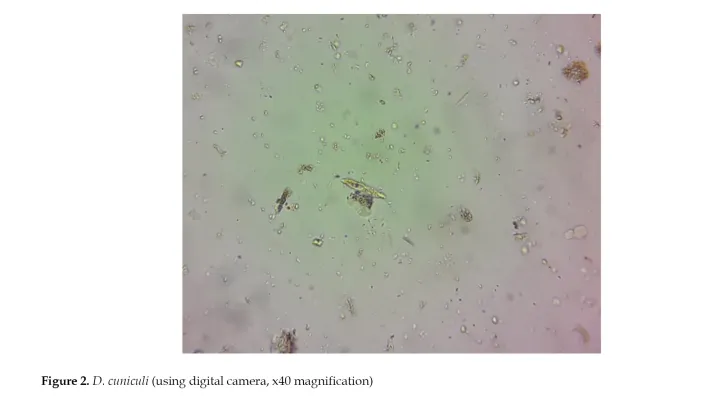
Demodex cuniculi
Description
How to identify
Rabbit demodex (Demodex cuniculi) is a microscopic mite belonging to the Demodecidae family. It is an obligatory parasite that resides within the hair follicles and sebaceous glands of rabbits.
The mite possesses a characteristic cigar-shaped, elongated body adapted for living inside tight skin pores. Due to their minute size, they are impossible to see without professional laboratory microscopy.
Its life cycle consists of egg, larva, nymph, and adult stages, all occurring on the host. This species is highly host-specific and does not infest plants, remaining strictly an animal health concern.
Transmission occurs through direct physical contact between rabbits or via contaminated grooming equipment. It does not survive long in the open environment outside of the host skin.
Unlike other mite species, Demodex cuniculi is often considered part of the normal skin flora in small numbers, becoming pathogenic only when the host's immune system is compromised.
What it damages
The damage caused by Demodex cuniculi is strictly veterinary. It leads to demodectic mange, a condition that disrupts the normal integrity of the rabbit's skin and fur quality.
Infestation causes the hair follicles to distend and the sebaceous glands to become blocked by mite waste, which triggers localized inflammatory responses and tissue damage.
As the infestation progresses, rabbits suffer from alopecia (hair loss) in affected areas. This leads to reduced fur quality, which is a significant issue for commercial rabbit farming.
Chronic infestation weakens the skin barrier, often allowing secondary bacterial infections to take hold. This causes discomfort, pain, and, in severe cases, systemic health decline.
Economic losses are associated with the costs of veterinary treatments, potential loss of fur value, and the time required for quarantined animals to recover.
Signs of infestation
The initial signs of infection often include the appearance of small, raised bumps or nodules on the skin surface, particularly around the face, eyes, and ears.
Over time, as mite populations increase, localized hair thinning or patches of complete baldness appear. The skin in these areas may become flaky or crusty.
If secondary infections occur, the skin may exhibit redness, swelling, and pus-filled lesions. Affected rabbits may show signs of scratching or restlessness due to inflammation.
Confirmation of Demodex cuniculi requires deep skin scrapings examined under a microscope. Clinical signs alone are often insufficient for a definitive diagnosis.
Farmers should monitor their rabbits for any changes in coat texture or skin condition, as early intervention prevents the spread of the parasite throughout the colony.
Control measures
Management focuses on maintaining high standards of hygiene and sanitation within the rabbitry. Regular cleaning and disinfection of cages and equipment are essential.
Quarantining newly introduced animals and isolating any showing symptoms of skin disease are critical practices to prevent the spread of the mite within the group.
Treatment involves the administration of specific acaricidal medications prescribed by a veterinarian, often accompanied by supportive therapies to boost the animal's immune system.
Maintaining optimal stocking density is important, as overcrowding facilitates the rapid spread of parasites through direct contact between rabbits.
Providing a balanced, nutritious diet helps maintain a rabbit's overall health and immune strength, which is the best defense against clinical demodectic mange outbreaks.
Taxonomy
- Latin name
- Demodex cuniculi
- Order
- Mites
- Family
- Demodicidae
- EPPO code
- DEMOCU
Discussion
No discussions yet — be the first.