
Goat follicle mite
Demodex caprae
Description
How to identify
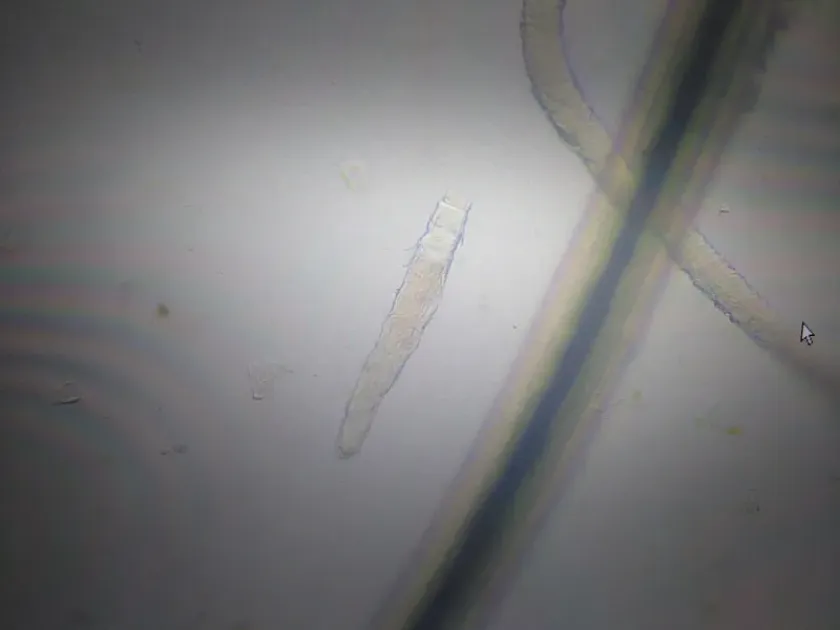
The goat follicle mite (Demodex caprae) is a microscopic parasitic mite belonging to the Demodicidae family, which resides within the hair follicles and sebaceous glands of goats.
These mites are characterized by a worm-like, elongated body that is divided into an anterior section with short legs and an elongated posterior abdomen.
Measuring roughly 0.2 to 0.3 mm in length, the parasite is invisible to the naked eye and requires professional microscopic examination of skin scrapings for confirmation.
The entire life cycle of the mite occurs on the host, where they feed on sebum, skin cells, and lymph, causing local irritation and tissue changes.
Transmission primarily occurs through direct physical contact between goats, especially in overcrowded housing conditions where mites can easily spread from animal to animal.
What it damages
Demodex caprae does not affect plants; instead, it is a significant veterinary pathogen that negatively impacts goat husbandry and livestock health.
By invading hair follicles, these mites interfere with normal skin physiology, leading to inflammation and compromised immunity in the infested animals.
The infestation results in economic losses for farmers due to damaged hide quality, decreased milk production, and the general loss of body condition in infected goats.
Chronic infestation leads to alopecia, which exposes the skin to further environmental damage and potentially fatal secondary infections if left untreated.
In addition to physical harm, the persistent itching and irritation cause high levels of stress, which can suppress the metabolic functions of the animals.
Signs of infestation
The most common clinical sign is the appearance of small, firm nodules or pustules on the skin, often found on the neck, shoulders, and chest regions.
As the infection progresses, hair loss becomes evident, and the skin in affected areas may become thickened, crusty, and scaly.
Squeezing the nodules reveals a waxy, whitish discharge that, when analyzed under a microscope, shows high concentrations of mites at all life stages.
Goats exhibit intense pruritus (itching), causing them to rub against fences or stall equipment, which exacerbates skin lesions and leads to open wounds.
In advanced cases, the skin may develop secondary pyoderma, characterized by abscesses, pain, and noticeable lethargy in the infested goat.
Control measures
Effective control of Demodex caprae requires accurate diagnosis via deep skin scrapings followed by the administration of appropriate acaricidal treatments.
Topical application of parasiticides or systemic treatments (such as ivermectin injections, strictly under veterinary guidance) are used to eliminate the mite population.
Environmental sanitation is a critical component of control; all pens and animal housing must be cleaned and disinfected to kill mites residing in the bedding.
Preventative management involves quarantining new arrivals, maintaining optimal hygiene levels, and ensuring that goats have a nutrient-rich diet to support skin health.
- Strict isolation of all clinically symptomatic goats.
- Regular herd screening for early signs of skin nodules.
- Professional disinfection of housing areas using acaricides.
- Regular veterinary consultation for diagnostic confirmation.
Taxonomy
- Latin name
- Demodex caprae
- Order
- Mites
- Family
- Demodicidae
- EPPO code
- DEMOCP
Discussion
No discussions yet — be the first.