
Demodex
Demodex
Description
How to identify
Demodex is a genus of microscopic mites belonging to the order Trombidiformes and the family Demodicidae. These organisms are so small that they can only be identified through microscopic examination.
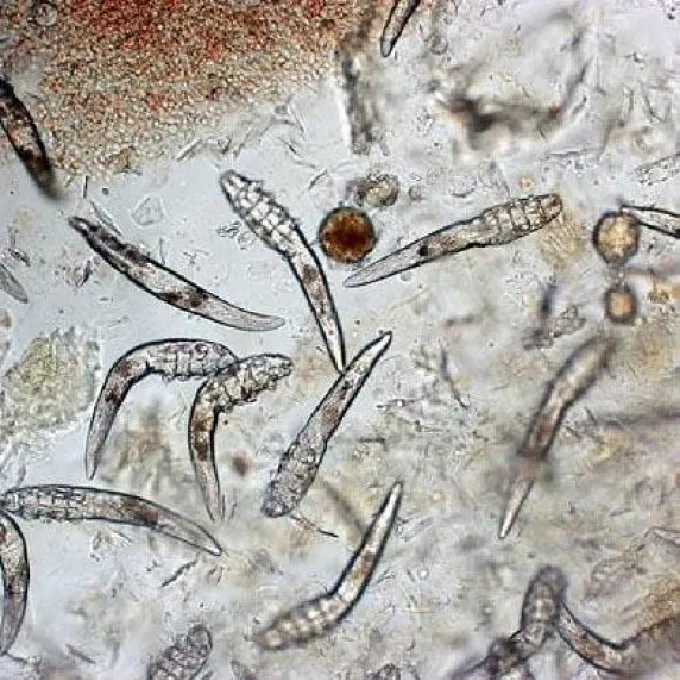
The morphology of the mite is worm-like, characterized by a distinct separation between the gnathosoma and the opisthosoma. They lack well-developed legs, which is a structural adaptation for living within host tissues.
The life cycle encompasses several distinct stages: egg, larva, protonymph, nymph, and adult. Due to their short generation time, populations can expand rapidly under favorable environmental conditions.
As highly specialized parasites, these mites reside deep within the epidermal layers of plants. This endoparasitic lifestyle provides them with protection and a constant food source.
Understanding the biology of Demodex is critical for agronomists, as their presence is often overlooked until significant tissue damage has already occurred.
What it damages
Demodex mites infest a variety of plants, causing substantial physiological disruption. They primarily target leaf tissues, where they feed on cellular contents, leading to metabolic decline.
The primary impact of the infestation is the interference with photosynthesis. As cells are destroyed, the plant loses its ability to produce necessary carbohydrates, resulting in stunted growth.
Infested tissues often show signs of morphological distortion. Leaves may become curled, thickened, or display localized tissue necrosis that ruins the plant's aesthetic and economic value.
The feeding activities of the mites create entry points for opportunistic pathogens. Bacteria and fungi often colonize these damaged areas, exacerbating the overall stress on the plant.
Yield loss is the most severe consequence of high mite density. In perennial crops, persistent infestation can lead to premature leaf drop and the long-term decline of the plant's health.
When it appears
The activity of Demodex is strictly regulated by environmental variables such as humidity and temperature. In controlled greenhouse environments, the mites can remain active throughout the year.
Outbreaks are most common during periods of rapid vegetative growth. High humidity levels tend to favor the survival of the mites as they migrate between host plants.
Dissemination often occurs through human activity. Contaminated tools and close contact during maintenance operations facilitate the spread of the pest from one plant to another.
Seasonal patterns of infestation are particularly noticeable in open-field settings where temperature fluctuations affect the mite's reproductive rate and developmental speed.
Monitoring for the presence of the pest should be intensified during the peak growing season, as this is when the mite population is most vulnerable to preventative measures.
Signs of infestation
The earliest symptom is the appearance of unusual discoloration on leaves. This often manifests as yellowing or chlorosis, signaling that the plant's chlorophyll is being depleted.
Plants may exhibit a significant reduction in growth rate. Even with optimal irrigation and fertilization, infested specimens will lag behind healthy ones in development.
Microscopic necrotic spots are common in areas of high infestation. These spots represent clusters of mites feeding on the internal tissues of the leaf surface.
Leaf distortion, including curling and asymmetry, serves as a key visual indicator for the agronomist. These symptoms often reflect damage to the vascular and structural tissues.
A general loss of turgor in the leaves, combined with premature senesce and drop, indicates a severe and long-term infestation that requires immediate corrective action.
Control measures
Effective management begins with strict quarantine and inspection of all incoming planting materials. Ensuring that new plants are pest-free is the first line of defense.
Chemical control involving systemic acaricides is necessary for severe infestations. These treatments must be applied carefully to ensure they penetrate the tissues where the mites reside.
Biological control, utilizing predatory mites, offers a sustainable alternative in greenhouse environments. These predators can effectively suppress the mite population without chemical residues.
Proper sanitation and the removal of infested plant parts are essential for limiting the spread. All biological waste must be disposed of away from the main growing area to prevent re-infection.
Consistent monitoring and early detection are the most reliable methods for maintaining plant health. Integrated Pest Management (IPM) practices should be employed to sustain long-term control.
Taxonomy
- Latin name
- Demodex
- Order
- Mites
- Family
- Demodicidae
- EPPO code
- DEMOSP
Discussion
No discussions yet — be the first.