
Demodex cati
Demodex cati
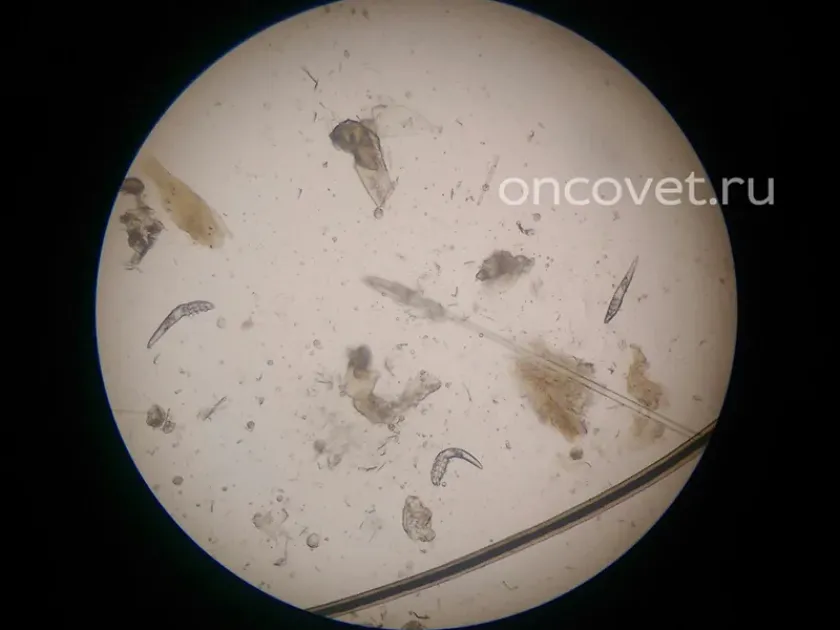
Description
How to identify
Demodex cati is a microscopic, cigar-shaped mite belonging to the family Demodicidae within the order Trombidiformes, known for inhabiting the hair follicles of domestic cats.
The morphology of this parasite is highly specialized for life in narrow skin channels, featuring a short, worm-like body and four pairs of stumpy legs located anteriorly.
The life cycle consists of egg, larva, protonymph, deutonymph, and adult stages, occurring entirely on the host's skin over a period of approximately 3 weeks.
These mites are considered commensals in many cases, living in low numbers without causing clinical disease in healthy, immunocompetent cats.
They are obligate parasites, meaning they cannot survive for long periods in the external environment outside of their mammalian host.
What it damages
Demodex cati exclusively affects feline species and is not a pest of plants or agricultural crops, thus having no impact on plant pathology.
The primary damage is caused by the proliferation of mites within hair follicles and sebaceous glands, leading to follicular distension and epithelial irritation.
High mite density disrupts the normal production of sebum and can lead to the formation of comedones, effectively clogging the pores of the skin.
Secondary damage occurs when the skin barrier is compromised, allowing opportunistic bacteria to infiltrate the follicles and cause pyoderma.
While local infestations are common, generalized demodicosis can lead to severe skin inflammation, pain, and systemic distress in severely affected cats.
Signs of infestation
Focal alopecia (patchy hair loss) around the eyelids, face, and base of the ears is the most common presenting clinical sign of Demodex cati infection.
Affected skin often appears erythematous (reddened) and may exhibit crusting or scaling, which is frequently mistaken for other dermatological conditions.
In more chronic cases, the skin may become thickened, wrinkled, and pigmented, showing signs of severe irritation and inflammatory response.
While intense itching is less common with this specific mite compared to others, scratching may occur due to secondary bacterial or yeast overgrowth.
Diagnosis requires a veterinarian to perform deep skin scrapings or trichograms, which are then examined under a microscope to confirm the presence of mites.
Control measures
Effective control of Demodex cati involves the targeted use of veterinary-prescribed acaricidal therapies, such as oral medications or topical spot-on treatments.
Treatment is typically prolonged until clinical symptoms subside and skin scrapings yield negative results for the presence of live or dead mites.
Addressing underlying health issues, such as diabetes, feline leukemia, or nutritional deficiencies, is crucial for preventing the recurrence of mite proliferation.
Strict adherence to the veterinarian's treatment plan and follow-up monitoring is necessary to ensure the successful elimination of the infestation.
- Consult a veterinarian for precise diagnosis and drug prescription
- Administer prescribed acaricidal treatments consistently
- Improve the cat's general health and nutritional status
- Monitor for secondary skin infections and treat them accordingly
Taxonomy
- Latin name
- Demodex cati
- Order
- Mites
- Family
- Demodicidae
- EPPO code
- DEMOCT
Discussion
No discussions yet — be the first.