
Danaus eresimus
Danaus eresimus
Description
How to identify
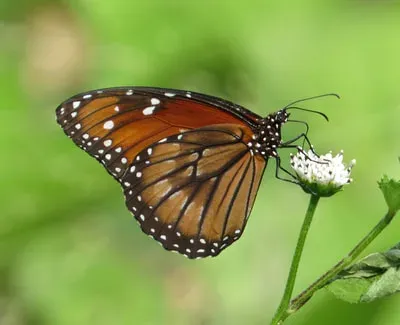
Danaus eresimus is a species of butterfly belonging to the Nymphalidae family, known for its distinctive dark brown wings with white spots.
The wingspan of an adult butterfly typically ranges from 7 to 8 cm, making it a prominent insect in its natural habitat.
The larvae are characterized by a unique set of appendages that assist in defense against predators, reflecting the evolutionary traits of the Danainae subfamily.
Its life cycle follows a complete metamorphosis: egg, larva, pupa, and adult, with each stage having specific ecological requirements.
Adults are known for their migratory behavior, which impacts the predictability of their appearance in agricultural landscapes across different regions.
What it damages
The larvae primarily feed on various species of plants in the Apocynaceae family, often favoring wild vines and associated shrubs.
While often considered a specialist in wild habitats, the pest can cause significant damage to nursery crops and ornamental plants when host plants are limited.
Larval feeding causes defoliation, which directly reduces the plant's photosynthetic capability and overall vigor.
Severe infestations can lead to the total loss of marketable foliage, making ornamental plants aesthetically unappealing and non-viable for sale.
Damage symptoms usually start at the leaf edges and progress inwards, eventually leaving only the major veins of the leaf intact.
When it appears
The activity of Danaus eresimus is highly temperature-dependent, peaking during warm, sunny months when food availability is high.
Multiple generations can occur within a single growing season if environmental conditions remain favorable for egg laying and larval development.
Larval emergence typically begins mid-season, coinciding with the peak vegetative growth of the host plants in the field.
Pupation occurs on the undersides of leaves or nearby stems, with the adult butterfly emerging after approximately two weeks of development.
As temperatures decline in late autumn, the insect population significantly reduces as the species moves towards dormancy or southward migration.
Signs of infestation
The presence of irregular, ragged holes in the leaves is the primary indicator of larval feeding activity in the early morning hours.
Frass (larval droppings) found on the surface of lower leaves serves as a clear diagnostic feature for identifying an active infestation.
Larvae are typically found on the underside of foliage, making it necessary to inspect the plants thoroughly during the early development stages.
Empty pupal cases found attached to the host plant indicate that a generation has completed its development and adults have dispersed.
Stunted growth and yellowing of the foliage indicate long-term damage, necessitating immediate intervention to save the crop.
Control measures
Integrated pest management strategies focusing on the removal of wild host weeds are essential to suppress the population within agricultural zones.
Biological controls, such as applications of Bacillus thuringiensis, provide a highly effective and targeted method to manage larval stages.
Manual removal of larvae remains a viable option for small-scale ornamental producers who wish to avoid chemical applications.
Monitoring programs using visual inspections should be implemented to ensure early detection before the larvae reach their final instars.
- Weed management of Apocynaceae species.
- Use of selective biological insecticides.
- Regular canopy inspection for larval stages.
Taxonomy
- Latin name
- Danaus eresimus
- Order
- Lepidoptera (butterflies)
- Family
- Nymphalidae
- EPPO code
- DANAER
Discussion
No discussions yet — be the first.