
Cyrtophora citricola
Cyrtophora citricola
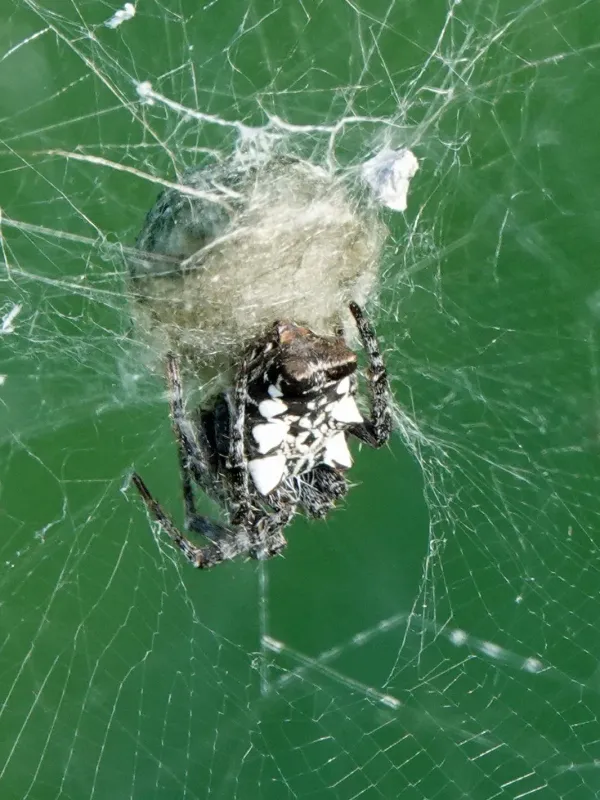
Description
How to identify
Cyrtophora citricola, known as the tropical tent-web spider, belongs to the Araneidae family. It is a medium-to-large spider with a distinct, teardrop-shaped abdomen featuring patterns ranging from grey to brown, providing excellent camouflage.
Females are significantly larger than males, reaching body lengths of up to 20 millimeters. A key characteristic of this species is its complex, non-adhesive, dome-shaped or horizontal web architecture, which differs significantly from the classic orb-web design.
This spider is sedentary, typically occupying spaces between branches of shrubs and trees. Its coloration helps it blend seamlessly into the bark and foliage, making it difficult to spot without a detailed inspection of the plant canopy.
The species is highly adaptable to various climatic conditions but thrives in warm, humid environments. Its presence is usually betrayed by the intricate, long-lasting tent structures it builds, which persist on the plant for extended periods.
The life cycle involves a full metamorphosis, with spiderlings emerging from egg sacs and dispersing via ballooning. They often establish colonies, leading to high population densities on individual host plants.
What it damages
While not a direct phytophage, Cyrtophora citricola is considered an indirect pest in agriculture, particularly in orchards and citrus groves. The damage is primarily caused by the physical presence of the extensive web structures.
Dense, multi-layered web tents interfere with the normal gas exchange and sunlight exposure of the foliage. This obstruction reduces the efficiency of photosynthesis, which in turn adversely affects the overall vigor and yield of the plant.
The webs trap dust, spores of fungal pathogens, and honeydew secreted by other pests like aphids or scale insects. This creates a stagnant microenvironment that promotes the growth of sooty mold, coating the leaves in a black fungal layer.
In intensive agricultural settings, heavy web colonization complicates standard maintenance tasks. The nets act as a physical barrier that prevents pesticides and fungicides from reaching the leaf surface, effectively shielding other harmful insects.
Large colonies can severely degrade the aesthetic and commercial value of ornamental plants and fruit-bearing trees, which is particularly detrimental for nurseries and high-value fruit production areas.
When it appears
The peak activity period for Cyrtophora citricola occurs during the warmer months, typically from late spring through mid-autumn. Maximum population density is observed during periods of high heat and humidity.
Adults and egg sacs survive the winter in protected niches such as bark crevices, fallen leaf litter, or dense branch tangles. As temperatures stabilize in spring, the spider begins re-establishing its colonies.
In greenhouse environments, the reproductive cycle may continue almost year-round if optimal temperature and moisture levels are maintained, making control efforts in such facilities more challenging.
Early-season monitoring of plantations is vital to identify initial colonization. Preventing the establishment of the first spiders can significantly reduce the risk of exponential population growth during the summer months.
Autumn migration behavior, as spiders seek overwintering sites, often leads to a visible increase in web construction. Performing sanitary pruning during this phase can effectively reduce the available habitat for the following year.
Signs of infestation
The primary sign of infestation is the presence of horizontal, dome-shaped web structures resembling an inverted funnel or tent. These webs are thicker, more opaque, and more durable than those of other orb-weavers.
Sticky residues on leaves are a common indicator, often resulting from the interaction between the spider's web and the excreta of other sucking pests that the spider tolerates or exploits.
Stunted growth of new shoots and leaf chlorosis in areas of heavy web concentration. The plant often appears stressed, loses its turgor, and exhibits a dusty or neglected appearance compared to healthy specimens.
The presence of camouflaged egg sacs tucked into leaf axils or bark fissures. These sacs are often colored to match the surrounding vegetation, making them challenging to detect during routine plant checks.
A noticeable decrease in pollinator activity within the infested zones. The density of the webbing creates a physical barrier that restricts the movement of beneficial insects, hindering pollination and fruit set.
Control measures
- Mechanical removal of webs using garden tools or high-pressure water spray to disrupt colonization.
- Sanitary pruning of infested branches during the dormant winter season to remove overwintering sites.
- Application of bio-insecticides based on entomopathogenic fungi that target arachnids.
- Maintaining optimal irrigation and nutrient levels to ensure plant resistance and resilience.
- Encouraging natural predators, such as insectivorous birds and beneficial beetles, within the orchard ecosystem.
Chemical intervention should be carried out with caution, utilizing acaricides specific to arachnids. Always adhere to application guidelines to minimize negative impacts on beneficial pollinator populations.
Prophylactic treatments at the beginning of the growing season are effective in keeping populations below the economic injury level. Systematic scouting is the cornerstone of successful management for this species.
Taxonomy
- Latin name
- Cyrtophora citricola
- Family
- Araneidae
- EPPO code
- CRTPCI
Discussion
No discussions yet — be the first.