
Cyrtophora
Cyrtophora
Description
How to identify
Cyrtophora is a genus of spiders belonging to the family Araneidae. These spiders are famous for constructing non-sticky, complex dome-shaped webs.
Unlike standard orb-weavers, Cyrtophora does not actively hunt by feeling vibrations in the web, but stays in a retreat within the web structure.
They often live in communal colonies, resulting in large, dense web structures covering significant portions of trees or shrubs.
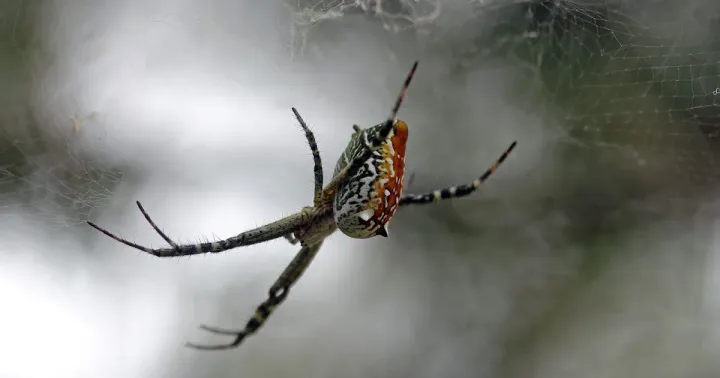
The physical appearance of the spider typically includes a bulky abdomen with intricate patterns, allowing for camouflage within the leaf environment.
Identification is based on the unique horizontal dome shape of the web, which remains permanent and is reinforced by the spider over time.
What it damages
Cyrtophora spiders are not primary plant pests as they do not consume plant tissues, sap, or roots. Their role is strictly that of a predator.
The primary concern is mechanical, as dense webs can shield leaves from sunlight, potentially slowing down the photosynthetic process of young growth.
Heavy web accumulation can distort delicate shoots, causing minor bending or structural stress to young branches in nursery settings.
In decorative gardens, the buildup of trapped dust, debris, and insect carcasses within the webs can significantly reduce the visual appeal of the plants.
Furthermore, in cases of extreme infestation, the dense webbing creates a microclimate that might harbor plant pathogens, though this is rare.
When it appears
Activity typically begins in late spring, as temperatures rise and the availability of flying insect prey increases in the garden environment.
Mid-summer represents the peak of their web-building activity, where colonies expand and consolidate their structures for the season.
As autumn approaches, reproduction occurs, and females lay egg sacs that are carefully protected within the web complexes.
The life cycle is closely linked to the vegetation period, as they require stable plant structures to maintain their permanent webs.
In warmer climates, these spiders remain active throughout the warmer months, necessitating consistent monitoring in high-value horticultural crops.
Signs of infestation
The most visible sign is the presence of multi-layered, dome-shaped webs, which do not disappear as quickly as typical circular spider webs.
The inclusion of old prey remains in the web is a characteristic trait, as Cyrtophora builds upon its previous structure rather than replacing it.
Visible tethering of young leaves or buds to the web structure indicates that the spider has selected specific points of the plant for support.
Observations of the spiders themselves, often positioned in the very center of their dome structures, are the surest way to confirm presence.
Noticeable decrease in air circulation through the plant canopy caused by thick web layers is another sign of significant colonisation.
Control measures
Mechanical removal is the most recommended approach; physical cleaning of the branches prevents the long-term establishment of the colonies.
Pruning techniques that improve canopy aeration and decrease the number of suitable branching points can make plants less attractive to the spiders.
Chemical control is generally not advised, as these spiders are natural predators that help regulate insect populations, including some minor pests.
Integrated pest management should focus on maintaining a healthy garden ecosystem, allowing natural predators of spiders to keep their numbers in check.
For high-value ornamental plants, frequent water sprays can disrupt web integrity and encourage the spiders to relocate to non-crop areas.
Taxonomy
- Latin name
- Cyrtophora
- Family
- Araneidae
- EPPO code
- CRTPSP
Discussion
No discussions yet — be the first.