
Tobacco bug
Cymus tabaci
Description
How to identify
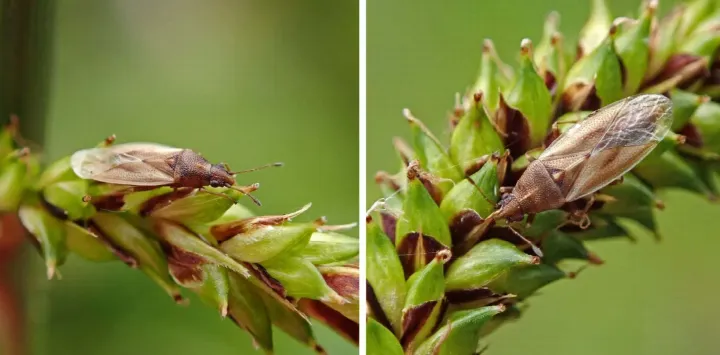
The tobacco bug Cymus tabaci belongs to the order Hemiptera and the family Cymidae. It is a small insect characterized by its ability to blend into the vegetation of host plants.
Adult insects usually exhibit a pale brown to dark brown coloration, which provides excellent camouflage against the tobacco leaves and stems where they reside.
The body is elongated and oval, featuring a piercing-sucking mouthpart, scientifically known as a rostrum, which is used to extract fluids from the plant tissue.
Key diagnostic features include the antennae, which are four-segmented, with the terminal segment being notably thickened compared to the other segments.
Nymphs, the immature stages of the bug, resemble adults in shape but are smaller and lack fully developed wings until their final molt.
What it damages
While the primary host is tobacco (Nicotiana tabacum), these bugs can occasionally be found on other Solanaceae species or associated weed vegetation.
Feeding consists of puncturing the plant tissue to suck out cellular sap, which results in significant stress to the plant's metabolic functions.
Damage typically manifests as chlorotic spots, stunted growth, and a general loss of vigor, especially in younger, more succulent leaves of the tobacco crop.
Beyond direct sap depletion, the feeding punctures often serve as entry points for secondary pathogens, potentially leading to bacterial or fungal leaf diseases.
Severe infestations can lead to substantial yield losses, affecting both the physical structure and the chemical quality of the tobacco leaf used in processing.
When it appears
The life cycle of the tobacco bug is heavily influenced by seasonal temperature fluctuations, as they undergo diapause during the colder months.
Adults overwinter in sheltered locations, such as crop residues, leaf litter, or in the upper soil layers, emerging when temperatures rise in early spring.
The insect typically completes multiple generations throughout the summer, with population numbers peaking during the warmer and drier months of the growing season.
Hot, arid conditions often accelerate their reproduction rate, leading to rapid population growth and an increased risk of severe damage to commercial tobacco fields.
As autumn approaches and temperatures drop, the bugs seek suitable overwintering sites, effectively ending their active feeding cycle for the year.
Signs of infestation
Early identification of the bug's presence involves spotting small, light-colored stippling or necrotic points on the upper and lower surfaces of leaves.
Leaves may show visible signs of curling, yellowing, and malformation as the plant's nutrient distribution is impaired by the bugs' feeding activity.
Direct inspection of the underside of leaves or the base of the stem often reveals the presence of adult bugs or clusters of nymphs hiding from light.
Small, dark fecal droplets deposited on the leaf surface act as an additional diagnostic sign confirming the presence of an active pest infestation.
In cases of heavy infestation, one may observe a general thinning of the canopy and premature shedding of flower buds, indicating significant plant stress.
Control measures
Cultural practices, such as the removal and destruction of crop residues immediately after harvest, are essential to eliminate overwintering sites for the bug.
Effective weed management around field perimeters is critical, as wild host plants often act as early-season reservoirs for the insect population.
Biological control, including the protection of natural predators like spiders or predatory bugs, can help maintain population levels below the damage threshold.
When chemical intervention is required, selective insecticides should be applied based on scouting data to minimize impact on beneficial organisms in the ecosystem.
- Implement robust crop rotation strategies.
- Monitor field margins for early colonization signs.
- Use yellow sticky traps for population density tracking.
- Ensure adequate sanitation to prevent pest buildup.
Taxonomy
- Latin name
- Cymus tabaci
- Order
- Hemiptera (bugs, aphids, leafhoppers)
- Family
- Lygaeidae
- EPPO code
- CYMUTA
Discussion
No discussions yet — be the first.