
Gold-colored slim bug
Cymus aurescens
Description
How to identify
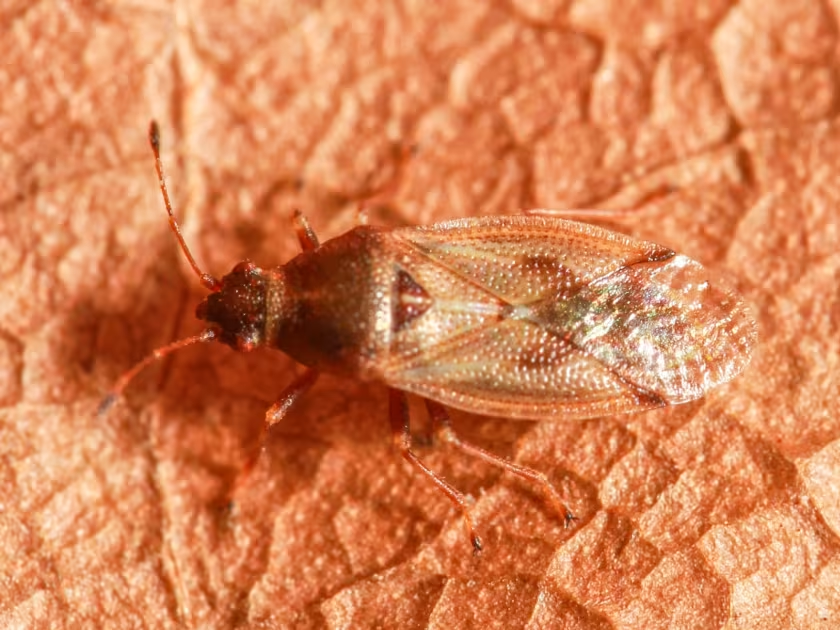
The gold-colored slim bug (Cymus aurescens) belongs to the family Cymidae, order Hemiptera. It is a small insect characterized by an elongated body shape adapted for life within dense plant inflorescences.
The adult bug typically exhibits a yellowish-brown or golden coloration, which provides excellent camouflage against the ripening grain heads of its host plants.
The mouthparts are of a piercing-sucking type, specifically evolved to penetrate the tough outer glumes of cereal plants to reach the nutrient-rich grain inside.
Nymphs share the general morphology of the adults but lack functional wings and exhibit a lighter pigmentation, making them less conspicuous on the stems.
This species thrives in humid environments, frequently colonizing fields near water bodies or areas with thick weed cover that maintains a stable microclimate.
What it damages
The primary hosts for Cymus aurescens are members of the Poaceae family. Both wild grasses and cultivated cereal crops can suffer from feeding damage.
The pest targets developing seeds during the milky and dough stages. By sucking the liquid contents of the grains, they cause significant weight loss and shriveling of the kernel.
Beyond the grain, the bugs can feed on stems, which weakens the plant's overall vascular system and interferes with the proper translocation of nutrients to the head.
Feeding sites often become entry points for fungal pathogens, which can lead to further deterioration of the crop quality through secondary infections in the field.
Significant infestations negatively impact seed germination rates, making the bug a serious concern for growers producing certified seeds for the next season.
When it appears
The life cycle of the bug is synchronized with the phenological stages of cereal crops, ensuring a continuous supply of food for emerging generations.
Adults overwinter in protected areas such as field margins, under leaf litter, or within the base of perennial grasses where they are sheltered from frost.
As temperatures rise in the spring, the overwintering population becomes active, feeding on wild grasses before moving onto newly emerged cereal fields.
The peak of damage coincides with the heading and grain-filling stages of cereal crops, as these stages provide the most nutritious food sources for the bugs.
Depending on local climate conditions, the bug may complete one or two generations throughout the growing season, which can lead to prolonged pressure on the crop.
Signs of infestation
Early detection involves inspecting the heads of cereal crops for the presence of the bugs, which are often found hidden at the base of the spikelets.
Visible damage is characterized by patches of whitened or underdeveloped grains that fail to fill properly due to the loss of cell contents.
The presence of frass (excrement) on the glumes and rachis of the spikes often indicates a long-term presence of the insects on that specific plant.
Stunted plant growth, deformed spikes, or uneven ripening across a field can be secondary symptoms of a significant Cymus aurescens infestation.
Sweep netting in the morning or evening, when the insects are most active, is the recommended method for scouting and estimating the population density in a field.
Control measures
Effective management begins with robust cultural practices, primarily the control of wild grasses and weed reservoirs along field boundaries.
Post-harvest management, including deep tillage or the destruction of crop residues, helps eliminate the overwintering habitats and reduces the initial population for the following year.
Maintaining proper spatial isolation between newly planted grain fields and areas dominated by perennial grasses can mitigate the risk of pest migration.
If population thresholds are exceeded, targeted application of insecticides such as pyrethroids or organophosphates is necessary during the grain-filling stage.
Always follow local regulatory guidelines regarding application rates and pre-harvest intervals to ensure safety and compliance with agricultural quality standards.
Taxonomy
- Latin name
- Cymus aurescens
- Order
- Hemiptera (bugs, aphids, leafhoppers)
- Family
- Lygaeidae
- EPPO code
- CYMUAU
Discussion
No discussions yet — be the first.