
Cymus bug
Cymus
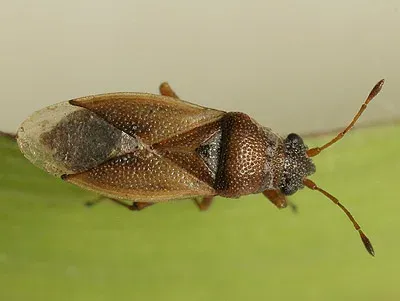
Description
How to identify
The Cymus bug (genus Cymus) belongs to the family Cymidae within the order Hemiptera. These are small insects, typically measuring 3–5 mm in length, characterized by an elongated body and a light brown or yellowish-brown coloration.
The insect is equipped with a developed piercing-sucking mouthpart designed to feed on plant sap. They possess functional wings, allowing them to migrate across fields in search of suitable host plants.
Nymphs resemble the adults but are smaller, wingless, and lighter in color. They undergo several developmental stages, gradually increasing in size until they reach adulthood.
The genus includes various species, with Cymus claviculus being one of the most common representatives associated with grass and cereal crops.
Precise species identification requires microscopic examination of the pronotum and wing patterns, as many species within the Cymidae family share similar morphological traits.
What it damages
Cymus bugs primarily feed on plants within the Poaceae family. Both nymphs and adults cause damage by sucking sap from the vegetative parts of the plants.
Cereal crops, such as wheat, barley, oats, and millet, suffer the most significant damage. They may also infest various forage grasses, including timothy-grass and foxtail.
Mass infestations lead to localized stunted growth and plant weakness, which can significantly reduce the overall yield and quality of the harvested grain.
In addition to direct damage, the feeding activities of these bugs can compromise plant immunity, making crops more susceptible to secondary fungal and viral infections.
Economic damage is typically observed during years with optimal weather conditions for bug reproduction, necessitating active field monitoring by agronomists.
When it appears
Adult Cymus bugs overwinter in plant debris, leaf litter, or the upper layers of soil, exhibiting high resistance to cold temperatures.
Spring activity begins when the average daily temperature reaches 10–12 degrees Celsius, prompting the insects to move onto young cereal shoots.
Peak activity occurs during the first half of the summer, characterized by feeding, mating, and oviposition on host plants.
The life cycle may consist of one or two generations per year, depending on the climatic conditions of the region.
Towards the end of the summer season, the population density declines as adults begin to seek suitable overwintering sites for dormancy.
Signs of infestation
The first sign of infestation is the appearance of small chlorotic spots on the leaves, which eventually turn yellow and necrotic as feeding continues.
Severe infestations manifest as stem deformation, delayed plant maturity, and a visible reduction in crop vigor across the affected areas.
Visual inspection during the morning hours often reveals the presence of bugs on the stems, within leaf sheaths, or near the developing flower heads.
Additional indicators include the presence of insect excreta on the leaf surfaces and the premature drying of the plant tips.
Fields with high pest pressure often exhibit a patchy appearance, with areas of stunted plants clearly distinguishable from the healthier sections of the crop.
Control measures
Effective cultural management starts with the thorough elimination of grassy weeds, which serve as crucial reservoirs for the bugs between cropping seasons.
Deep autumn plowing (tillage) is essential for destroying the overwintering sites of the bugs, significantly reducing the pest population for the following year.
Crop rotation and maintaining spatial isolation between cereal fields and pasture lands help prevent the migration of these pests into the crop.
- Application of systemic insecticides when populations exceed the economic threshold.
- Utilization of biological control agents to manage pest numbers naturally.
- Regular field scouting using yellow sticky traps or sweep nets to monitor population trends.
Chemical treatments are most effective during the early nymphal stages, as these insects are highly susceptible to insecticides while feeding actively on the crops.
Taxonomy
- Latin name
- Cymus
- Order
- Hemiptera (bugs, aphids, leafhoppers)
- Family
- Lygaeidae
- EPPO code
- CYMUSP
Discussion
No discussions yet — be the first.