
Swan
Cygnus
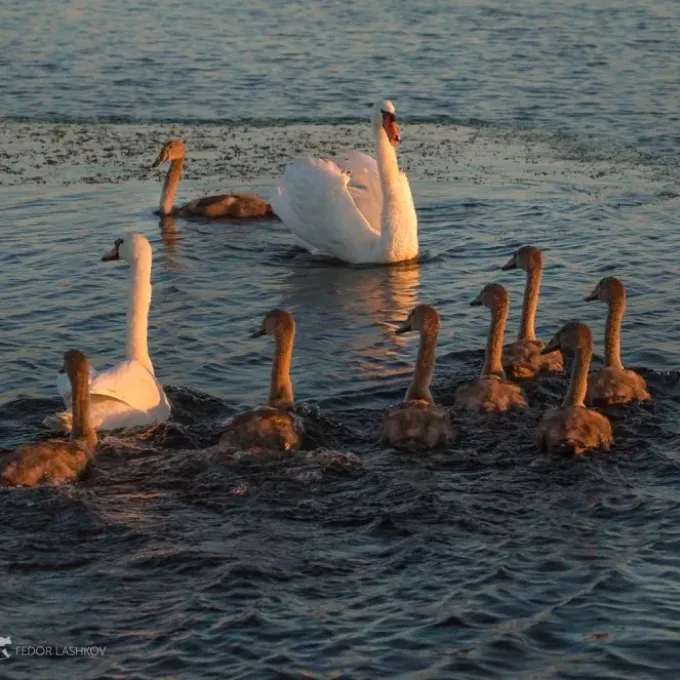
Description
How to identify
The swan (genus Cygnus) belongs to the order Anseriformes and the family Anatidae. These large waterfowl are known for their long necks and high intelligence, which enables them to exploit new food sources efficiently.
In Europe, the most common species are the Mute Swan, identified by its orange-red bill, and the Whooper Swan, recognized by its yellow and black bill.
They are highly social birds, often forming large, stable flocks that can cause significant agricultural impact when they descend on a cultivated field.
Their digestive physiology is adapted to processing large quantities of plant material, meaning a single flock can consume a substantial percentage of a crop yield in a few days.
Despite their graceful appearance, their size and weight make them capable of causing significant structural damage to soil and fragile plant stems during feeding.
What it damages
Swans primarily target winter cereals like wheat, barley, and rye, especially during the early tillering phase when plants are nutrient-dense.
Rapeseed crops are also frequently devastated, as swans selectively graze on the tender, protein-rich leaves, which can completely halt the growth of the crop.
Beyond ingestion, the weight of the flock leads to severe soil compaction and the destruction of the delicate root systems of the seedlings through trampling.
Field contamination from droppings can introduce pathogens and affect the overall health and uniformity of the crop canopy, reducing harvest potential.
In areas adjacent to wetlands, persistent grazing by swans can lead to total crop failure, forcing farmers to re-sow the affected areas entirely.
When it appears
The peak risk period for agricultural damage occurs during the autumn migration season, typically between September and November, when birds are building reserves.
Early spring (March–April) is another critical time, as swans seek fresh green vegetation as the first available food source after the winter period.
Climate factors such as mild winters may result in swans overwintering in agricultural areas, extending the pressure on winter crops throughout the year.
Feeding activity is most intense during dawn and dusk, though during the migration peak, birds may graze on fields throughout the entire day.
Dry conditions in their natural aquatic habitats can drive swans toward irrigated or fertilized agricultural fields in search of alternative nourishment.
Signs of infestation
Identifying swan activity is straightforward: look for large, distinctive webbed footprints deeply impressed into moist or soft field soil.
Large quantities of avian droppings in centralized areas of the field are clear evidence that a flock has been using the site for extended grazing.
Damaged plants exhibit clean, diagonal shears where the bill has snipped the leaves, often leaving only the base of the stem behind.
Feathers scattered across the field surface indicate resting areas where the birds spent time preening between bouts of feeding on the crop.
Distinctive pathways through the crops, where the vegetation is flattened or broken, usually lead from the water's edge directly into the feeding zone.
Control measures
Visual deterrents, such as scarecrows or reflective streamers, are useful but must be moved daily to prevent the birds from becoming accustomed to them.
Bio-acoustic systems that broadcast distress calls of swans or predator sounds are among the most effective non-lethal methods for protecting larger field areas.
Integrating agricultural practices, such as maintaining buffer strips between wetlands and crops, can help reduce the attractiveness of the field to the birds.
- deployment of motion-activated laser deterrents;
- use of pyrotechnic bird-scaring devices;
- regular monitoring and manual patrolling of field borders;
- installation of wire or net fencing for small, high-value plots.
Effective management requires a proactive approach, using a combination of methods to keep the birds from establishing a habit of feeding on a particular field.
Taxonomy
- Latin name
- Cygnus
- Family
- Anatidae
- EPPO code
- CYGNSP
Discussion
No discussions yet — be the first.