
Short-tailed blue
Cyaniris semiargus
Description
How to identify
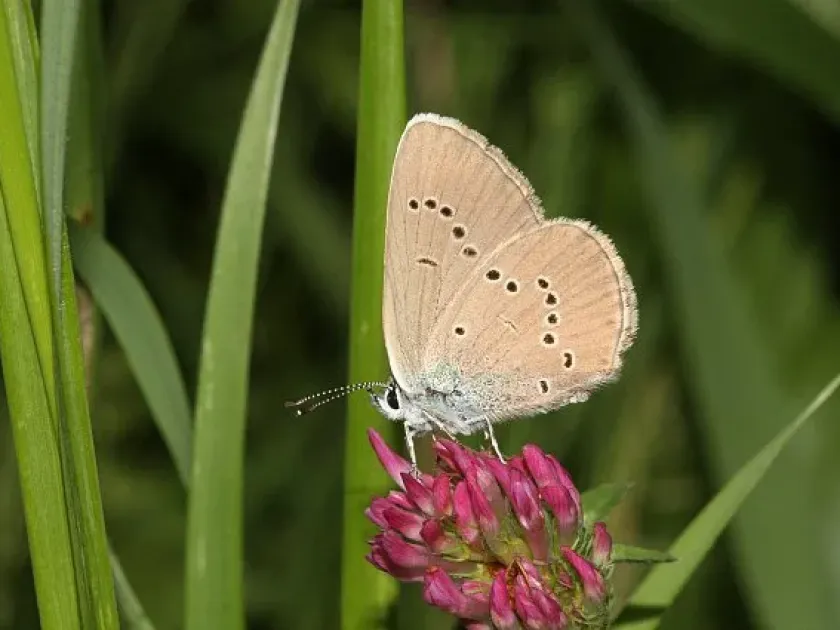
The Short-tailed blue (Cyaniris semiargus) is a butterfly belonging to the Lycaenidae family. Adult specimens have a wingspan ranging from 30 to 35 mm, with males showing a vivid blue-violet color and females appearing dark brown.
The larvae, or caterpillars, are short and robust, covered with tiny hairs, and possess a greenish hue with a darker dorsal stripe, which provides effective camouflage among their host plants.
Eggs are hemispherical and whitish, typically laid singly at the base of flower buds, making them difficult to detect during routine crop scouting in the field.
This species exhibits myrmecophily, meaning the larvae have a symbiotic relationship with ants. The caterpillars secrete a sugary substance that attracts ants, which in turn protect the larvae from predators.
The life cycle is highly adapted to temperate climates, allowing the species to thrive in both agricultural fields and wild grasslands where legume host plants are abundant.
What it damages
The Short-tailed blue primarily damages crops in the Fabaceae (legume) family, with red clover, white clover, and mountain clover being the most frequent hosts for its larvae.
Caterpillars feed specifically on the reproductive organs of the plants. Their activity is focused on destroying flower buds and blooms, which is detrimental to seed production.
By consuming the floral tissues, the larvae prevent successful pollination and seed setting, often leading to significant yield losses in seed-production fields.
While damage to foliage can occur, the primary economic impact is driven by the destruction of blossoms, which makes this species a concern for specialized legume growers.
Constant population pressure from surrounding wild habitats ensures that the pest can re-colonize agricultural fields even after local control measures are implemented.
When it appears
The life cycle of the Short-tailed blue typically consists of one or two generations per year. The adult flight period occurs from late May through August.
The species overwinters as young larvae, hiding in the plant's basal zone or in the leaf litter, resuming feeding activity as soon as warmer spring temperatures arrive.
The period of highest damage coincides with the budding and flowering phase of clover, during which the larvae are most active and voracious in their feeding habits.
After reaching maturity, the larvae pupate either on the plant host or in the top layer of the soil, with the pupal stage lasting approximately two to three weeks.
Monitoring the adult population during sunny weather is crucial for predicting the timing of larval emergence and establishing effective management thresholds.
Signs of infestation
Initial signs of infestation include small holes in the flower buds. A closer inspection often reveals the caterpillars hiding within or at the base of the damaged flower heads.
Large numbers of butterflies flying over clover fields during the flowering period serve as a primary indicator of a potential infestation and subsequent egg-laying.
Premature shedding of buds or the presence of hollowed-out clover florets are clear indicators of larval damage within the canopy of the legume stand.
Excrement from the larvae, appearing as small, dark granular deposits near the feeding sites, is another common sign of the pest's presence in the field.
Heightened ant activity on the stems of clover plants can also serve as a secondary sign of infestation, as ants are drawn to the sugary secretions produced by the larvae.
Control measures
Crop rotation and maintaining spatial isolation between seed production plots and wild grassland habitats are key strategies to reduce pest colonization.
Early mowing of clover crops is an effective cultural practice, as it removes the flower heads where larvae develop, effectively terminating their life cycle.
Biological insecticides based on entomopathogenic bacteria are recommended for use when young larvae are emerging, providing effective control with minimal environmental impact.
Chemical control should be reserved for seed crops where the economic threshold of damage has been reached, utilizing systemic insecticides in accordance with label regulations.
Integrated pest management, including regular field inspections and the use of pheromone traps, helps to optimize the timing of interventions and minimizes the need for synthetic chemicals.
Taxonomy
- Latin name
- Cyaniris semiargus
- Order
- Lepidoptera (butterflies)
- Family
- Lycaenidae
- EPPO code
- CYRSSE
Discussion
No discussions yet — be the first.