
Corncrake
Crex crex
Description
How to identify
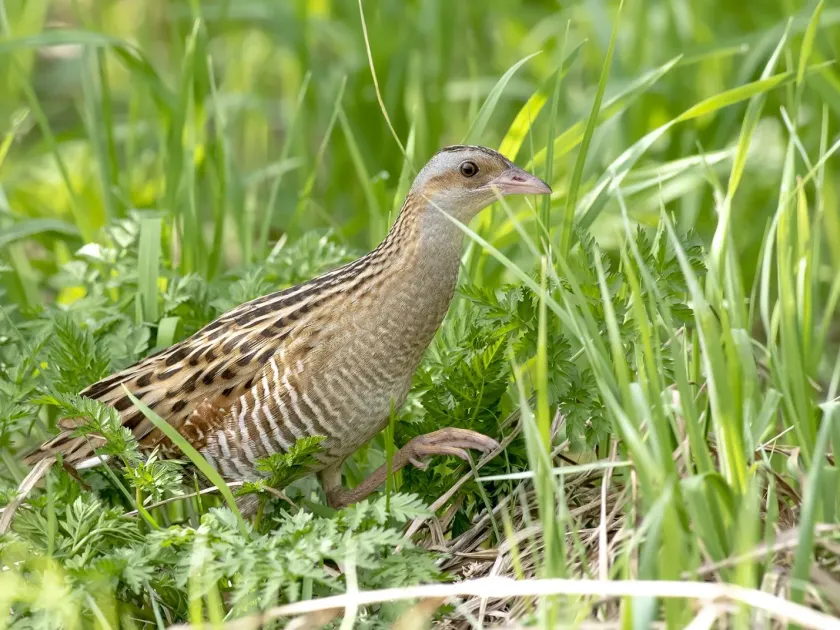
The Corncrake (Crex crex) is a member of the Rallidae family, known for its secretive nature and preference for tall, dense vegetation. It is a medium-sized bird with a buff-brown, streaked plumage that provides excellent camouflage.
Corncrakes are primarily ground-dwelling birds that rarely fly, preferring to run quickly through tall grass or agricultural crops to escape potential threats.
The most reliable way to identify a corncrake is by its distinctive, repetitive, and rasping call. This sound is loud and can be heard over long distances, particularly during the night in the breeding season.
Taxonomically, the corncrake belongs to the order Gruiformes. They are highly territorial during their stay in temperate agricultural regions, where they establish breeding sites in grasslands and cereal fields.
Although they are often considered beneficial in terms of insect control, their presence in dense crop stands can lead to localized agricultural conflicts.
What it damages
The primary agricultural impact of the corncrake is physical damage to young crops. During nest construction, birds clear small areas of soil, resulting in the loss of plants in those spots.
Heavy foot traffic by the birds as they move through the fields can lead to localized trampling and lodging of cereal and legume shoots, especially in the early stages of growth.
During the grain-filling stage, there is minor damage to ears and seeds as birds utilize them for food, potentially causing slight reductions in yields within the most concentrated areas.
In humid conditions, the accumulation of bird droppings and the physical disturbance of the vegetation canopy may promote the development of fungal pathogens near the base of the crop stalks.
The presence of nesting birds can also lead to delays in farm operations, as farmers may need to adjust machinery schedules to avoid damaging the nests during the critical breeding months.
When it appears
Corncrakes arrive at their breeding grounds from migration in late spring, typically during April and May, as temperatures rise and vegetation cover increases.
The peak period of their impact on agricultural land occurs between June and July, coinciding with the peak of their nesting and fledgling-rearing activities in the dense crop canopy.
By late August, activity levels decline as the birds complete their breeding cycles and begin preparing for their long-distance migration back to their wintering sites.
In the autumn, fields are usually vacated, meaning that winter crops are rarely affected by the presence of these birds during the planting or early seedling stages.
The timing of their presence is closely linked to the growth phases of tall grasses and cereals, which offer the necessary protection and food resources required for their reproductive success.
Signs of infestation
The most unmistakable sign of a corncrake is the persistent, rasping 'crex-crex' call heard during twilight and through the night, which indicates the bird is holding a territory.
Physical evidence of their presence includes small, trampled patches of flattened vegetation where the birds have built their nests or established paths through the crop.
Droppings found on the lower leaves and stalks of the crops provide clear evidence of the birds’ presence in a specific area, often accompanied by feathers scattered nearby.
In areas of high density, farmers may observe broken ears of corn or damaged stems at ground level, indicating where the birds have been feeding or moving through the field.
Because corncrakes are notoriously difficult to see, landowners often rely on acoustic monitoring and ground inspections for physical indicators of nesting activity.
Control measures
Effective management includes modifying field margins by keeping grass short, as corncrakes strictly avoid open, low-vegetation areas for nesting purposes.
Acoustic deterrents that simulate the presence of avian predators can be used in sensitive fields to discourage birds from settling in prime crop areas during the nesting season.
Agrotechnical strategies, such as managing the timing of mowing or plowing field borders, can alter the attractiveness of a plot, encouraging the birds to move to less productive areas.
In many regions where the corncrake is protected, farmers often implement 'bird-friendly' buffer zones, effectively separating the core production area from the habitat the birds prefer.
Cooperation with local conservationists allows for the implementation of integrated management plans that balance crop safety with the protection of this elusive species.
Taxonomy
- Latin name
- Crex crex
- Family
- Rallidae
- EPPO code
- CREXCR
Discussion
No discussions yet — be the first.