
Japanese quail
Coturnix japonica
Description
How to identify
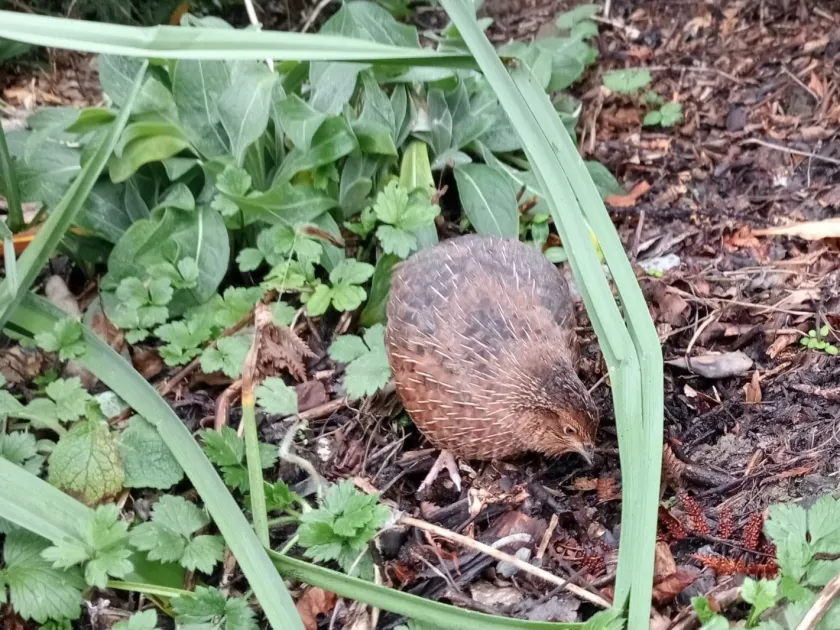
The Japanese quail (Coturnix japonica) is a small ground-dwelling bird belonging to the Phasianidae family. Typically measuring 18-20 cm in length, it features mottled brown plumage that provides excellent camouflage in dense vegetation.
In the wild, these birds inhabit grasslands and agricultural landscapes. Unlike domestic varieties, wild populations retain strong flight capabilities and prefer to move stealthily through tall grasses, making them difficult to detect.
The species has a high reproductive rate, with maturity reached in just a few months. Their nesting habits involve creating hidden ground nests, often directly within or near agricultural fields.
Systematically, they are highly adaptable, which allows them to thrive in human-modified landscapes where food availability is consistent throughout the growing season.
Their metabolism requires frequent foraging, driving these birds to explore agricultural plots systematically in search of nutrient-rich seeds and insects.
What it damages
Japanese quails primarily damage crops by targeting sown seeds and young sprouts. They are particularly attracted to grains, legumes, and oilseed crops during the germination phase.
When seeds are sown at insufficient depths, the birds easily unearth them, causing significant thinning of the crop stand. This often leads to the necessity of reseeding large portions of the field.
During the milk-wax maturity stage, quails damage standing crops by pecking at the grain heads. This causes both yield loss and physical trauma to the plants, opening them to fungal infections.
Physical movement of large quail groups across a field results in the trampling of young plants. This type of damage is often concentrated along field boundaries, where birds feel more secure from predators.
The cumulative effect of foraging can lead to noticeable yield reductions, especially when bird density is high and food alternatives in the surrounding natural environment are scarce.
When it appears
The peak period for damage occurs during spring sowing, as the exposed seeds on the surface or in shallow soil become a high-energy food source for the quail.
In mid-summer, as crops mature and grain heads fill, the birds return to the fields, attracted by the abundant nutritional content of the developing cereal crops.
Autumn migration serves as another period of heightened activity, where flocks may stop in agricultural areas to feed on remaining harvest residues or late-maturing crops.
Extreme weather conditions, such as drought, often force birds out of their natural habitats and into irrigated farmland, significantly increasing the pressure on agricultural crops.
Daily activity cycles show that quails are most active in the early morning and late evening, which are the critical windows for implementing and monitoring deterrent measures.
Signs of infestation
Irregular patches of missing plants within a field are the primary sign of quail foraging activity. These patches often show signs of excavation where seeds have been dug up.
Characteristic footprints left in the loose soil, along with feathers and distinct bird droppings, serve as clear biological evidence of a quail infestation in the area.
Damaged grain heads display shredded husks and partially eaten kernels. Unlike insect damage, these injuries are typically larger and often result in the complete destruction of the grain head.
A sudden, explosive flight of birds from the field margins, accompanied by distinct alarm calls, is a frequent indicator that a flock has been feeding in the immediate vicinity.
Secondary infections, such as mold or rot, often appear on the damaged plants, as the physical trauma from the quails' beaks allows pathogens to penetrate the plant tissues.
Control measures
Acoustic deterrents that broadcast predator calls or distress signals are highly effective at discouraging quail presence when implemented before the arrival of large flocks.
Ensuring proper sowing depth is an essential cultural practice; seeds buried deeper are far less accessible to ground-dwelling birds, significantly reducing potential damage.
Visual repellents, such as reflective tapes, scarecrows, and motion-activated lights, can create an inhospitable environment, particularly on the edges of large fields.
Treating seeds with specialized bird-repellent coatings provides a chemical barrier that makes the grains unpalatable without harming the overall germination process.
Maintaining clean field margins by removing excessive weed cover reduces the attractiveness of the area for nesting and hiding, forcing flocks to search for food elsewhere.
Taxonomy
- Latin name
- Coturnix japonica
- Family
- Phasianidae
- EPPO code
- COTXJA
Discussion
No discussions yet — be the first.